
This month’s top three reports in biblical archaeology include a biblical inscription, a manuscript containing sayings of Jesus, and the chance discovery of beautifully-preserved Roman swords in a Judean cave.
3. Four Roman Swords Discovered in Judean Cave
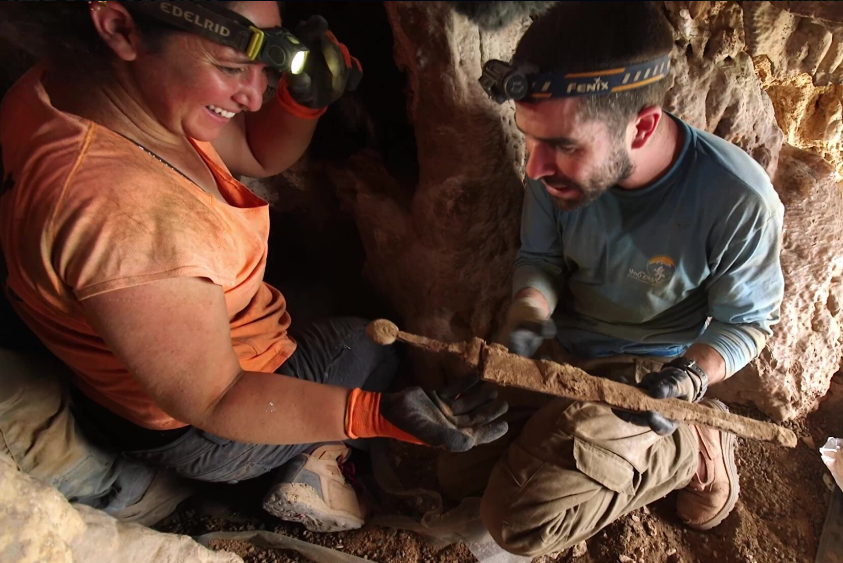
Four 1900-year-old Roman swords were recently discovered in a cave in the Ein Gedi Nature Reserve near the Dead Sea in Israel. A team of archaeologists was at the cave to photograph a well-known stalactite that bears an inscription written in ancient Hebrew script that is similar to that used during the First Temple period. While there they happened to find the swords lodged in a crevice. Three of the iron swords were still in their wooden and leather sheaths, and were the size of Roman “spatha” swords (24 to 26 in.; 60 to 65 cm), while the fourth sword was a shorter ring-pommel sword (18 in; 45 cm). The initial theory is that these swords were taken from Roman soldiers by Jewish rebels during the Bar Kokhba Revolt (AD 132 to 135) and hidden in the cave. An article on the swords has been published in “New Studies in the Archaeology of the Judean Desert: Collected Papers.”
REPORT: https://www.timesofisrael.com/four-1900-year-old-roman-swords-discovered-hidden-in-desert-cave/
2. Ancient Inscription from the Book of Psalms Discovered at Judean Desert Fortress
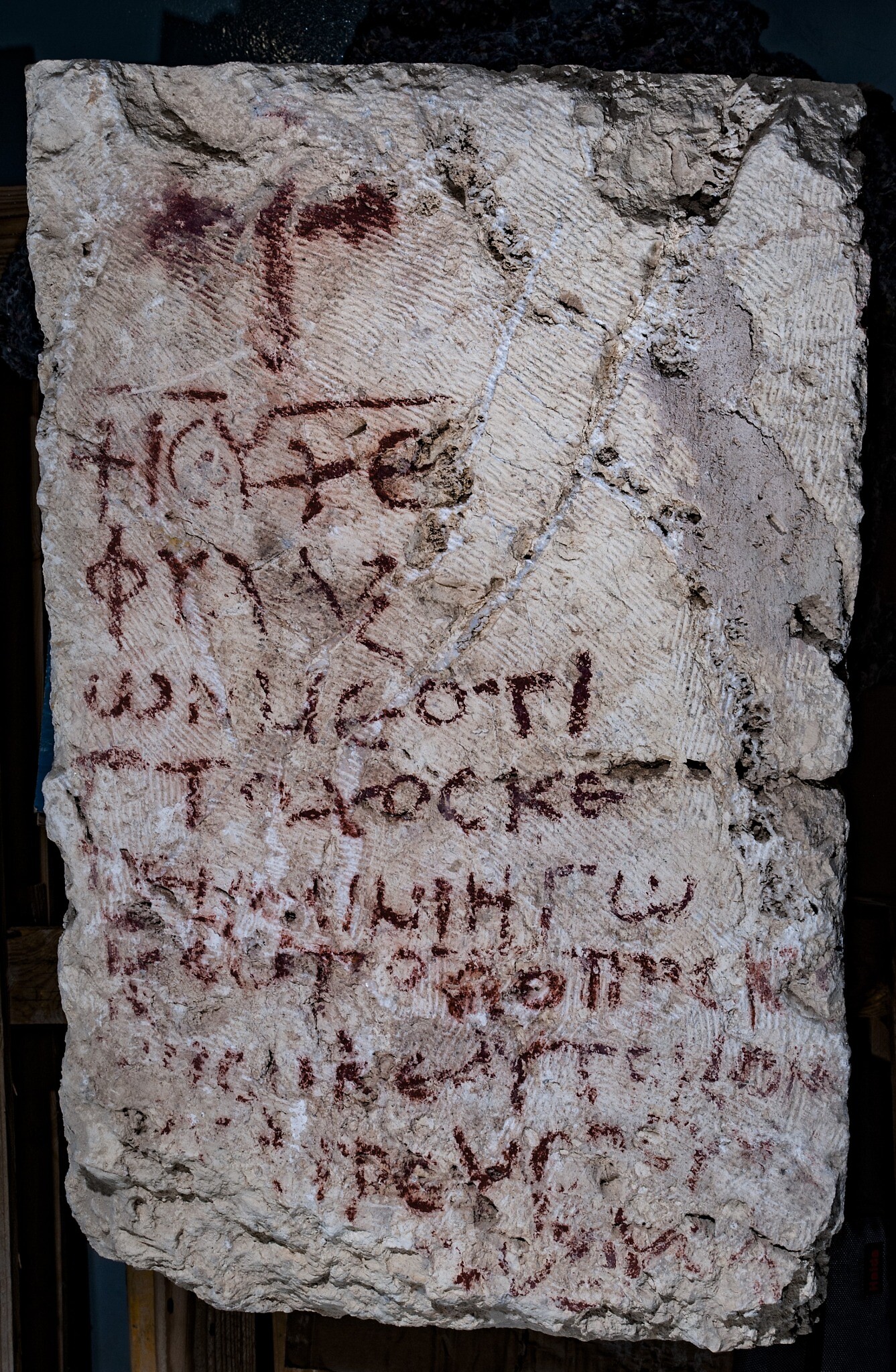
 The Koine Greek inscription of Psalm 86 from Hyrcania. Photo: DrOren Gutfeld and Michal Haber
Archaeologists from the Hebrew University of Jerusalem have unearthed an inscription from the book of Psalms dating to the Byzantine era at Hyrcania in the Judean Desert. Hyrcania, located ten miles southeast of Jerusalem, was constructed in the first or second century BC by the Hasmonean ruler John Hyrcanus or his son Alexander Jannaeus. It was enlarged by Herod the Great, but was abandoned after his death. Finally, it was occupied by a small Christian monastery at the end of the fifth century AD. The Byzantine-era inscription was discovered on the side of a large building stone and is written in Koine Greek. It adapts Psalm 86:1–2 addressing it to Jesus; below a red cross and inscribed in red ink are the words, “Jesus Christ, guard me, for I am poor and needy. Guard my life, for I am faithful to you”. The original psalm of David reads, “Hear me, Lord, and answer me, for I am poor and needy. Guard my life, for I am faithful to you; save your servant who trusts in you. You are my God” (NIV). The find may be the first Koine Greek rendering of a psalm ever discovered inscribed on stone rather than on parchment or papyrus.
REPORT: https://www.jpost.com/archaeology/article-760618
1. New Papyrus Published Containing Sayings of Jesus
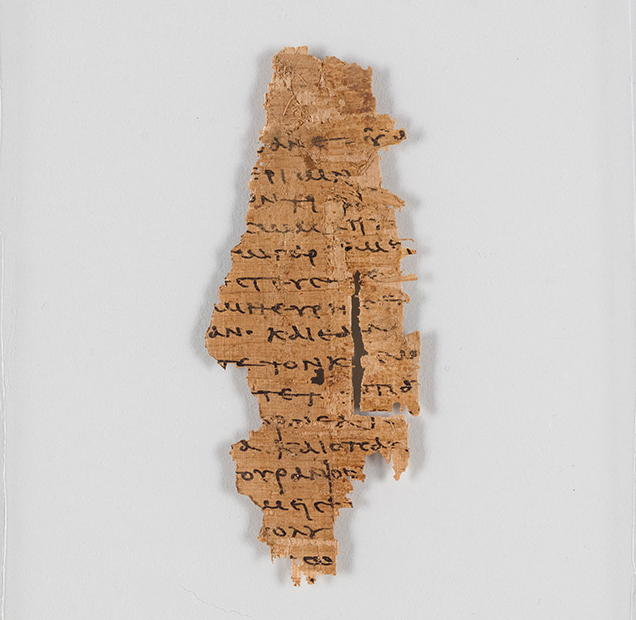
A papyrus fragment containing quotes from Matthew, Luke, and the Gnostic Gospel of Thomas was recently published in the most recent volume of the Oxyrhynchus Papyri (volume LXXXVII). The papyrus dates to the late second or early third century and is part of the collection of over 500,000 papyri discovered at Oxyrhynchus, Egypt in the late 1800’s and early 1900’s by Bernard Grenfell and Arthur Hunt. The fragment, known by it’s technical designation P.Oxy. 5575, contains small portions of Matthew 6, Luke 12 and the Gospel of Thomas 27. It is the oldest manuscript with text from Matt 6 and the earliest witness to the Gospel of Thomas. The Gnostic Gospel of Thomas is a later, second-century work that purports to contain secret sayings that Jesus gave only to Thomas, and it is not considered an authentic record of actual sayings by the historical Jesus described by the canonical Gospels from the first century
REPORT: https://textandcanon.org/whats-the-big-deal-about-a-new-papyrus-with-sayings-of-jesus/
Stay Up-To-Date
Get the latest BREAKING NEWS in biblical archaeology each week here: https://biblearchaeology.org/current-events-list
 Bible Archaeology Report