

The top three reports in biblical archaeology in April focused on New Testament finds, included a marble head of a Roman god, the discovery of a Roman emperor’s villa, and an ancient manuscript.
3. Marble Head of Apollo Discovered at Philippi

A team of Greek archaeologists has unearthed a marble head of Apollo at ancient Philippi. The statue head, was discovered late in 2023 and dates to the second or third century AD. Based on the location the where artifact was found, it appears the head was reused in the Medieval period to decorate a fountain in the town square. Apollo was one of the foremost ancient Greek gods and was associated with a wide range of things, including archery, music, and healing. The apostle Paul visited Philippi on his second and third missionary journeys and wrote a letter to the church there (Acts 16:12, 20:6).
LINK: https://www.archaeology.org/news/12269-240409-greece-philippi-apollo
2. Archaeologists Claim to Have Found the Villa of Caesar Augustus Near Mt. Vesuvius
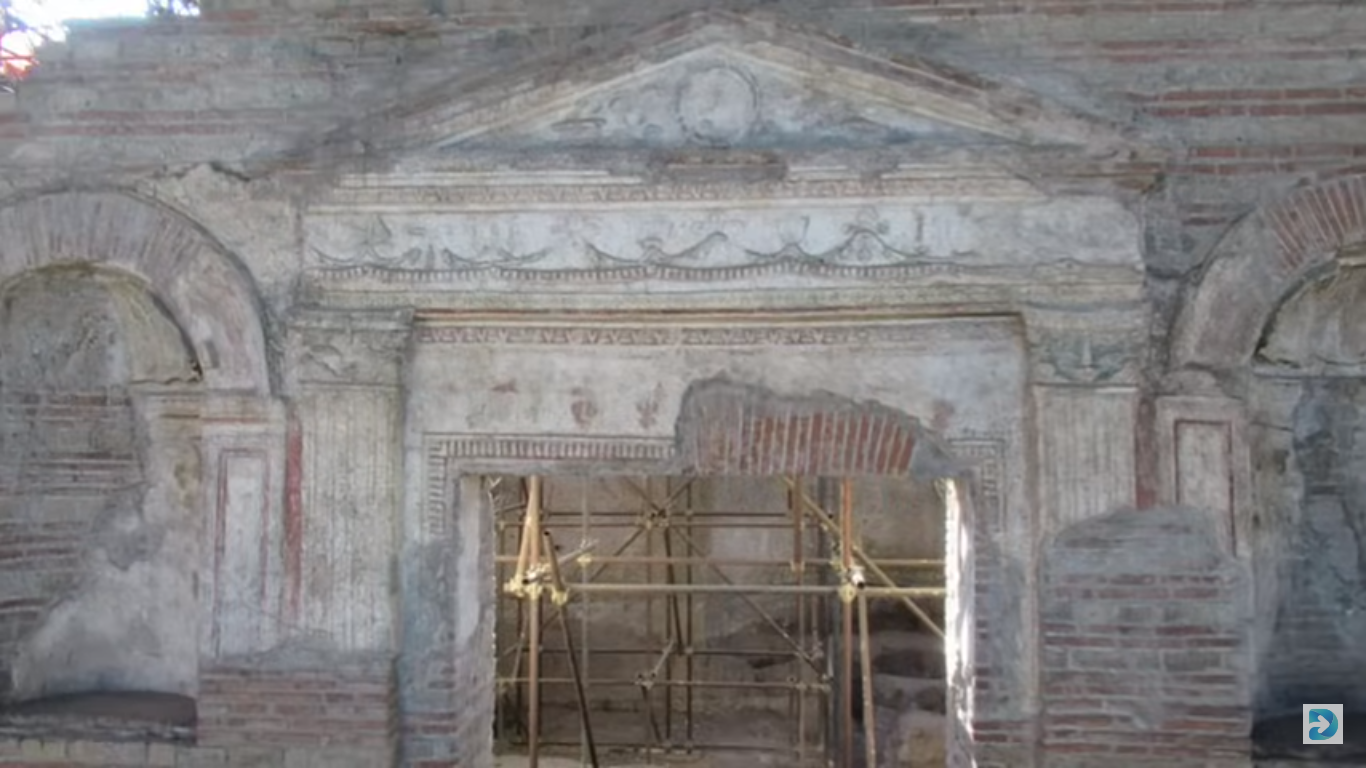
Japanese archaeologists from the University of Tokyo recently announced new data that they say confirms that a villa in Somma Vesuviana on the northern slope of Mt. Vesuvius once belonged to Caesar Augustus. From the work of several ancient writers, including Tacitus and Suetonius, we know that Augustus died on the northern side of Vesuvius and that his villa there was later dedicated as a temple for his imperial cult. The villa in Somma Vesuviana was first discovered in the 1930’s, but at that time it appeared that it only dated to early in the second century AD. Further excavations, however, have revealed that the second-century villa was built atop an earlier villa complex. Radiocarbon dating and chemical analysis of volcanic layers have revealed that the earlier structure dates to the reign of Augustus. A large temple-like structure was later built on top of the villa site, providing further evidence that the first-century villa may have once belonged to Augustus. Caesar Augustus is named in Luke 2:1 as the Roman emperor ruling at the time of Christs’ birth.
1. Ancient Biblical Codex About to be Auctioned by Christies
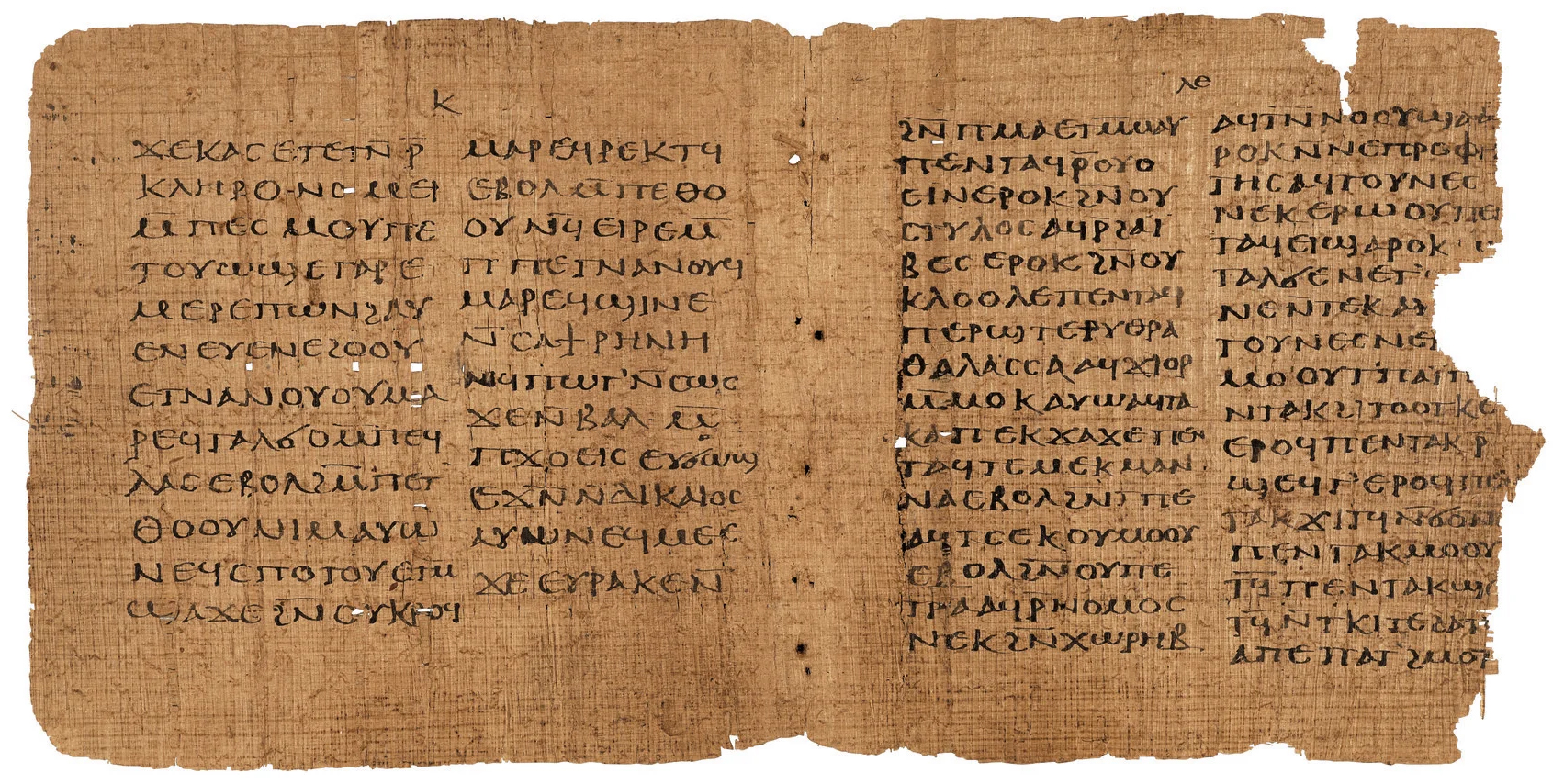
An ancient papyrus codex containing the earliest complete texts of Jonah and 1 Peter is one of a number of manuscripts and Bibles set to be auctioned by Christie’s New York on June 11, 2024. The Crosby-Schøyen Codex first came to light when it was purchased in the 1950’s by the University of Mississippi. It was acquired by Dr. Martin Schøyen in 1988. The codex, which dates to AD 250-350 contains five Christian texts in Coptic: Melito’s On Passover, 2 Macc. 5:27–7:41, 1 Peter, Jonah, and an Easter morning homily. The auction house estimates it will sell for between $2.6 million to $3.8 million.
Stay Up-To-Date
Get the latest BREAKING NEWS in biblical archaeology each week here: https://biblearchaeology.org/current-events-list
 Bible Archaeology Report