
It’s a new year! Here were the top three reports in biblical archaeology for January 2025: two news stories come from Egypt and one from Israel.
3. Tomb of Doctor who “Treated the Pharaoh Himself” Discovered in Egypt
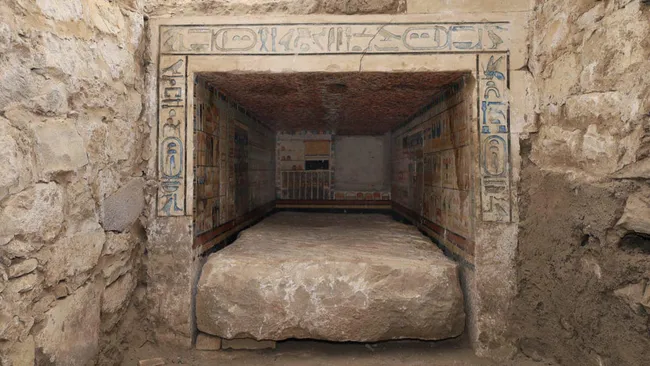
A French-Swiss team of archaeologists has discovered a tomb at Saqqara that once belonged to doctor who treated the Egyptian pharaoh. The tomb is 4,100-years-old and dates to the Old Kingdom period, which means he may have treated Pharaoh Pepi II or one of the subsequent rulers of Egypt. The team also discovered a stone sarcophagus with inscriptions bearing the doctor’s name, Teti Neb Fu, and his titles: Chief Palace Physician, Priest and “Magician” of the Goddess Serket, Chief Dentist, and Director of Medicinal Plants. The walls of the tomb still bear vibrant, colorful paintings of Teti Neb Fu’s life and work. According to a literal understanding of biblical chronology, this tomb dates to the approximate time of Abraham.
Sources:
- https://www.facebook.com/tourismandantiq/posts/993326902828856
- https://www.livescience.com/archaeology/ancient-egyptians/4-100-year-old-tomb-of-doctor-who-treated-pharaohs-discovered-at-saqqara
2. Discoveries Made at Hatshepsut’s Mortuary Temple
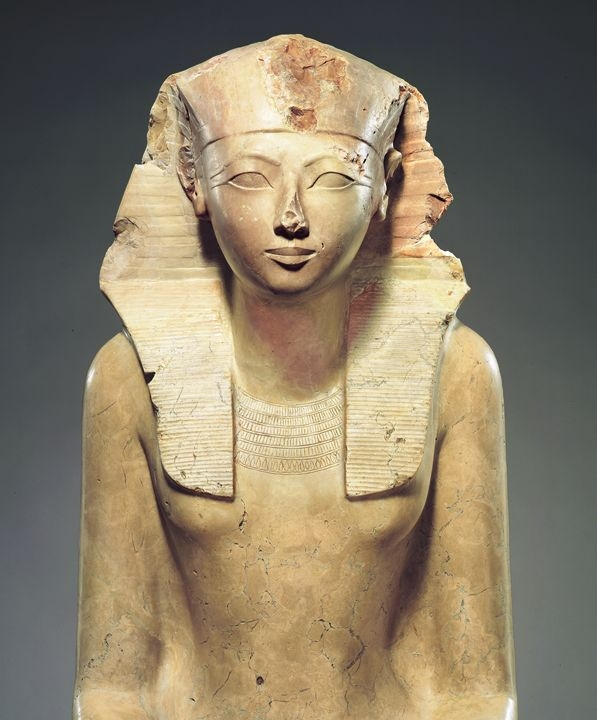
Egyptian archaeologist and former head of Egypt’s Ministry of Antiquities, Zahi Hawass, recently announced several discoveries around the mortuary temple of Egypt’s female pharaoh, Hatshepsut. The excavation team located the temple’s “foundation deposit” – a group of artifacts that the builders buried when they began construction. The foundation deposit included two stones with Hatshepsut’s cartouche (name ring) and several tools. Almost 1500 painted blocks were also found, which appear to have come from Hatshepsut’s nearby valley temple. Hatshepsut ruled during the 18th Dynasty in the New Kingdom period of Egyptian history. She was the stepmother of Thutmose III, who succeeded her as pharaoh. After her death, her statues and reliefs were intentionally destroyed, although Hawass claims they have unearthed evidence that Thutmose III restored her temple. Some scholars have suggested Hatshepsut is a good candidate for Pharaoh’s daughter, who pulled baby Moses from the Nile River (Ex 2:5).
Sources:
- https://www.hawasszahi.com/news/new-discoveries-in-luxor
- https://www.livescience.com/archaeology/ancient-egyptians/excavations-at-queen-hatshepsuts-mortuary-temple-reveal-elaborate-burials-decorated-blocks-and-ancient-tools
1. Structure on the Eastern Slope of the City of David Identified as an Ancient Place of Worship
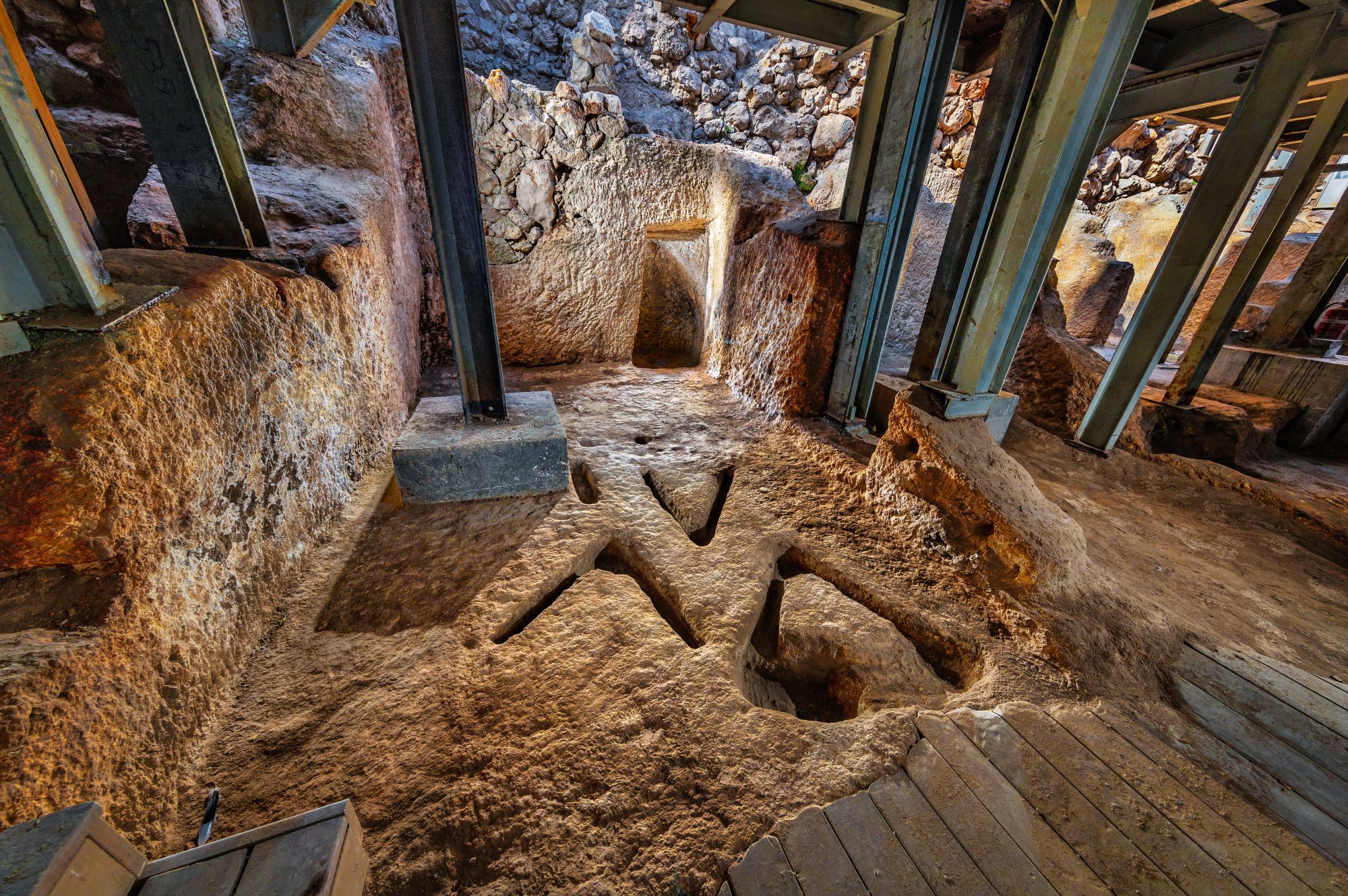
The authors of a recent article in the journal ‘Atiqot interpret a structure on the eastern slope of the City of David in Jerusalem as an ancient place of worship that was in use from the Middle Bronze Age to the mid-eighth century BC. The excavations were carried out in 2011, but the results were only recently published. The structure consists of eight, rock-hewn rooms, some of which contained artifacts associated with cultic sites. Room 1 contains a raised surface from which a channel exits eastward. This surface may have been used as an altar base with the channel serving to drain the liquids. In Room 4, excavators found part of a massebah (standing stone) in situ, which was likely used for worship. Room 5 contained a chamber with what the authors believe is a favissa, a collection worship-related artifacts that were no longer in use. These include scarabs, bullae, restorable vessels, figurines, and animal bones. Room 5 also contained mysterious V-shaped channels carved into the floor. Various suggestions have been given for these V-shaped grooves. They may have served as a base for a tripod—an installation with three legs used for ritual activities—or they may have been used for the preparation of liquids such as oil or wine. An oil press was discovered nearby within the structure. Archaeologist, Eli Shukron has, in the past, associated this site with Melchizedek’s Temple. However, ABR’s Dr. Scott Stripling believes it may have been the location where King David set up the tabernacle to house the ark of the covenant (see link to his interview on-site with Jim Scudder Jr. of InGrace). These rock-hewn rooms had walls but no roof; a tent could have been placed over them. Moreover, the Bible indicates that David set up the tabernacle above the Gihon Spring (2 Sam 6:16–17; 1 Kgs 1:38–39), which is where this structure is located.
Source: https://publications.iaa.org.il/atiqot/vol116/iss1/5/
Dr. Stripling’s interview on InGrace:
Stay Up-To-Date
Get the latest BREAKING NEWS in biblical archaeology each week here: https://biblearchaeology.org/current-events-list

 Bible Archaeology Report