
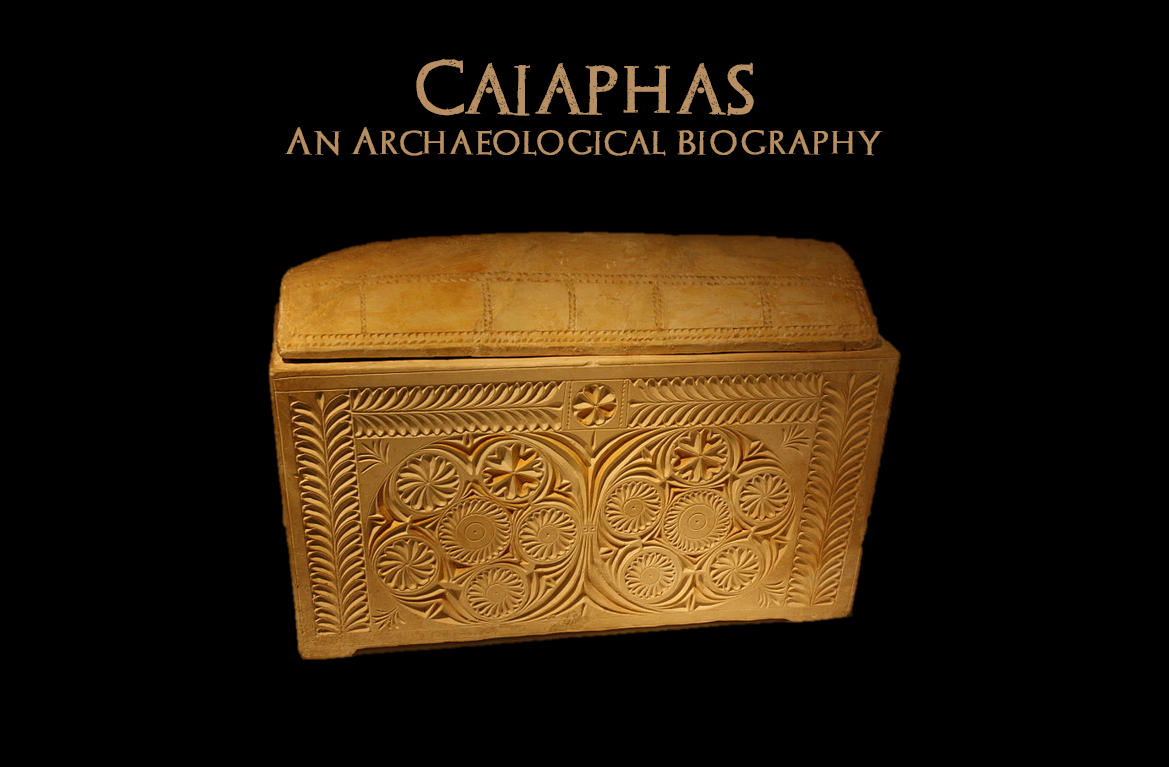
Those who had arrested Jesus took him to Caiaphas, the high priest, where the teachers of the law and the elders had assembled (Mt 26:57 ESV).
Caiaphas played a significant role in the crucifixion of Jesus, serving as the High Priest who presided over the trial that led to Jesus’s condemnation. Our primary sources regarding the life of Caiaphas are the New Testament, the writings of Josephus, and archaeological finds.
Caiaphas as High Priest
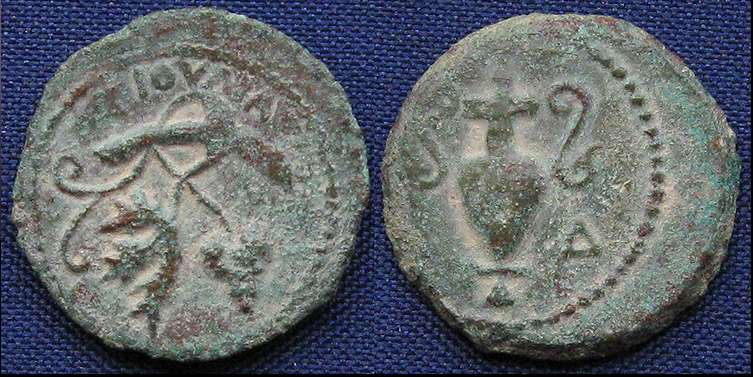
In 18 CE, the Roman governor, Valerius Gratus, deposed Simon son of Camithus as the High Priest, and appointed Caiaphas to serve in this role.1 Caiaphas was the son-in-law of Annas (Jn 18:13), a powerful man who had served as High Priest from 6–15 CE. Even after Annas was deposed, he retained considerable influence as five of his sons2, and his son-in-law, Caiaphas, all served as the High Priest at various times. This is reflected in the fact that, after Jesus was arrested, he was taken first to Annas (Jn 18:13) and then to Caiaphas (Jn 18:24).
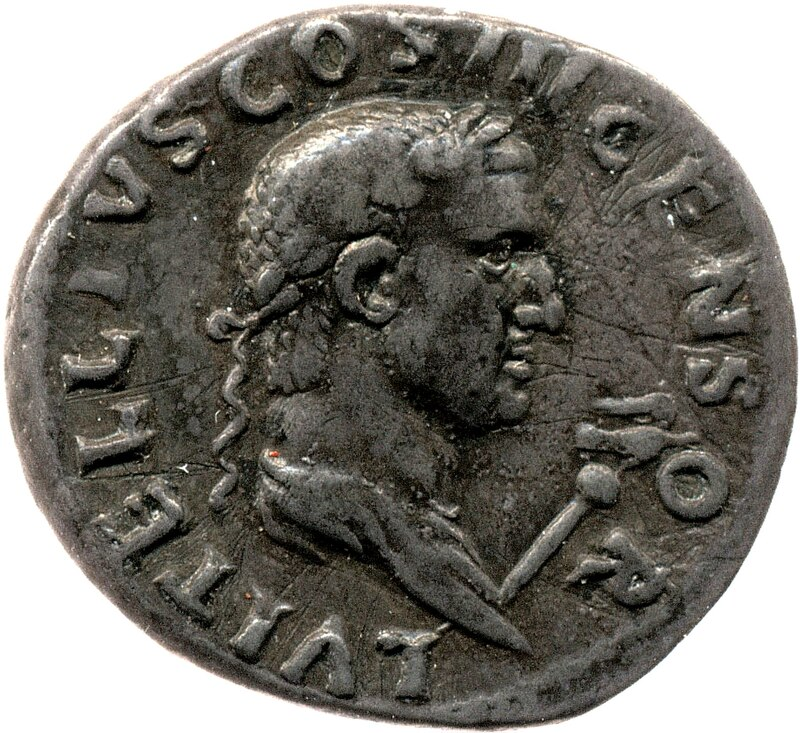
According to Josephus, his given name was “Joseph, who was also called Caiaphas.”3 He served as High Priest for a notably long period; when Gratus was succeeded by Pontius Pilate, Caiaphas remained in office. Both he and Pontius Pilate were eventually deposed by Lucius Vitellius, the governor of Syria, in 37 CE.4
Given this timeline, the Caiaphas named by Josephus as serving as High Priest in Jerusalem and the Caiaphas described as holding the same role in the Gospel accounts (Mt 26:3; Lk 3:2; Jn 18:13) must be one and the same person.5
Caiaphas and the Trial of Jesus
The original plot to arrest and kill Jesus was hatched in the home of Joseph Caiaphas. Matthew records, “Then the chief priests and the elders of the people assembled in the palace of the high priest, whose name was Caiaphas, and they plotted to arrest Jesus in some sly way and kill him. “But not during the Feast,” they said, “or there may be a riot among the people” (Mt. 26:3–5 ESV). While the chief priests and elders discussed how to get rid of Jesus to protect their position, Caiaphas said, “It is better for you that one man should die for the people, not that the whole nation should perish” (Jn 11:50). Ironically, he unwittingly prophesied that Jesus would die for the people (Jn 11:51; 18:14).
Despite their reticence to move against Jesus during the Passover, they eventually decided to take this risk after Judas presented an opportunity to betray Jesus to them (Mt 26:14–16). Perhaps they believed that, with an inside man, they could arrest Jesus quietly and avoid a riot among the people.
Jesus was eventually taken to the palace of Caiaphas for the first of two primary trials: a religious trial before the Jewish ruling council, which was followed by a Roman civil trial before Pontius Pilate. At his religious trial, Jesus was accused of numerous things by contradictory witnesses but remained silent. Finally, Caiaphas spoke:
“I adjure you by the living God, tell us if you are the Christ, the Son of God.” Jesus said to him, “You have said so. But I tell you, from now on you will see the Son of Man seated at the right hand of Power and coming on the clouds of heaven.” Then the high priest tore his robes and said, “He has uttered blasphemy. What further witnesses do we need? You have now heard his blasphemy. What is your judgment?” They answered, “He deserves death” (Mt 26:63–66 ESV).
Having pronounced Jesus worthy of death, the Jewish leaders then led him to the Roman governor, Pontius Pilate, to request that this sentence be carried out (Mt 27:2).
Archaeological Evidence for Caiaphas
In 1990, a tomb was discovered during construction work in the Peace Forest of Jerusalem. Archaeologists were called in and excavated a tomb in which they found six intact ossuaries (limestone boxes used to inter the bones of the deceased after the body had decomposed), as well as fragments of six others. Based on the ossuaries themselves—as well as pottery, oil lamps, a glass vessel, and a coin of Herod Agrippa (minted ca. 37–44 AD)—experts dated the tomb to the first century6
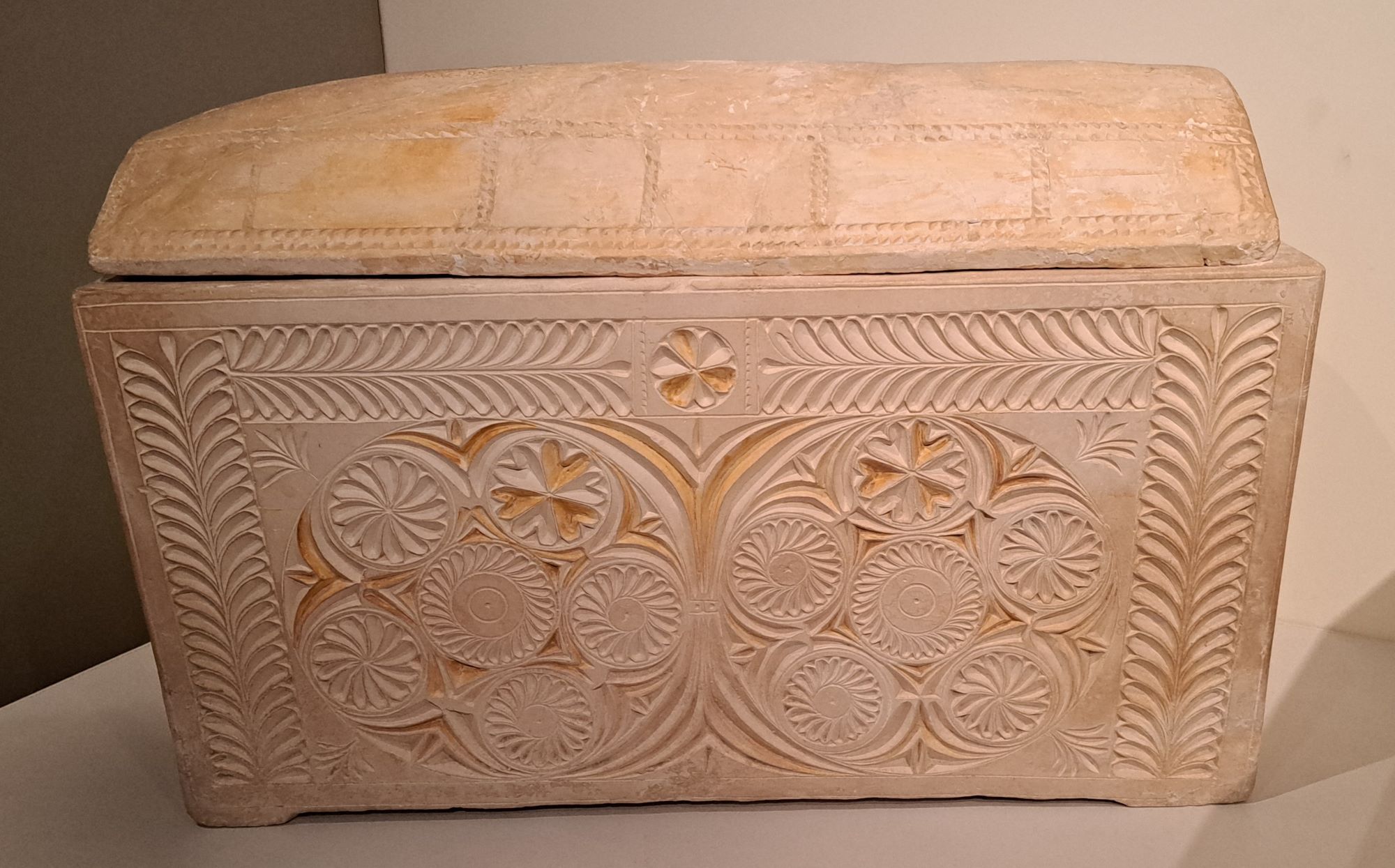
One of the ossuaries was more ornate than the rest and was decorated with rosettes and floral motifs. On the back and on one end inscriptions read, “Joseph son of Caiaphas.”7 Ronny Reich notes, “The name Joseph son of Caiaphas does not necessarily mean that Caiaphas was Joseph’s father. Caiaphas may designate simply a family nickname. Thus, the inscription may well be understood as Joseph of the family Caiaphas.”8

The bones from six different individuals were found inside this ornate ossuary: two infants, a child (2–5 years old), a teenage boy, an adult woman, and a male who was estimated to be about 60 years old.9 Many scholars believe this ossuary belonged to Joseph Caiaphas, the high priest who presided over the religious trial of Jesus. If so, the bones of the 60-year-old man the ossuary contained may be the earthly remains of Caiaphas.
A second, less ornate ossuary discovered in the tomb also bore an inscription with the name of Caiaphas. It contained the bones of five individuals, but none of them were an elderly male.10
Interestingly, two iron nails were discovered in the tomb: one was found in the niche where the “Caiaphas ossuary” was discovered, and the other was found inside an (unidentified) ossuary. While some have suggested these might be the nails used to crucify Christ, this is stretching the evidence. The excavation report notes: “It is possible that these nails were used to inscribe the ossuaries after the bones had been deposited in them…possibly even after some of the ossuaries were placed inside the kokhim [niches].”11
In 2011, the Israel Antiquities Authority (IAA) announced they authenticated another ossuary naming Caiaphas.12 This artifact was purported to have come from a burial cave in the area of the Valley of Elah. Because it was not discovered in a controlled archaeological context, the IAA assembled a team to determine its authenticity. Based on the patina and the inscription, the ossuary was deemed genuine. The inscription on the front reads, “Miriam Daughter of Yeshua Son of Caiaphas, Priests [of] Ma’aziah from Beth ’Imri.” According to Boaz Zissu and Yuval Goren, “The wording of the inscription indicates that Caiaphas — Yeshua’s father and Miriam’s grandfather — was a member of a prominent family of priests active in the first century CE…Another family member, the High Priest Joseph son of Caiaphas, became famous because of his involvement in the trial and crucifixion of Jesus.”13 It is possible that this is the ossuary for the granddaughter of Caiaphas, the High Priest.

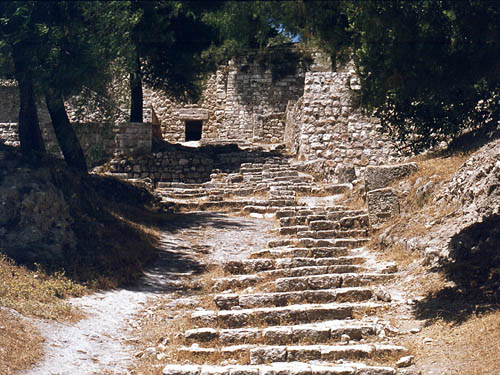
The location of the palace of Caiaphas, where Jesus was tried and Peter denied his Lord, has been a matter of speculation for many years. According to Catholic tradition, Caiaphas’ house is located at the Church of Petrus in Gallicantu (Latin meaning “Peter of the Cockcrow”) on the eastern slope of Mount Zion. An ancient set of steps runs from the Pool of Siloam past this church to the Upper City. Others believe the house of Caiaphas is located on the property of the Monastery of Saint Savior on Mount Zion. Both of these locations have evidence from at least the Byzantine era. Still others suggest it was located somewhere else on Mount Zion or in the vicinity of a group of priestly mansions in the Jewish Quarter of the Old City of Jerusalem.14 The reality is that we simply do not know precisely where Caiaphas lived.
Conclusion
The historicity of the High Priest Caiaphas, who oversaw the religious trial at which Jesus was sentenced to death, has been established through literary and archaeological evidence. To have held the role of High Priest as long as he did he must have been politically astute—especially considering his interactions with two Roman governors during his term. The ossuary of Caiaphas, one of the most ornate yet discovered in Israel, indicates his family’s wealth. One of the great ironies of Easter is that the tomb of the man who sentenced Jesus to death has been found, along with his ossuary, which likely once held his remains—while the tomb of Jesus is empty.
Cover Photo: BRBurton / Wikimedia Commons / Public Domain
Endnotes:
1 Josephus, Antiquities, 18.2.2. Online: https://penelope.uchicago.edu/josephus/ant-18.html (Accessed April 7, 2025).
2 Josephus, Antiquities, 18.4.3. Online: https://penelope.uchicago.edu/josephus/ant-18.html (Accessed April 7, 2025).
3 Josephus, Antiquities, 20.9.1 Online: https://penelope.uchicago.edu/josephus/ant-20.html (Accessed April 16, 2025).
4 Josephus, Antiquities, 18.4.3. Online: https://penelope.uchicago.edu/josephus/ant-18.html (Accessed April 7, 2025).
5 Lawrence Mykytiuk, “New Testament Figures Confirmed.” BAR Summer 2021. Online: https://library.biblicalarchaeology.org/article/new-testament-religious-figures-confirmed/ (Accessed April 7, 2025)
6 Zvi Greenhut, “The ‘Caiaphas’ Tomb in North Talpiyot, Jerusalem.” ’Atiqot / עתיקות 21 (1992), p. 68–70. Online: http://www.jstor.org/stable/23458058 (Accessed April 14, 2025).
7 Ronny Reich, “Caiaphas Name Inscribed on Bone Boxes.” BAR September/October 1992. Online: https://library.biblicalarchaeology.org/article/caiaphas-name-inscribed-on-bone-boxes/ (Accessed April 14, 2025).
8 Ibid.
9 Zvi Greenhut, “Burial Cave of the Caiaphas Family.” BAR September/October 1992. Online: https://library.biblicalarchaeology.org/article/burial-cave-of-the-caiaphas-family/ (Accessed April 14, 2025).
10 Ibid.
11 Zvi Greenhut, “The ‘Caiaphas’ Tomb in North Talpiyot, Jerusalem.” ’Atiqot / עתיקות 21 (1992), p. 63. Online: http://www.jstor.org/stable/23458058 (Accessed April 14, 2025).
12 “Ossuary Belonging to a Daughter of the Caiaphas Family of High Priests was Discovered (JUNE 2011).” Israel Antiquities Authority. Online: https://www.antiquities.org.il/article_eng.aspx?sec_id=25&subj_id=240&id=1849&module_id=#as (Accessed April 14, 2025).
13 Boaz Zissu and Yuval Goren. “The Ossuary of ‘Miriam Daughter of Yeshua Son of Caiaphas, Priests [of] Maʿaziah from Beth ʾImri.’” Israel Exploration Journal 61, no. 1 (2011), p. 79. http://www.jstor.org/stable/23214223 (Accessed April 14, 2025).
14 For a good summary of the various locations that purport to be the palace of Caiaphas, see “Where Did Caiaphas Interrogate Jesus?” by Danny the Digger: https://dannythedigger.com/tours/caiaphas/ (Accessed April 16, 2025).
 Bible Archaeology Report