

I am very pleased to welcome my next guest to the virtual chair for an interview on topics related to Jesus and biblical archaeology. My “Scholar’s Chair” series is similar to my “Discussions with the Diggers” series, except that I interview scholars whose work touches upon biblical archaeology, even though they may not be actual archaeologists. In the past I’ve been privileged to interview scholars such as Dr. Lawrence J. Mykytiuk, Dr. Charles Aling, Dr. Todd Bolen, Dr. Clyde Billington, and Dr. Mark Wilson. Today, I share an interview I conducted with Dr. Joan Taylor, who was gracious enough to answer my questions about her work.
I was first introduced to Dr. Taylor through an excellent article she wrote entitled, “Golgotha: A Reconsideration of the Evidence for the Sites of Jesus’ Crucifixion and Burial.” It was published by the Associates for Biblical Research in the Spring 2002 issue of Bible and Spade magazine. (This article is freely available online HERE).
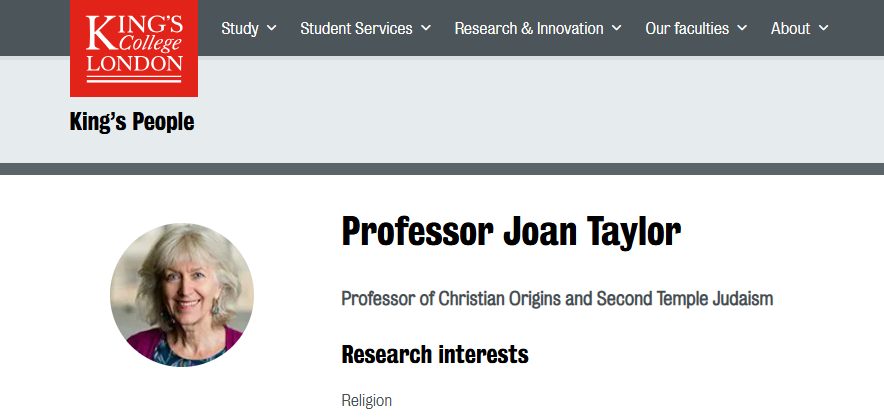
Dr. Taylor is a historian and Professor of Christian Origins and Second Temple Judaism at King’s College London, where she has taught since 2009. She obtained her PhD from New College, Edinburgh University, and began her career as a lecturer at the University of Waikato, New Zealand. In 1995, she won an Irene Levi-Sala Award in Israel’s archaeology for her book Christians and the Holy Places (a version of her PhD thesis). Dr. Taylor’s most recent book is called Boy Jesus, which we discuss below.
BIBLE ARCHAEOLOGY REPORT: Dr. Taylor, welcome! How did you become involved in history?

DR. JOAN TAYLOR: I wouldn’t say I was always interested in history. In fact, I remember thinking history at school was a bit boring because it was about wars and politics and the life of eminent men, few of whom I found interesting. I then finally got quite fascinated by ancient history because I was interested in Jesus.
BIBLE ARCHAEOLOGY REPORT: You have researched the life of Jesus for many years. What motivated your study in this field?
DR. JOAN TAYLOR: I read two books by Geza Vermes – one was Jesus the Jew and the other was the Dead Sea Scrolls in English. I was 22, and working in a craft shop in Covent Garden in London, when I was overseas from my homeland of New Zealand. In between serving customers I would read the books. I loved how the Scrolls seemed to illuminate the thought world of Jesus’ time. I then went to Israel-Palestine and travelled around, visiting a lot of places and museums, and taking notes wherever I went. I wanted to know more and then, when I returned to New Zealand, I enrolled in a degree that is equivalent to an American MTS. I studied history then. I audited courses in archaeology too as I knew I wanted to work with material culture and go on to do a PhD. I was then annual scholar at the British School of Archaeology in east Jerusalem, so I had hands on experience of digging and interpreting sites and learning practical things. I then went to Edinburgh University to do a PhD and explored the archaeology of Christian holy places, with a view to understanding when, how and why they came to be remembered, venerated and visited.
BIBLE ARCHAEOLOGY REPORT: You were involved in an archaeological excavation at the Church of the Nativity in Bethlehem several years ago. Tell us about that and what you learned from those excavations as it relates to the life of Jesus.

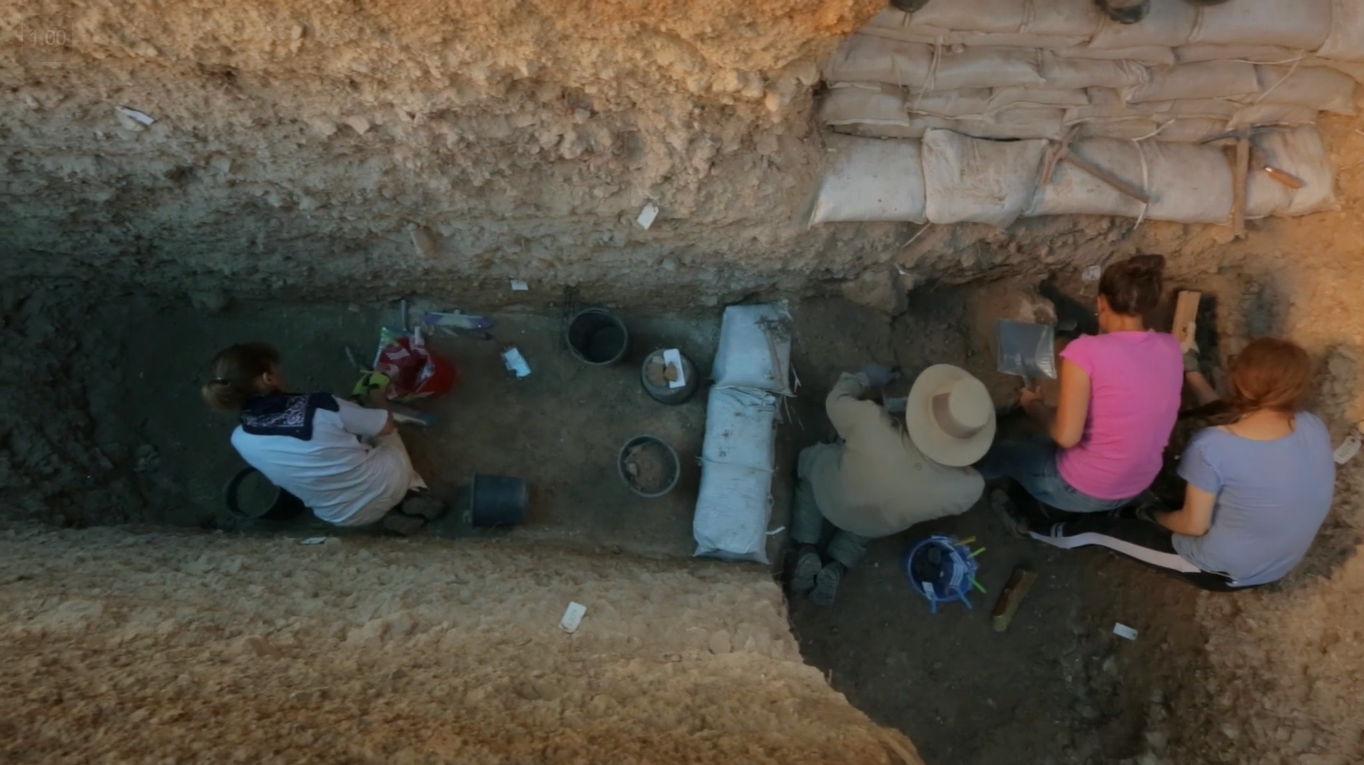
DR. JOAN TAYLOR: In lots of ways I found just being in Bethlehem itself was very important. Today it is under occupation and there are military restrictions on people living there. This made me think of the threats Jesus’ family were under living in Bethlehem when it was under the control of the Roman client king Herod, who was ever alert for any trouble. On the skyline of Bethlehem there is Herodion, which is where Herod’s fortress-palace and tomb were located – he was breathing down the neck of Bethlehem! The excavation I participated in was directed by Shimon Gibson, then working for the Jerusalem-based University of the Holy Land, after he was invited by the Armenian Orthodox Patriarch to investigate part of their property at the Church. I was assisting him in this, but it hasn’t been fully published or reported on yet so I don’t want to jump in too much. I can say perhaps that this area is a Crusader structure that would have once been a hospital, and we mainly worked in medieval and early modern levels, inside and in the garden, though there were quite a few Byzantine tesserae. However, Shimon’s team dug down below the floor level of the Crusader building (the Hall of St Jerome) and uncovered ceramic material that dated back to the first century CE. Part of the cave system in this area was exposed, but whether these represented rock-cut cellars of houses or burials remains unclear, and much is still unknown about the layout of Bethlehem at the time of Jesus.
BIBLE ARCHAEOLOGY REPORT: You’ve just published a book entitled Boy Jesus. How would you summarize this work?
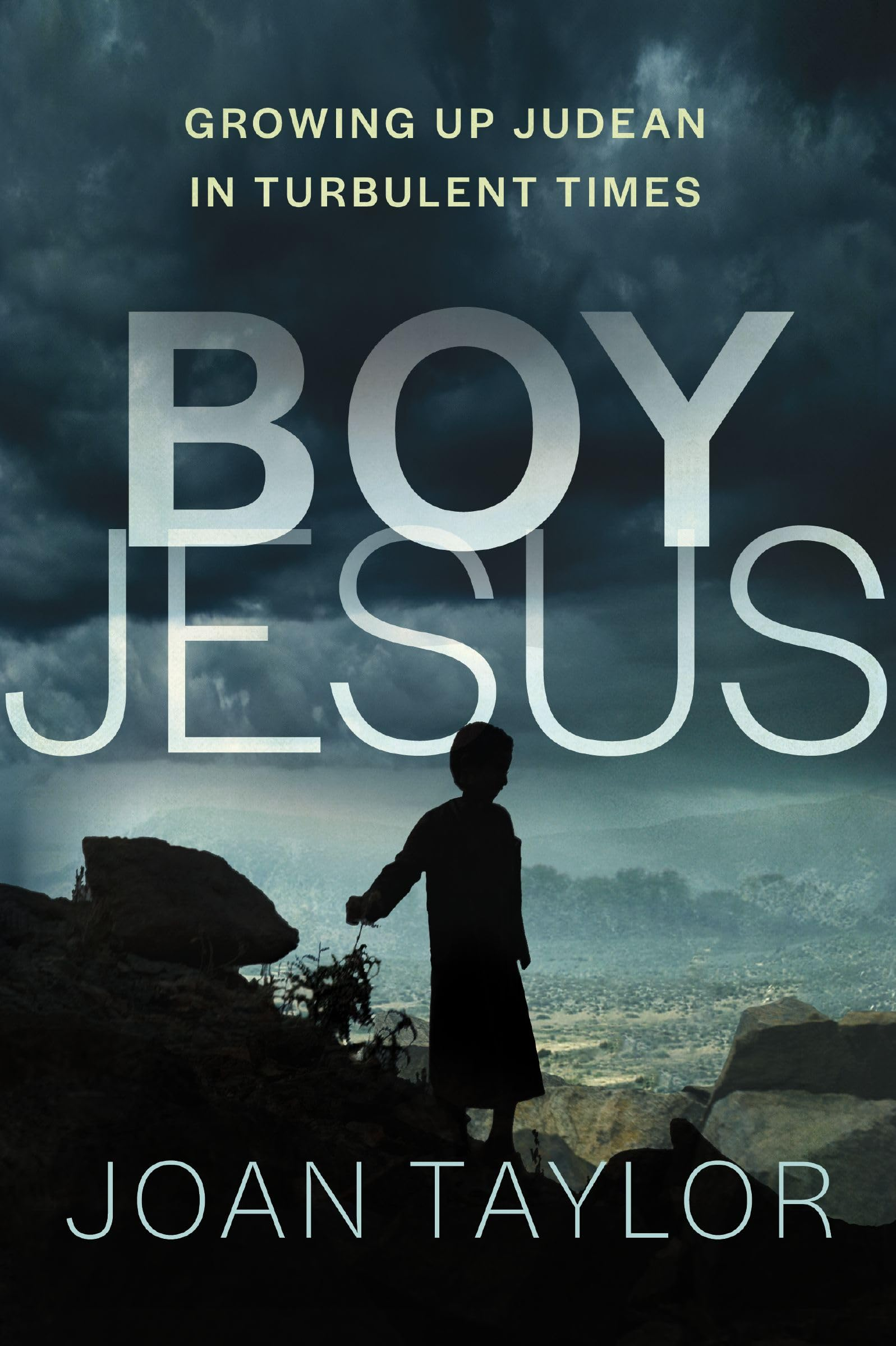
DR. JOAN TAYLOR: Boy Jesus situates Jesus within the context of the very turbulent times he was born into. For this context we largely have the writings of the Jewish historian Josephus, but there is also archaeology. I argue that there were reasons for Jesus’ Davidic family to be particularly afraid, given Herod had already desecrated the tomb of David in Jerusalem, and Herodion’s position shows the king’s worries about Bethlehem. I have a chapter in the book on Bethlehem which explores aspects of its history and archaeology. One of the most interesting things is that a beautiful aqueduct, ultimately destined for Jerusalem, was detoured to run right through the hill on which the town was built. I think that indicates that Bethlehem was sizeable and quite important, as it would have been very costly to bring water like this to the place, so it was not just a little village. Not much significant archaeology has taken place in Bethlehem, given the situation, so much is still unknown.
In the book I also argue that Bethlehem was where the clan of David continued to live. It is no wonder Jesus’ family fled from there in the years before Herod died, because Herod became extremely paranoid about any whiff of opposition and killed many people, in very brutal ways, including three of his own sons. According to Josephus, there was huge hope in Judaea following Herod’s death for liberation. People occupied the Temple and demanded independence, but they were massacred by Herod’s son Archelaus! This then led to a number of revolts. There was autonomy declared in Galilee against Rome. And that’s when Joseph led his family back from Egypt, to Galilee in fact, rather than to Bethlehem, as the Gospel of Matthew indicates. The freedom there did not last long: they would then have seen the Roman army come and quash all the resistance with incredible ferocity. We know people fled to different hiding places at different times – archaeology has shown these in the Judaean desert, but also in Galilee. Jesus would have grown up with stories of violence and fear. Another revolt broke out at the time of the census in 6 CE, when Jesus would have been about 12 years old. My study mainly tries to look at the context, and in doing this I look to archaeological evidence that enables us to get a better picture of what actually happened.
BIBLE ARCHAEOLOGY REPORT: Do you have any other fields of research that you’re actively pursuing?
DR. JOAN TAYLOR: I am working on archives of a 1960s British excavation of a cave of refuge in the Judaean wilderness. I am working on the Copper Scroll, and continue to work on aspects of the material culture of the Dead Sea Scrolls. I have a lot of different projects I work on concurrently. I am working on a book on Mary Magdalene. I want to go back to study more about Jesus’ life though. This was what drew me into the world of the past and that is my central interest.
I would like to thank Dr. Taylor for taking the time to answer my questions. You can order a copy of her book Boy Jesus at Amazon, or better yet, support your local Christian bookstore and order it through them.
Here are some other articles by Dr. Joan Taylor from her Academia.edu page:
- Secrets of the Copper Scroll
- Dressing Judeans and Christians in Antiquity
- The Meaning of “Magdalene”: A Review of Literary Evidence
Disclaimer: I allow each scholar to answer in his or her own words and may or may not agree with his or her interpretation.
Cover Photo: Taylorjoan / Wikimedia Commons / CC BY-SA 4.0
 Bible Archaeology Report