

The top three reports in biblical archaeology in October 2025 featured a tomb in Egypt, a necropolis in Turkey, and an inscription in Israel.
3. Tomb of Amenhotep III Reopens to the Public after 20-Year Renovation

The tomb of Pharaoh Amenhotep III has reopened to the public following a 20-year restoration project led by a Japanese archaeological team. Located in the Valley of the Kings, the tomb features an entrance passage approximately 118 feet (36 m) long and 45 feet (14 m) deep, leading underground. The walls of the tomb are adorned with vivid paintings depicting Amenhotep III with various Egyptian deities, along with hieroglyphic inscriptions containing spells from the Book of the Dead. The main burial chamber was originally intended for Amenhotep III, with two other chambers for two of his queens, Tiye and Sitamun. The pharaoh’s mummy, however, was later relocated by ancient priests to the tomb of his grandfather, Amenhotep II, and is now on display at the National Museum of Egyptian Civilization. Many scholars identify Amenhotep II as the pharaoh of the Exodus, with Amenhotep III possibly ruling during the period of the Israelite conquest.
Source: https://apnews.com/article/egypt-antiquities-lucxor-vally-of-kings-2862b6897a704dfc9c5d1be2782a91b1
2. Ancient Necropolis Unearthed at Colossae
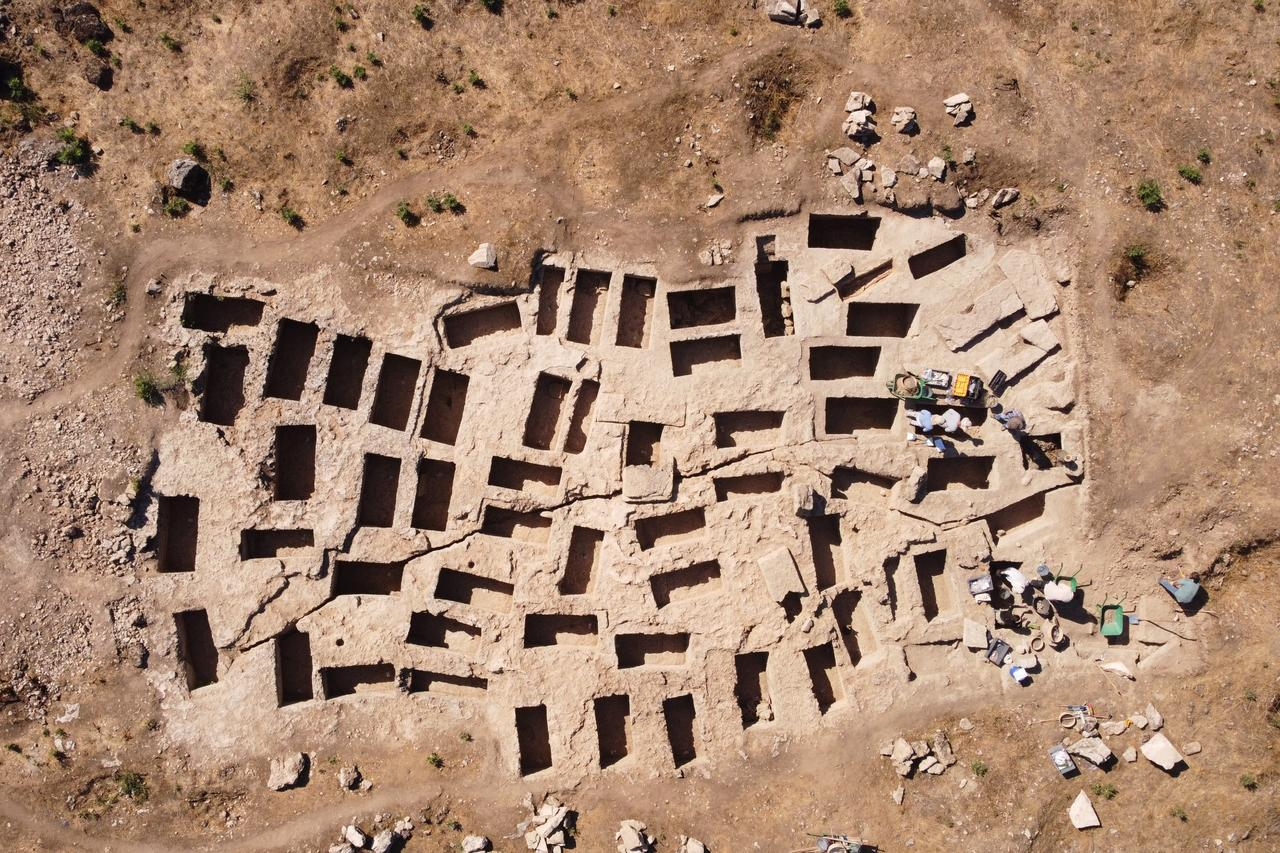
The first systematic excavations at Colossae began in 2025, and the team from Pamukkale University leading the dig has announced the discovery of a necropolis at the site. Sixty intact, rock-cut “bathtub” tombs were unearthed, each approximately 5 feet 11 inches (1.8 m) long and 4 feet 11 inches (1.5 m) deep. Inside the tombs, archaeologists discovered clay vessels, glass bottles, oil lamps, coins, and personal belongings, such as sandals. Preliminary evidence suggests the burials date to around 2,200 years ago. This discovery offers new insights into the burial customs and spiritual beliefs of the ancient Colossians. The site is historically significant for biblical studies because the apostle Paul wrote a letter to the church at Colossae, which was likely founded by Epaphras (Col. 1:7; 4:12).
1. Fragment of Assyrian Cuneiform Inscription Discovered in Jerusalem

The Israel Antiquities Authority has announced the discovery in Jerusalem of a pottery sherd inscribed in Akkadian cuneiform, believed to be a request from the king of Assyria to the king of Judah for tribute. This is the first Assyrian inscription from the First Temple period discovered in Jerusalem. The sherd is about 1 inch (2.5 cm) in size and was discovered in material that had been swept into a Second Temple-era drainage channel. It likely originated from an earlier structure above, which dates to the First Temple period. The pottery sherd is approximately 2,700 years old and dates to the reign of Hezekiah, Manasseh, or Josiah, when Judah was a vassal state of Assyria. Petrographic analysis reveals that the sherd is composed of clay from the Tigris River basin in Mesopotamia, rather than local clay from the southern Levant. A preliminary translation suggests that the inscription concerns a delay in tribute due to the king of Assyria. In a video (see link below) from the City of David, an expert summarizes the inscription as follows: “And here we actually have a direct letter signed with the seal of the king of Assyria addressed to the king of Judah saying to him, ‘Dear king of Judah, send the tribute quickly by the first of Av and if not the consequences will be severe.’” One possible biblical connection to this artifact appears in 2 Kings 18:7, which records that Hezekiah “rebelled against the king of Assyria and did not serve him.”
Source: https://www.iaa.org.il/en/page/news-index (See Rare Evidence for Royal Assyrian Court Communication to the King of Judah for the First Time in Jerusalem: An Assyrian Inscription from the First Temple Period Was Discovered, [Oct. 22, 2025])
City of David video: https://www.youtube.com/watch?v=FoyFwyAlwMk
Stay Up-To-Date
Get the latest BREAKING NEWS in biblical archaeology each week here: https://biblearchaeology.org/current-events-list

 Bible Archaeology Report