
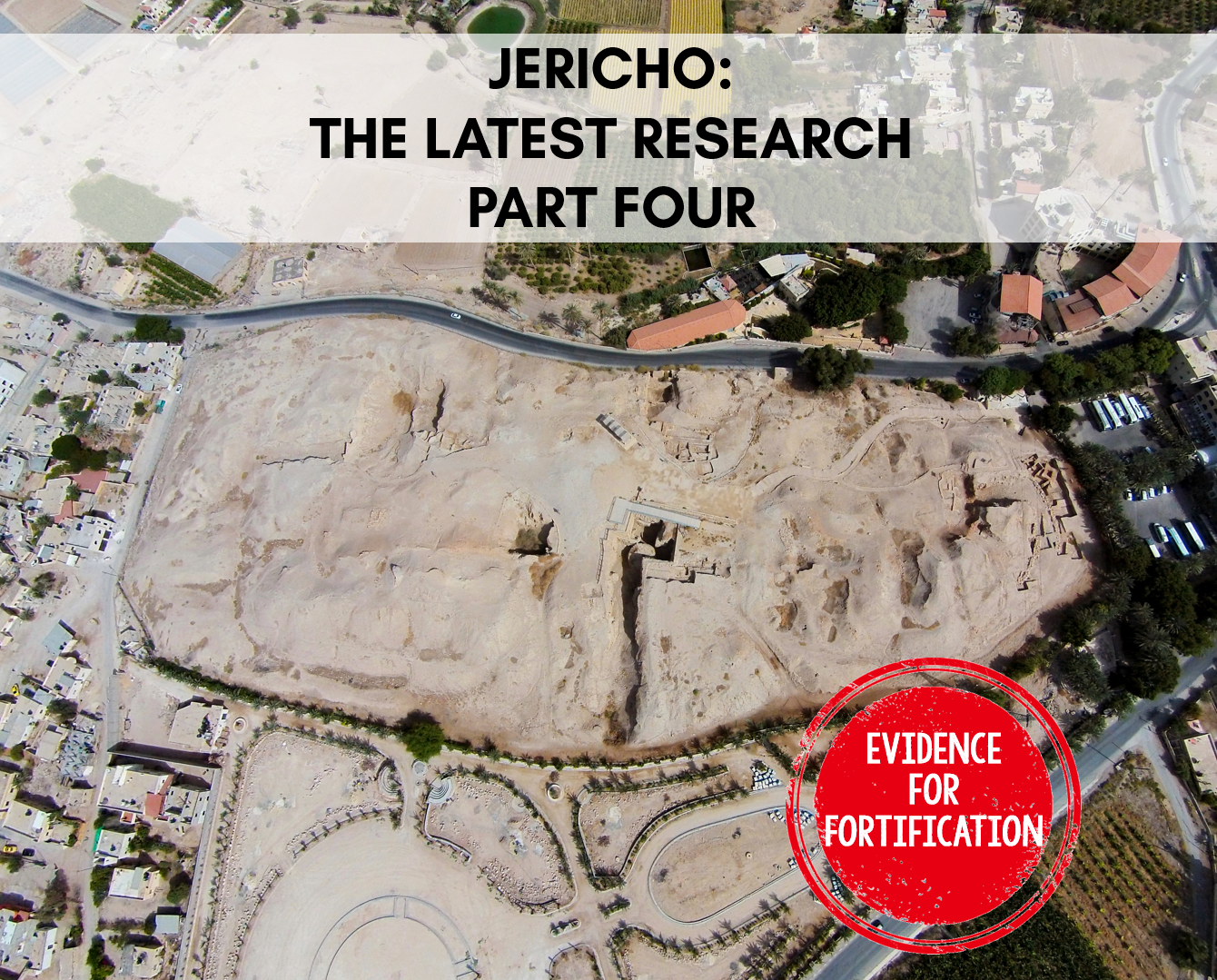
This is part four of a five-part series on the latest archaeological evidence from Jericho indicating that City V was occupied, fortified, and destroyed in the Late Bronze Age. This was the subject of my Master’s thesis and was recently published as a book entitled Joshua’s Jericho: The Latest Archaeological Evidence for the Conquest, from Trowel Press. It is available from Amazon here: https://a.co/d/iCUWXQW
In Part One, I set the stage by reviewing the various excavations at Jericho and introducing my thesis that it was Jericho City V, not Jericho City IV, that Joshua conquered.
In Part Two, I outlined my chronological window approach to dating the conquest. I maintain that the conquest occurred sometime between 1426 and 1346 BC.
In Part Three, I presented some of the evidence for the occupation of Jericho City V within this conquest window.
In Part Four, I will be describing the fortifications of Jericho City V, as revealed by the latest archaeological data from Lorenzo Nigro’s team.
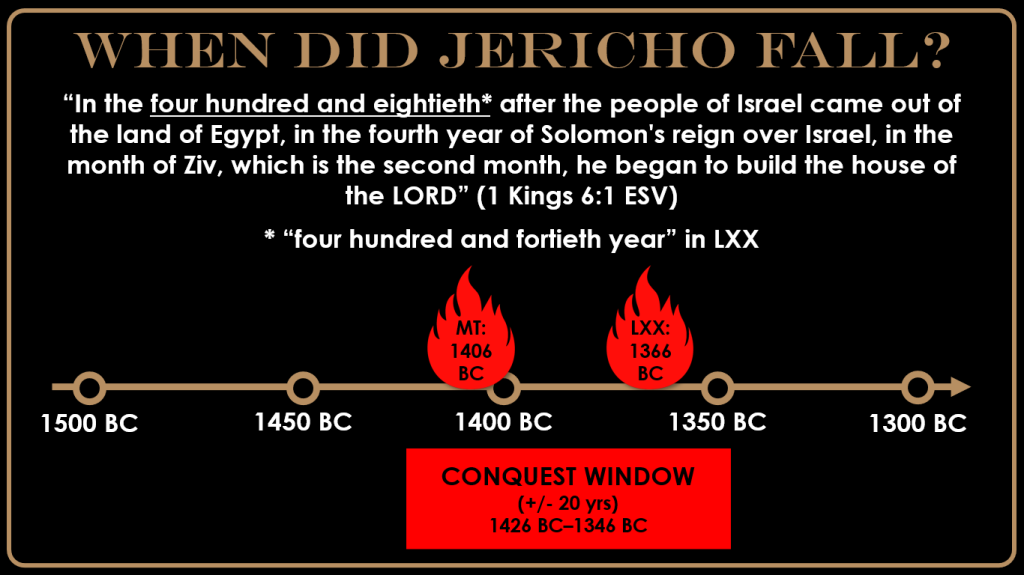
Central to the biblical account of the fall of Jericho was that the city actually had walls that could come tumbling down (ie, Josh. 6:5, 20). But was Jericho City V fortified in the Late Bronze Age when the city fell?
Garstang believed the city was fortified, but he misdated the walls he thought belonged to the Late Bronze Age; they were in fact from the Early Bronze Age.1
Kenyon thought the fallen city walls of City IV were from the Middle Bronze Age and that the LB City walls, which she believed had been built atop the MB Cyclopean wall, had disappeared over time due to erosion.2
Bryant Wood believed Kenyon had misdated City V and that the walls of from this stratum were the LB walls that fell before Joshua’s army.3
Bienkowski has argued that LB Jericho was unfortified, citing the lack of physical evidence and the widely held belief that cities in the Late Bronze Age were unfortified.4
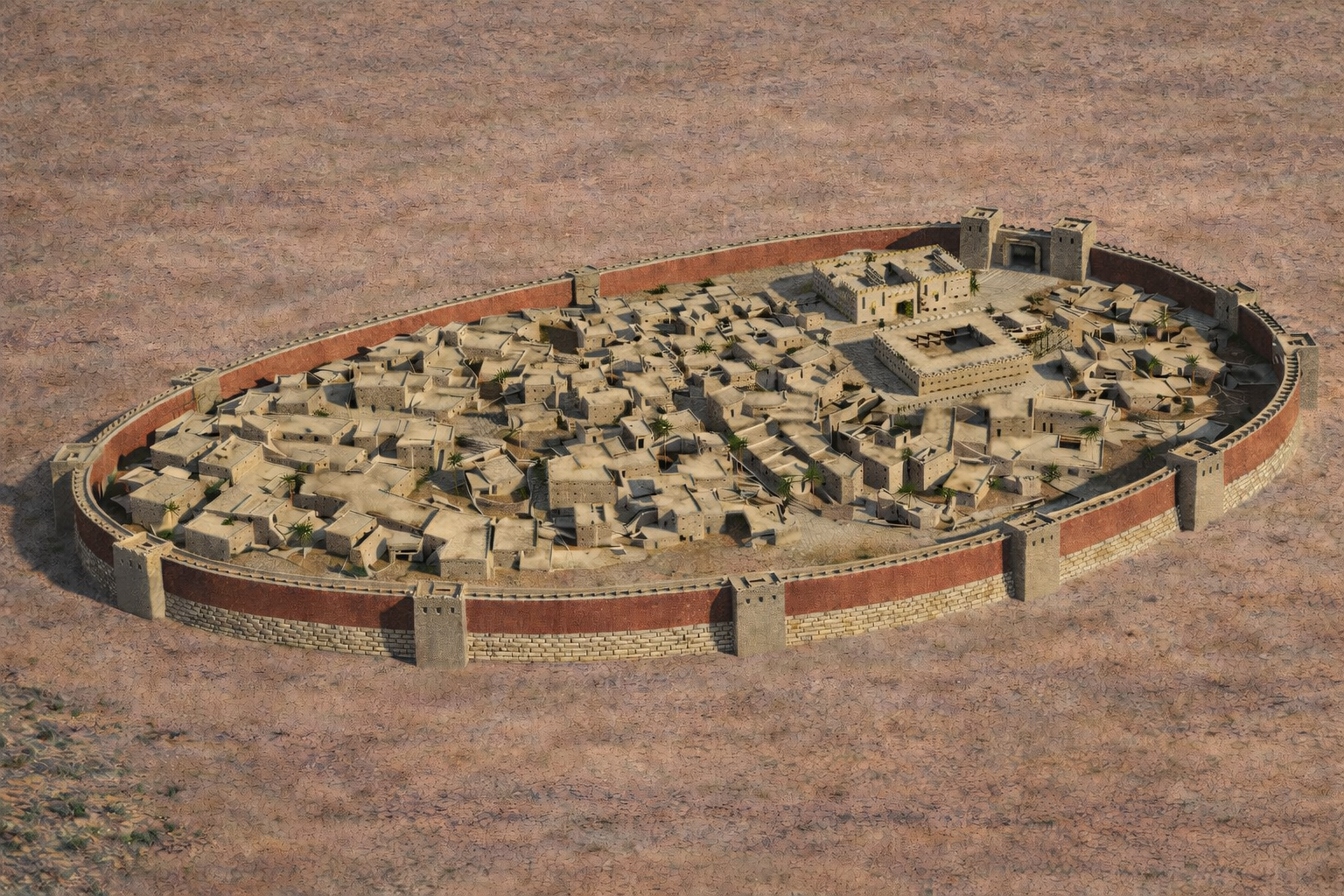
Lorenzo Nigro’s team from Sapienza University is to be commended for making sense of the confusing and contradictory information regarding the fortifications of the Late Bronze Age city of Jericho. Over 20 seasons, they harmonized the findings of the previous excavations with their own and clarified the different phases of the fortifications.
In the MB III period (1650–1550 BC), the residents of Jericho City IV constructed a stone revetment wall, today called the Cyclopean Wall, as part of their defenses. A rubble rampart ran from the base of the tell, up over the Cyclopean wall, which was buried and unseen,5 continuing up the tell, where the MB III mudbrick wall stood.6 After City IV was destroyed, sometime between 1550 and 1520 BC7, the site lay abandoned for close to a century.
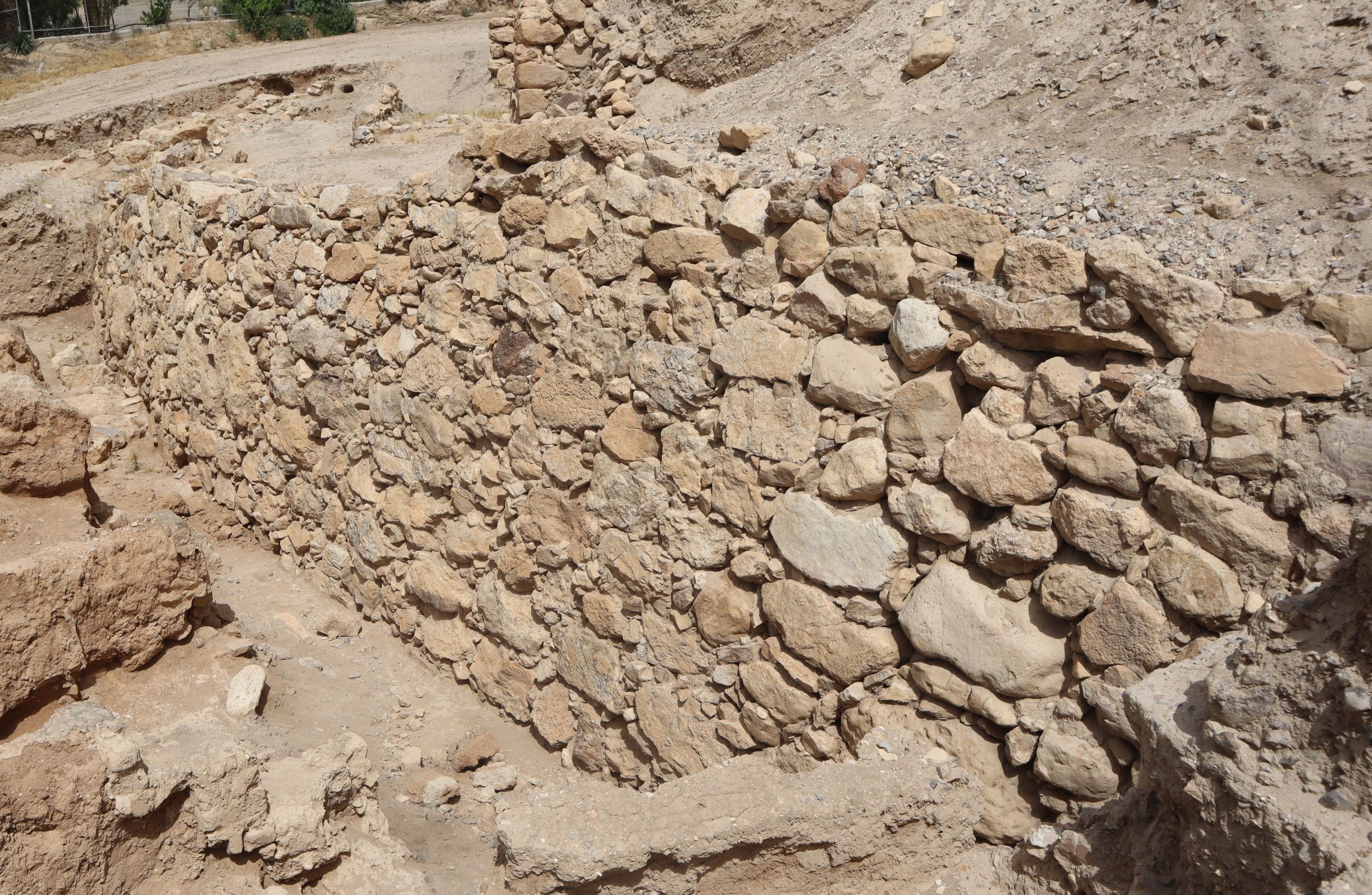
Sometime in the middle of the 15th century BC (ca. 1450 BC),8 the site was resettled, and the residents reused the MB III Cyclopean wall for the fortifications of City V. Nigro’s excavations have revealed that the citizens of City V added a new mudbrick wall on top of the surviving crest of the Cyclopean Wall.9 He writes:
“The LB II wall was 2m wide and it was erected moving back 20–30 cm from the front edge of the Cyclopean Wall. The whole extension of the fortification wall should be of ca. 850 m, as suggested by the analysis of the field reports published by the Austro-German and the two British Expeditions; the occupied area of the LB II city, thus, could be around 4.5 hectares.” 10
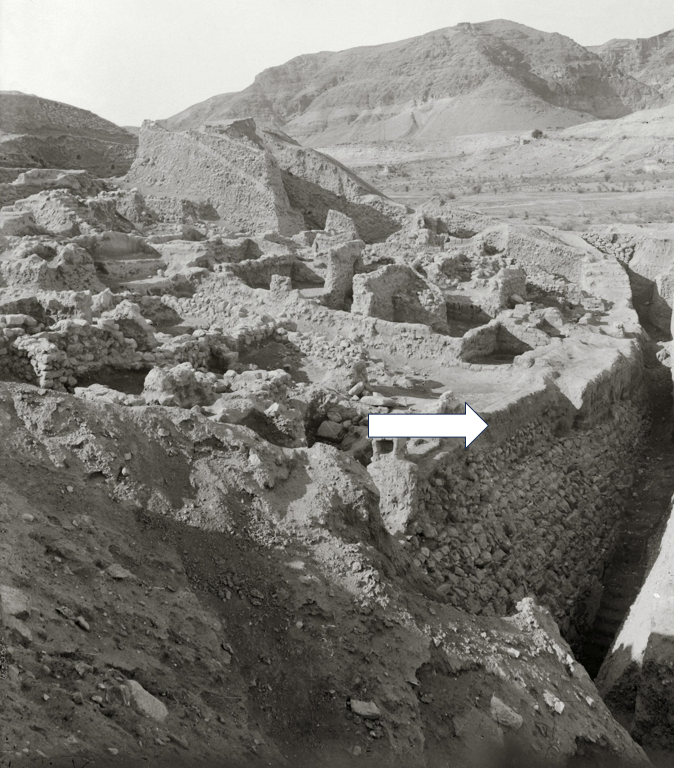
Nigro’s team exposed a portion of the Cyclopean wall at the southern end of the tell. They found the remains of a few courses of LB mudbricks still atop the stone wall.11 Nigro has gone back through the excavation reports of previous teams and discovered that they also found the remains of a few courses of LB mudbrick walls atop the Cyclopean Wall, even if they did not recognize them as such. In one publication, he republished a photo from Garstang’s excavations in the 1930’s along with an arrow pointing to this along with the caption, “LB I–II mudbrick wall on top of Cyclopean Wall.”12 He also highlighted the same findings in Sellin and Watzinger and Kenyon’s reports.13
Thus, according to the latest archaeological research, Jericho City V was fortified in the LB I-II horizon, within the chronological window for the fall of the city, just as the Bible indicates. Did the walls of Jericho actually collapse as described in Joshua 6? Stay tuned for the final part in this series next month.
Cover Photo: Bill Schlegel / BiblePlaces.com / Used with Permission
Endnotes
1 Kathleen M. Kenyon, Digging Up Jericho. (New York: Frederick A. Praeger, 1957), 181.
2 Kenyon 1957, 262.
3 Bryant G. Wood, “Did the Israelites Conquer Jericho? A New Look at the Archaeological Evidence.” Biblical Archaeology Review 16.2 (March/April 1990), 55–56.
4 Piotr Bienkowski, Jericho in the Late Bronze Age. (Oxford: Aris & Phillips, 1986), 124.
5 Chiara Fiaccavento and Elisabetta Gallo, “Protecting the People: The Fortification Systems of Middle Bronze Age Jericho in Light of the Italian-Palestinian Excavations,” In Digging Up Jericho: Past, Present and Future, eds. Rachael Thyrza Sparks, Bill Finlayson, Bart Wagemakers and Josef Mario Briffa, (Oxford: Archaeopress Publishing Ltd., 2020), 241.
6 Lorenzo Nigro, “The Italian-Palestinian Expedition to Tell es-Sultan, Ancient Jericho (1997–2015): Archaeology and Valorisation of Material and Immaterial Heritage,” In Digging Up Jericho: Past, Present and Future, eds. Rachael Thyrza Sparks, Bill Finlayson, Bart Wagemakers and Josef Mario Briffa, (Oxford: Archaeopress Publishing Ltd., 2020), 201.
7 Lorenzo Nigro, “Tell es-Sultan/Jericho in the Late Bronze Age,” in Durch di Zeiten: Through the Ages, eds. Katja Soennecken, Patrick Leiverkus, Jennifer Zimni and Katharina Schmidt. (Munich: Gütersloher Verlagshaus, 2023), 600.
8 Nigro 2023, 600.
9 Lorenzo Nigro, “The Italian-Palestinian Expedition to Tell es-Sultan, Ancient Jericho (1997–2015): Archaeology and Valorisation of Material and Immaterial Heritage,” In Digging Up Jericho: Past, Present and Future, eds. Rachael Thyrza Sparks, Bill Finlayson, Bart Wagemakers and Josef Mario Briffa, (Oxford: Archaeopress Publishing Ltd., 2020), 202.
10 Lorenzo Nigro, “Tell es-Sultan/Jericho in the Late Bronze Age,” in Durch di Zeiten: Through the Ages, eds. Katja Soennecken, Patrick Leiverkus, Jennifer Zimni and Katharina Schmidt. (Munich: Gütersloher Verlagshaus, 2023), 605.
11 Nigro, Lorenzo and Jehad Yasine. “Interim Report on the Excavations at Tell es-Sultan, Ancient Jericho (2019-2023): The Bronze and Iron Age Cities.” Vicino Oriente XXIX, 2024, 56.
12 Lorenzo Nigro, “The Italian-Palestinian Expedition to Tell es-Sultan, Ancient Jericho (1997–2015): Archaeology and Valorisation of Material and Immaterial Heritage,” In Digging Up Jericho: Past, Present and Future, eds. Rachael Thyrza Sparks, Bill Finlayson, Bart Wagemakers and Josef Mario Briffa, (Oxford: Archaeopress Publishing Ltd., 2020), 202.
13 Lorenzo Nigro, “Tell es-Sultan/Jericho in the Late Bronze Age,” in Durch di Zeiten: Through the Ages, eds. Katja Soennecken, Patrick Leiverkus, Jennifer Zimni and Katharina Schmidt. (Munich: Gütersloher Verlagshaus, 2023), 601–605.
 Bible Archaeology Report
Thank you, Bryan. Long-held assumptions can indeed distort our own views. So, there is much insight to be gained here by your re-examination of the Jericho excavation data. However, it still seems (to me, at least) that the assignment of Joshua’s destruction of Jericho to City V is being driven more by chronological assumptions than by archaeological necessity. I always recommend the late Christine Tetley’s proposals since I think she was generally on the right track in both of her books. Her basic proposals should be considered – that is, her revised (earlier) dating of the divided kingdom (that she placed in 981 BC, but I locate in 986 BC), and her key anchor dates from Egyptian chronology (which shift the 18th Dynasty approximately 100 years earlier than conventional dating). When the Septuagint OG and non-Kaige textual evidence is taken seriously, the biblical Exodus can be placed in 1547 BC (yet still under Amenhotep II). Within the framework of a ~1507 BC conquest, the destruction of Jericho City IV aligns naturally with the biblical account. This eliminates the need to speculate regarding Late Bronze fortifications atop the Cyclopean Wall associated with City V.