
The Shroud of Turin is perhaps the most famous artifact associated with Jesus of Nazareth. Some say it is a clever medieval forgery, while others believe it to be the actual burial shroud of Jesus Christ, who was crucified by Pontius Pilate early in the first century. Much of what the average person knows about the Shroud comes from research done in the 1980’s or from Wikipedia.1 In recent years, a number of scientific studies related to various aspects of the artifact were published. In this article, I will weigh the evidence for and against the authenticity of the Shroud of Turin. Since the Shroud is among the most widely studied artifacts, I cannot possibly summarize all the findings since the first major scientific studies were conducted by the Shroud of Turin Research Project in 1978. Therefore, I focus strategically on the most recent and compelling studies, limiting my analysis to academic articles rather than popular books or blogs. Finally, the question of authenticity should be considered in two parts: first, whether it is an authentic burial shroud, and second, whether it is the burial shroud of Jesus. These are separate but related questions.
The Artifact
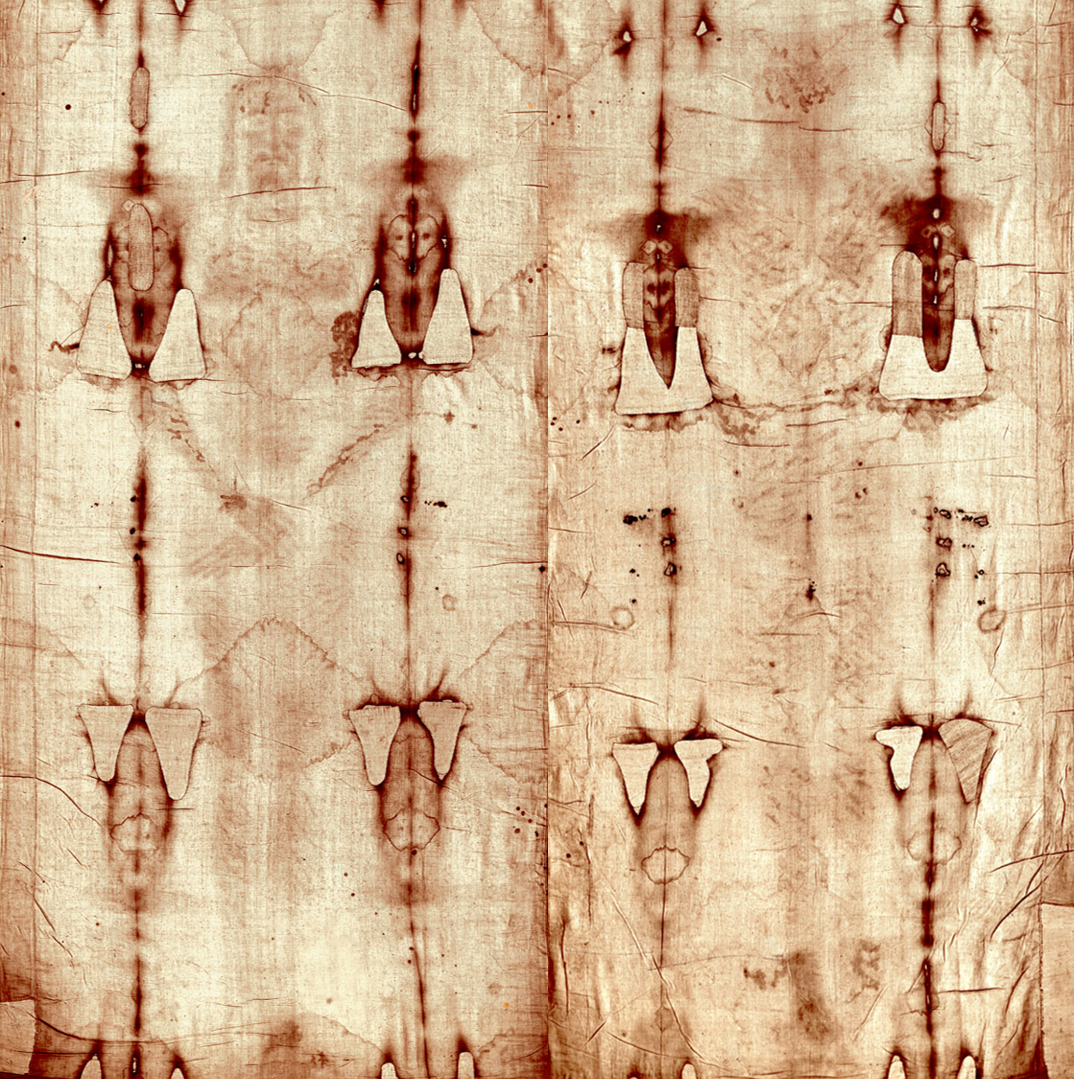
The Shroud of Turin appears to be the burial cloth of a crucified man. It is made of woven linen, approximately 14.5 feet (4.4 m) long and 3.7 feet (1.1 m) wide, and bears a faint, negative image of the front and back of a man who has wounds consistent with crucifixion. While some have suggested it is a clever medieval forgery, no convincing explanation for its creation has been offered. There is no paint or pigment on the Shroud, but there are trace elements of blood (see below). It is currently housed at the Cathedral of Saint John the Baptist in Turin, Italy.
The Timeline of the Earliest References to the Shroud
The earliest definitive historical references to the Shroud of Turin come from the Middle Ages.
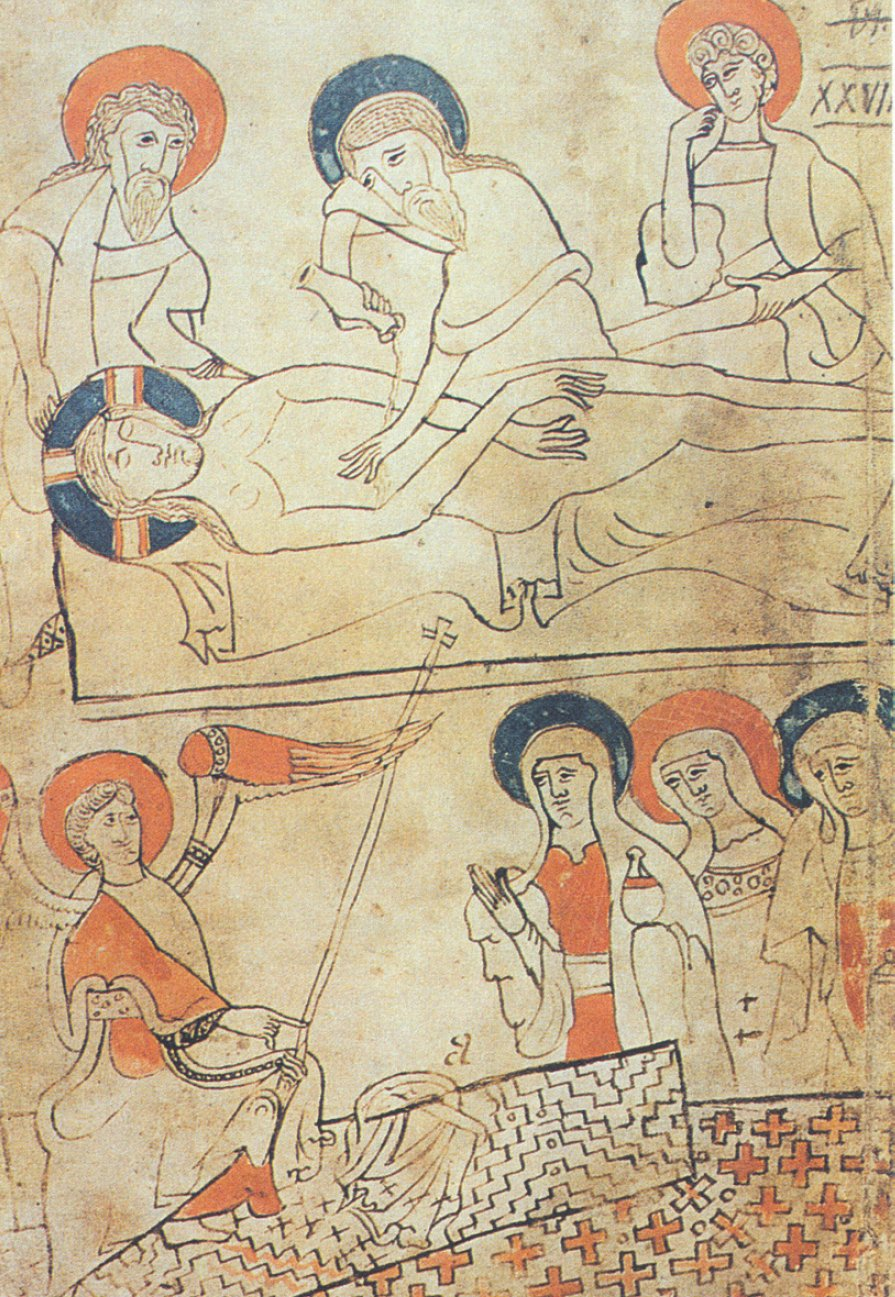
1195 – The Hungarian Prayer Codex contains an image of Jesus being buried, along with an image of the resurrection, in which an angel points to an empty burial shroud. Both images contain numerous similarities to the Shroud of Turin, including the pose of Jesus’ body, the position of his arms and hands, a herringbone pattern on the shroud, and four L-shaped dots that perfectly match the poker holes on the Shroud of Turin. This likely indicates there is a direct or indirect link between the Prayer Codex image and the Shroud of Turin.2
1353 – Records show the Shroud of Turin was in the possession of Geoffrey de Charny, a French knight, who built a church at Lirey, France. The shroud begins to be exhibited in this church.3
1390 – Bishop d’Arcis of Troyes writes a report for Avignon Pope Clement VII, expressing concern about “a certain cloth cunningly painted…. falsely declaring that and pretending that this was the actual sudarium in which our Savior Jesus Christ was enfolded in the tomb, and upon which the whole likeness of the Savior had remained thus imprinted together with the wounds which he bore.”4
From these earliest historical references onward, scholars can trace the provenance of the Shroud with relative certainty. A complete record of these historical references are found on the website of the Shroud of Turin Education and Research Association.5
I should note that some suggest that the face of the man on the Shroud of Turin resembles the face of Jesus in early Christian artwork from the seventh to tenth centuries, or that it is to be associated with a relic known as the Edessa image from the same timeframe.6 However, since these are theories, and not definitive historical references, I do not consider them in my evaluation of the general authenticity of the Shroud (see my comments in the final section).
The Evidence Against its Authenticity
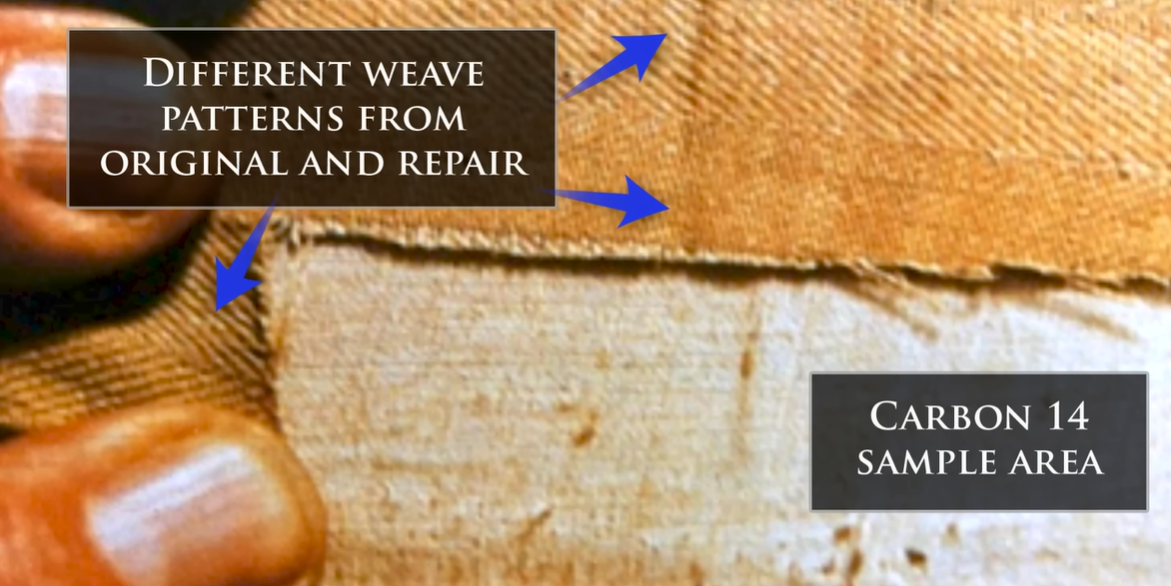
The most widely cited argument against the authenticity of the Shroud is the result of the 1988 radiocarbon dating. Three pieces of the Shroud were sent to labs in Arizona, Oxford, and Zurich for testing. The results yielded a calibrated calendar range with 95% confidence for the linen of the Shroud to AD 1260–1390 (rounded down/up to the nearest 10 yr).7 For many, the radiocarbon dates from these tests all but settle the debate: for them, the Shroud of Turin is a medieval forgery. However, critics point out that the material used in the carbon testing was taken from an area of the Shroud that had been repaired in the Middle Ages, and there were foreign cotton fibers in the samples.8 Indeed, a photo of the cut area distinctly shows it had a different weave than the rest of the cloth.
More recently, two separate studies questioned the Shroud’s authenticity. In a 2025 article in the journal Archaeometry, Cícero Moraes used computer simulations and digital 3-D modelling to analyze the image on the Shoud. Moraes concluded that a Shroud draped over a human body would lead to a distorted image, rather than the one on the Shroud. He suggested that the image was “more consistent with an artistic low-relief representation than with the direct imprint of a real human body, supporting hypotheses of its origin as a medieval work of art.”9 This study, while interesting, still fails to explain how the image was created if indeed it is a work of art. There is no evidence of paint; the image coloring is only on the top fibers of the Shroud, rather than having seeped into the cloth if paint or other coloring was used. Moreover, scientific studies have demonstrated that the image was not the result of an applied material.10
Another article published in 2025 in the Journal of Medieval History presented a newly discovered text, dating between 1355 and 1382, written by Nicole Oresme, in which he declares the Shroud to be a fraud.11 This is an interesting development, but it does not really add any new data to the consideration of the Shroud’s authenticity, as we already knew that some people from the Middle Ages considered the artifact to be a clever artistic hoax (ie. see Bishop d’Arcis’ objections above).
Some Christians object that the Shroud cannot be the burial cloth of Jesus because it does not match the description of the burial practices described in the New Testament. The gospels use several words to describe the different parts of burial assemblages.
- John 11:44 – The man who had died came out, his hands and feet bound with linen strips [Gk keiria], and his face wrapped with a cloth [Gk. sudarion]
- Matt 27:59 – And Joseph took the body and wrapped it in a clean linen shroud [Gk. sindon]
- John 20:6-7 – Then Simon Peter came, following him, and went into the tomb. He saw the linen cloths lying there, and the face cloth [Gk. sudarion], which had been on Jesus’ head, not lying with the linen cloths [Gk. othonion] but folded up in a place by itself.
This can be confusing to the average person, so I reached out to archaeologist Dr. Scott Stripling for an explanation of how this all fits with what we know about the Shroud of Turin. Here was his response: “Othonia refers in plural to the assemblage of burial garments. It was comprised of the sindon (Shroud), sudarion (face covering) and keiria (binding strips). The sudario went over the sindon and tied the jaw closed. Note that the keiria in Lazarus’s case were loose and allowed him to walk.” So there is nothing in the biblical description of burial cloths that would disqualify the Shroud’s authenticity.
The Evidence For its Authenticity
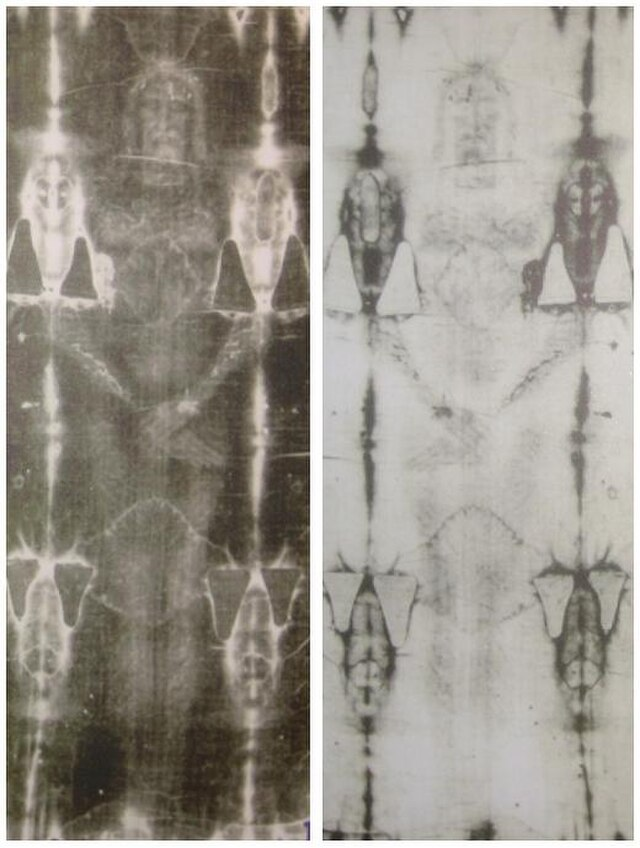
Other studies, including some recently published in scientific journals, support the thesis that the artifact is an ancient burial shroud.
In a study in the journal, Thermochimica Acta, researchers tested fibers from the Shroud and noted the lack of vanillin in the lignin, which are detectible on linen from the Middle Ages. The author concluded, “The fact that vanillin can not be detected in the lignin on shroud fibers, Dead Sea scrolls linen, and other very old linens indicates that the shroud is quite old. A determination of the kinetics of vanillin loss suggests that the shroud is between 1300- and 3000-years old. Even allowing for errors in the measurements and assumptions about storage conditions, the cloth is unlikely to be as young as 840 years.”12
In 2022, a new study from Italy’s Institute of Crystallography of the National Research Council concluded that the Shroud dates to the first century. The scholars used a method called “Wide-Angle X-ray Scattering,” which measures the structural degradation due to natural aging of the cellulose that makes up the fibers of the linen threads.13
A 2024 study in the journal Archive of Hematology Case Reports and Reviews demonstrated that there are particles of blood on the Shroud that contain nanoparticles of fibrin and creatinine, typical of a tortured person.14
In 2024, Tristian Casabianca authored an article entitled “Systematic Evaluation of Recent Research on the Shroud of Turin,” which used Bayesian modeling and argument mapping to review decades of data, concluding that a belief in favor of the authenticity of the Shroud is warranted.15
Another study showed that residue from a rare type of limestone called aragonite, which is common to Jerusalem, was discovered near the foot area of the image.16
The Verdict
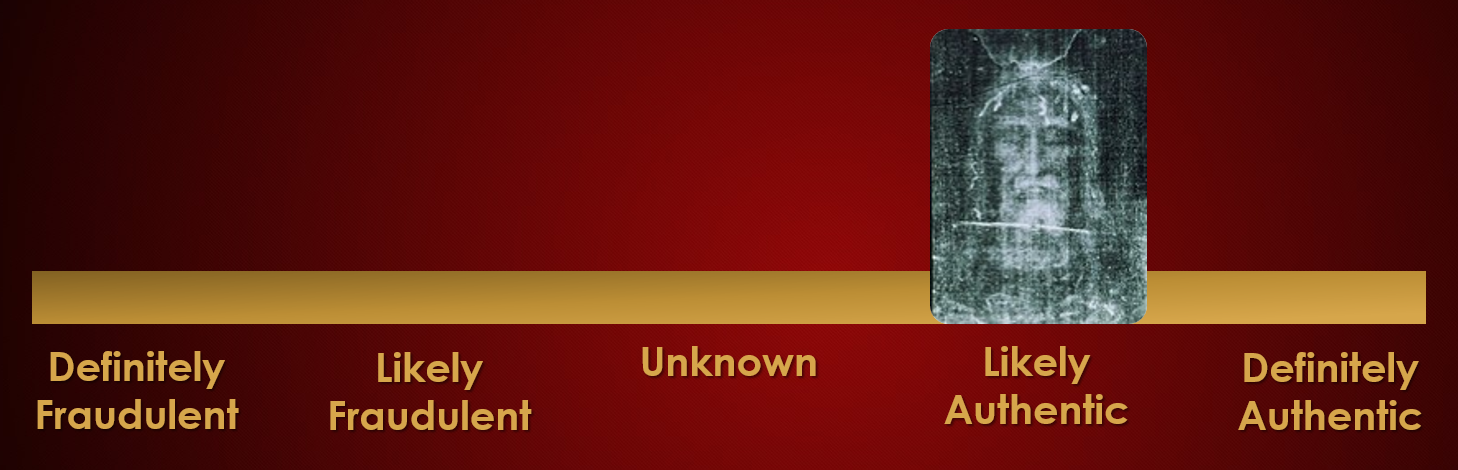
Overall, I find the scientific evidence in favor of the authenticity of the Shroud of Turin to be more compelling than the evidence presented that it is a Medieval forgery. As such, I conclude that the Shroud of Turin is likely the authentic burial shroud of a man who was crucified in the first century near Jerusalem.
However, I am not prepared to go so far as to suggest it is the actual burial shroud of Jesus of Nazareth. While the image does seem to display evidence of wounds that are consistent with the gospel accounts of the crucifixion of Jesus, there may be other explanations for this, including the fact that this may be because of similar crucifixion methods in Judea at that time. Jesus was one of thousands of people crucified by the Romans in the first century in Judea.
The main issue for me is the provenance: the first definitive historical reference to the Shroud comes from ca. AD 1195. Artwork from before the 12th century may be based upon the image on the Shroud, but this now builds a theory (it’s the burial shroud of Jesus) upon a theory (the Shroud is the basis of early Christian artwork), which loses its effectiveness in my opinion. Furthermore, some suggest that the fact that we do not know how the image was humanly made, it must have a supernatural origin, that is, that the image was created by the glory of Jesus resurrecting from the dead. This, however, is essentially the old “God of the gaps” argument.
So, while I believe the evidence supports that the cloth is likely the burial shroud of a man crucified in the first century somewhere near Jerusalem, I do not believe the evidence goes so far as to support the definitive claim that this is the actual burial shroud of Jesus. To suggest this, in my opinion, is stretching the evidence.
I will conclude with the words of a recent study on the Shroud: “Today science is still unable to explain how the image of the body on the Turin Shroud was formed. The fact that it cannot be reproduced in today’s laboratory conditions is indeed an enigma.”17 I do hope that further testing continues to be done on this important artifact.
Endnotes
1 If you consider Wikipedia to be a credible source of information, you need to reconsider. I have experienced the censorship that goes on behind the scenes first-hand in my role as an editor when I tried to update articles related to archaeology with information found in peer-reviewed articles. If the information was outside of the mainstream paradigm, it was quickly removed. I consider Wikipedia to be useful only for finding selective footnotes and sources. It does not provide a balanced overview of data related to certain subjects, and much of its information is out of date.
2 Tristan Casabianca, “The Ongoing Historical Debate About the Shroud of Turin: The Case of the Pray Codex.” The Heythrop Journal 62, no. 6 (2021), 11. https://doi.org/10.1111/heyj.13970 (Accessed March 23, 2026).
3 Emmanuel Poulle, “Les sources de l’histoire du linceul de Turin. Revue critique.” Revue d’Histoire Ecclésiastique 104 (2009), 776.
4 Ian Wilson, “The Earliest Pilgrim Badges Produced for the So-Called ‘Shroud of Turin’.” Peregrinations: Journal of Medieval Art and Architecture, Vol. 7, Iss. 3 (2021), 175–177.
5 Ian Wilson, “Highlights of the Undisputed History.” Shroud of Turin Education and Research Association (1996), https://www.shroud.com/history.htm (Accessed March 23, 2026).
6 John Long, “The Shroud of Turin’s Earlier History: Part Two – To the Great City,” Bible & Spade 20.4 (2007), 120–128. Online: https://biblearchaeology.org/the-shroud-of-turin-list/2632-the-shroud-of-turins-earlier-history-part-two-to-the-great-city (Accessed March 23, 2026).
7 P. Damon, D. Donahue, B. Gore, et al. Radiocarbon dating of the Shroud of Turin. Nature 337 (1989), 614. https://doi.org/10.1038/337611a0 (Accessed March 24, 2026).
8 Joseph G. Marino and M. Sue Benford, “Evidence For The Skewing Of The C-14 Dating Of The Shroud Of Turin Due To Repairs.” Chemistry Today (Jan. 2002). Online: https://www.shroud.com/pdfs/marben.pdf (Accessed March 26, 2026).
9 Cícero Moraes, “Digital Modeling of the Shroud of Turin Image Formation.” Archaeometry (2025). https://doi.org/10.1111/arcm.70030 (Accessed March 26, 2026).
10 R. N. Rogers, “Studies on the Radiocarbon Sample from the Shroud of Turin.” Thermochimica Acta 425 (2005), 192. https://doi.org/10.1016/j.tca.2004.09.029 (Accessed March 26, 2026).
11 N. Sarzeaud, “A New Document on the Appearance of the Shroud of Turin from Nicole Oresme: Fighting False Relics and False Rumours in the Fourteenth Century.” Journal of Medieval History, 51.5, (2025), 604–621. https://doi.org/10.1080/03044181.2025.2546884
12 R. N. Rogers, “Studies on the Radiocarbon Sample from the Shroud of Turin.” Thermochimica Acta 425 (2005), 192. https://doi.org/10.1016/j.tca.2004.09.029 (Accessed March 26, 2026).
13 De Caro, L.; Sibillano, T.; Lassandro, R.; Giannini, C.; Fanti, G. X-ray Dating of a Turin Shroud’s Linen Sample. Heritage 2022, 5, 860–870. https://doi.org/10.3390/heritage5020047
14 Giulio Fanti, “New Insights on Blood Evidence from the Turin Shroud Consistent with Jesus Christ’s Tortures.” Arch Hematol Case Rep Rev. 9 (1):1–15.
15 Tristan Casabianca, “Systematic Evaluation of Recent Research on the Shroud of Turin,” Theology and Science, (07 Dec 2024), 1-17.
16 John Long, “Science Meets The Shroud of Turin,” Bible and Spade 31.1 (2018), 7.
17 G. Di Minno, R. Scala, I. Ventre, et al. “Blood stains of the Turin Shroud 2015: beyond personal hopes and limitations of techniques.” Intern Emerg Med 11, (2016), 514. https://doi.org/10.1007/s11739-016-1433-7
 Bible Archaeology Report