
This past month, we saw news stories about the ancient world from modern-day Israel, Egypt and Jordan. Here were the top three reports in biblical archaeology in March 2026.
3. 2,100-Year-Old Inscribed Sling Bullet Uncovered at Hippos
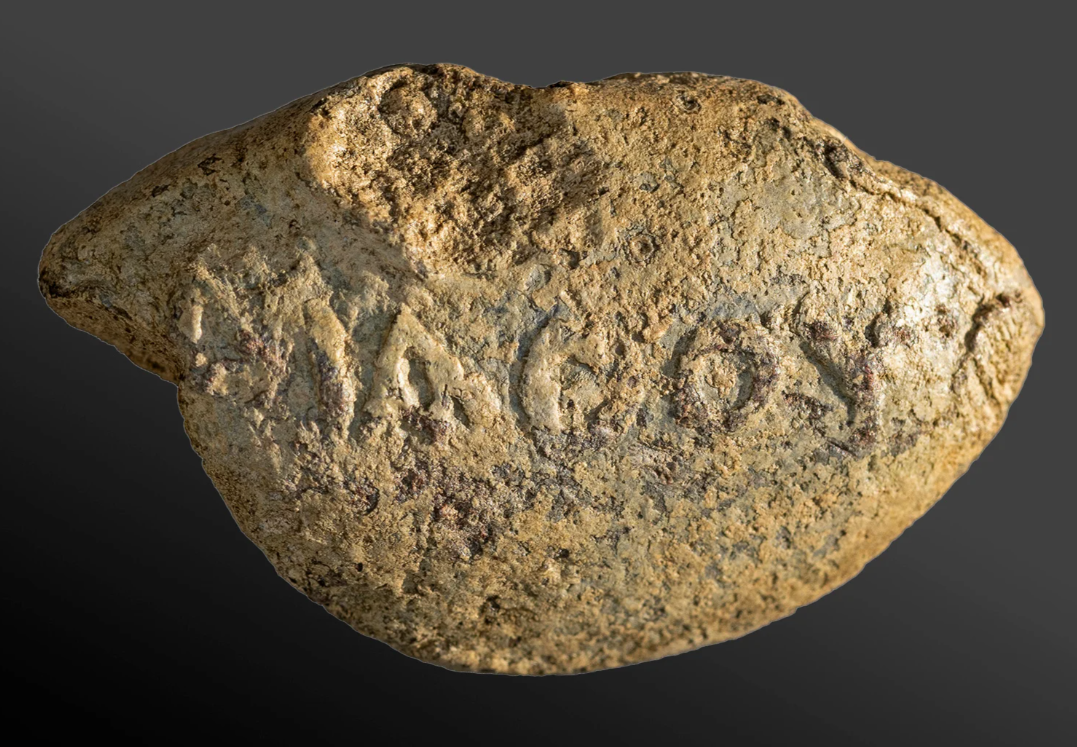
A 2,100-year-old lead sling bullet inscribed with the Greek word “Learn” was uncovered in the southern necropolis of Hippos. In total, 69 lead sling bullets have been found at Hippos; some are inscribed with symbols, such as a scorpion or thunderbolt, but this was the first to be discovered with an inscription. The sling bullet is ellipsoidal in shape and measures 3.2 × 1.95 cm. Inscribed sling bullets are known from other sites, often including sayings directed at the enemy, such as “Take a taste!” “Receive this!” or “Take it!” With this context, the authors of a study on this artifact, which was recently published in Palestine Exploration Quarterly, suggest that the intended message was “Learn your lesson.” Given that Hippos sat on a prominent ridge overlooking the Sea of Galilee, some suggest Jesus referred to it when He said, “A city set on a hill cannot be hidden” (Mt 5:14).
Source: https://www.tandfonline.com/doi/full/10.1080/00310328.2026.2641294
2. Update Provided on Recent Excavations in the Citadel of Amman in Jordan
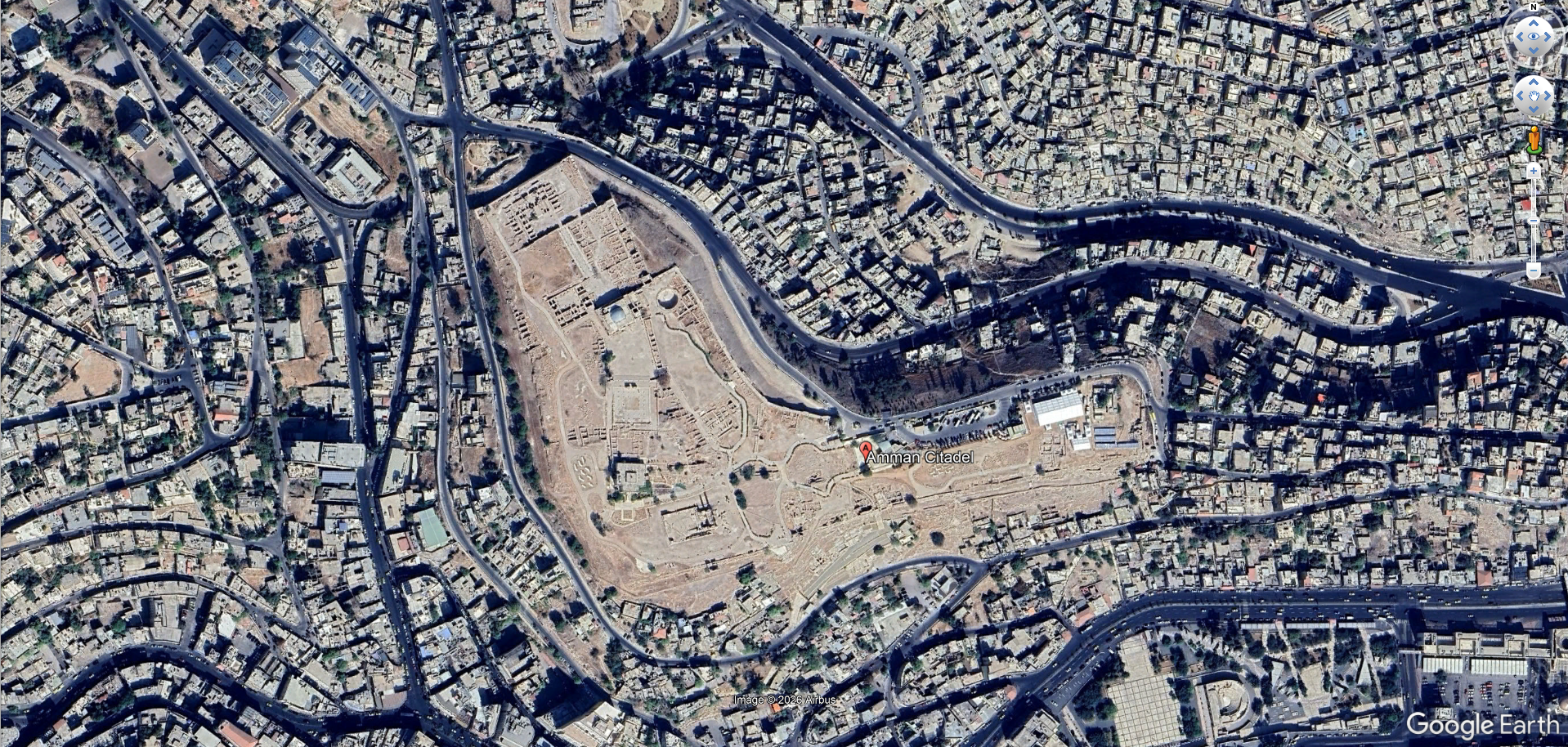
Professor Katharina Schmidt from the University of Münster recently provided an update on renewed excavations (2024–2025) at Jabal al-Qalʿa (the Citadel of Amman) in Amman, Jordan. This is the site of the Iron Age royal capital of the Ammonites, Rabbath-Ammon, or Rabbah in the Bible (e.g., 2 Sam 11:1; 1 Chr 20:1; Ezek 25:5; Amos 1:14). The German excavation team is focusing on a monumental building, part of which was first unearthed between 1987 and 1991, to determine whether it was simply an elite residence, or the palace of the Ammonite kings. So far, several new construction phases have been identified, and significant artifacts have been uncovered, including ivory inlays and fragments of alabaster vessels. Three sculpted heads were also discovered, dating to the Iron Age and depicting three women with curly hair and beautiful ornaments about their ears and necks. According to Schmidt, “The project aims not only to clarify the building’s function but also to refine its chronology, examine its integration into the Iron Age urban layout of the citadel, and assess how political changes affected architecture, governance, and expressions of elite representation in this Levantine kingdom.”
Source: https://anetoday.org/royal-capital-ammon/
1. New Study of Hatshepsut’s Statues Suggests They Were “Deactivated” Rather Than Deliberately Destroyed With Hostility
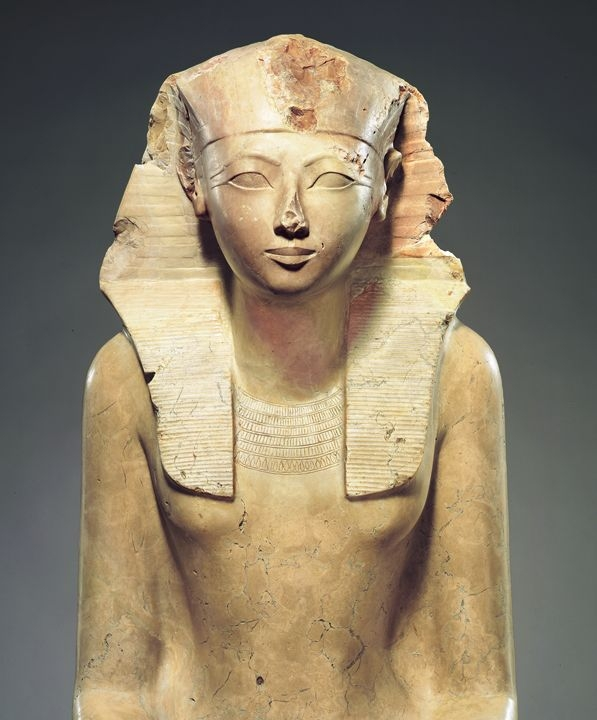
In a new study in the journal Antiquity, entitled “The Afterlife of Hatshepsut’s Statuary,” the author analyzes archival material from the original excavations at Hatshepsut’s mortuary temple at Deir el-Bahri and suggests a different motivation for the damage to the female pharaoh’s statues. While the monuments and statues of Hatshepsut were systematically destroyed after her death, the motivation behind this action is disputed. Rather than seeing it as an act of outright hostility, the author argues that the damage resulted from the “deactivation” of Hatshepsut’s statues and the reuse of the raw materials in nearby construction activities
The statues of Hatshepsut from Deir el-Bahri divide into three categories: architectural statues, sphinxes, and freestanding statues. While many of her statues were destroyed, the study notes that “many survive in relatively good condition with their faces virtually intact.” Moreover, patterns of damage and survival varied significantly between the three categories of statues, which can be explained in large part by the reuse of the stone used in the monuments. The author concludes that this is consistent with other examples of “deactivation” of statues of other pharaohs, which was intended “to neutralise the inherent power of the statues.”
Source: https://doi.org/10.15184/aqy.2025.64
Stay Up-To-Date
Get the latest BREAKING NEWS in biblical archaeology each week here: https://biblearchaeology.org/current-events-list

 Bible Archaeology Report