
The new year kicked off with a number of news reports from the the world of biblical archaeology. These included studies and discoveries related to ancient Egypt, Judah, Philistia, and Babylon. Here were the top three (bonus: four!) news reports in biblical archaeology for January 2024.
3. Ninety-Five Percent of the Columns at the Karnak Temple Complex Have Been Restored
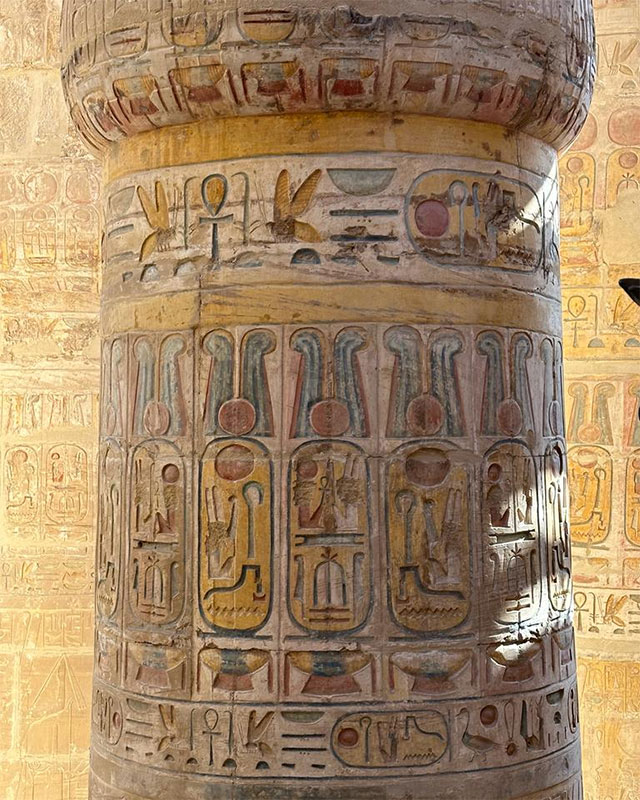
A team of conservationists from Egypt’s Supreme Council of Antiquities and the Luxor Restoration Institute, along with graduates from the restoration department of Luxor and South Valley universities has successfully restored 95 percent of the columns of the Great Hypostyle Hall at the Karnak Temple. The project began in 2021 with the goal of cleaning the columns and clearing away the sand, dust and bird dung that had accumulated in the crevices over the years. Tourists will now be able to appreciate more fully the original colors and engravings. One of the most famous parts of the Karnak Temple is the Bubastite Portal, on which Pharaoh Sheshonq I (biblical Shishak) left a record of his campaign into Canaan, which is mentioned in 2 Chronicles 12:1–12.
NEWS LINK: https://english.ahram.org.eg/News/516161.aspx
2. Rare Persian-Era Coin Discovered in the Judean Hills
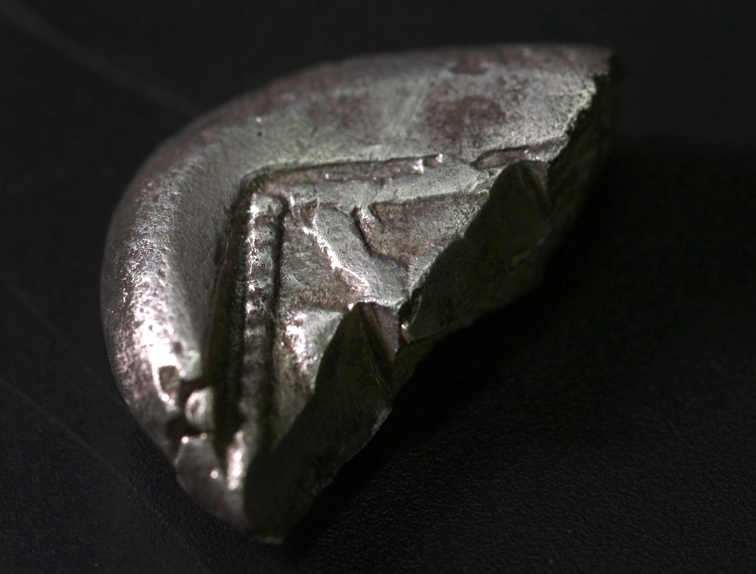
The Israel Antiquities Authority recently announced the discovery of a rare coin dating to the Persian era (sixth–fifth centuries BC) at a site in the Judean Hills. It dates to the very dawn of coinage, and is one of only six such coins yet discovered in Israel. The silver coin bears the imprint of a square stamped into one face and predates the later technique of minting coins where the images were protruding rather than sunken in. This particular coin was intentionally cut in half, indicating that it may have been used as a weight, rather than as the coin that it was. Prior to coinage, commercial transactions took place using weighed pieces of silver. Given that this coin dates to the transitional period between the old form of commerce and the new, it may have been used in the old way.
NEWS LINK: https://www.timesofisrael.com/extremely-rare-2550-year-old-silver-coin-unearthed-in-judean-hills/
1b. New Archaeomagnetic Process Developed; Study Settles Dispute at Tell es-Safi/Gath
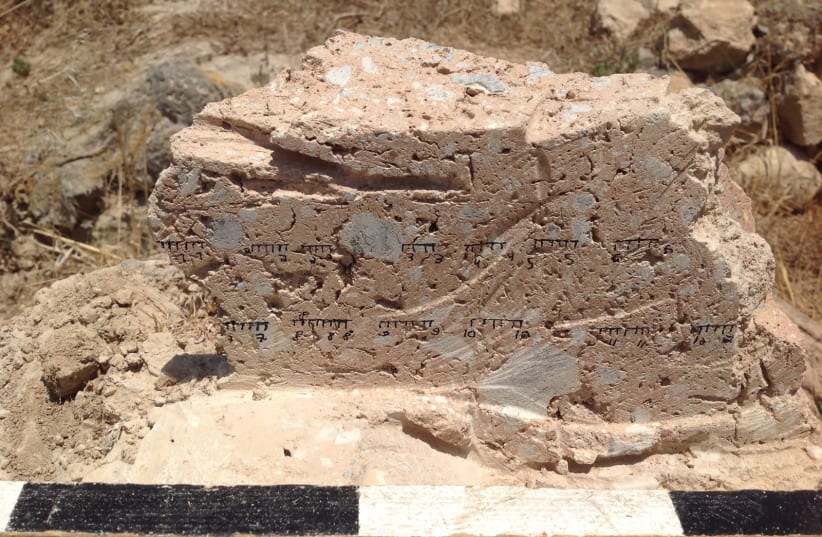
A new archaeomagnetic process has been developed by scientists from Tel Aviv University, the Hebrew University of Jerusalem, Bar-Ilan University, and Ariel University that enables scholars to estimate the firing temperatures of burnt materials unearthed in excavations. Unlike previous techniques, the new process is effective for artifacts that were heated at lower temperatures, even as low as 200°C. Having confirmed the effectiveness of the new technique in lab-controlled tests, the researchers used the process to settle a dispute about the destruction layer at Tell es-Safi/Gath, which is attributed to the Aramaean king Hazael (2 Kings 12:17). Some scholars had speculated that the bricks in one area had been kiln-fired, not burned on location during Hazael’s destruction of Gath. The results of the new tests, however, indicate that both the bricks from the wall and those from the debris beside the wall were burned and then cooled down in situ, indicating that they were fired during Hazael’s destruction. The team has published its research in an article in the journal PLOS ONE entitled, “Applying Thermal Demagnetization to Archaeological Materials: A Tool for Detecting Burnt Clay and Estimating its Firing Temperature.”
NEWS LINK: https://www.jpost.com/archaeology/article-780745
1a. New Archaeomagnetic Study Provides Date for the Construction of the Ishtar Gate in Babylon

In a new article published in the journal PLOS ONE, a team of researchers has dated the construction of the Ishtar Gate in Babylon to ca. 583 BC using archaeomagnetism. The team obtained samples from five fired mud bricks from all three construction phases of Ishtar Gate and analyzed the geomagnetic field of each sample. The results indicated that there were no significant chronological gaps between the construction phases, as previously thought. Some scholars had suggested that King Nebuchadnezzar had commissioned the gate, based on his dedicatory inscription on the structure, but that it may have been completed in phases, possibly even after his death. The new study affirms that the second two construction phases are related to the first, and that the gate was completed in 583 BC (+/- 22 yrs), within the lifetime of Nebuchadnezzar, who reigned from 605 to 562 BC. According to the Bible, King Nebuchadnezzar invaded the land took captives from Judah into exile in Babylon on three different occasions: in 605 BC (when the prophet Daniel was taken), in 597 BC (when the prophet Ezekiel was deported) and finally in 587/586 BC, when Jerusalem was destroyed (2 Kgs 25:1–11).
Stay Up-To-Date
Get the latest BREAKING NEWS in biblical archaeology each week here: https://biblearchaeology.org/current-events-list
 Bible Archaeology Report
Nice job!
>