
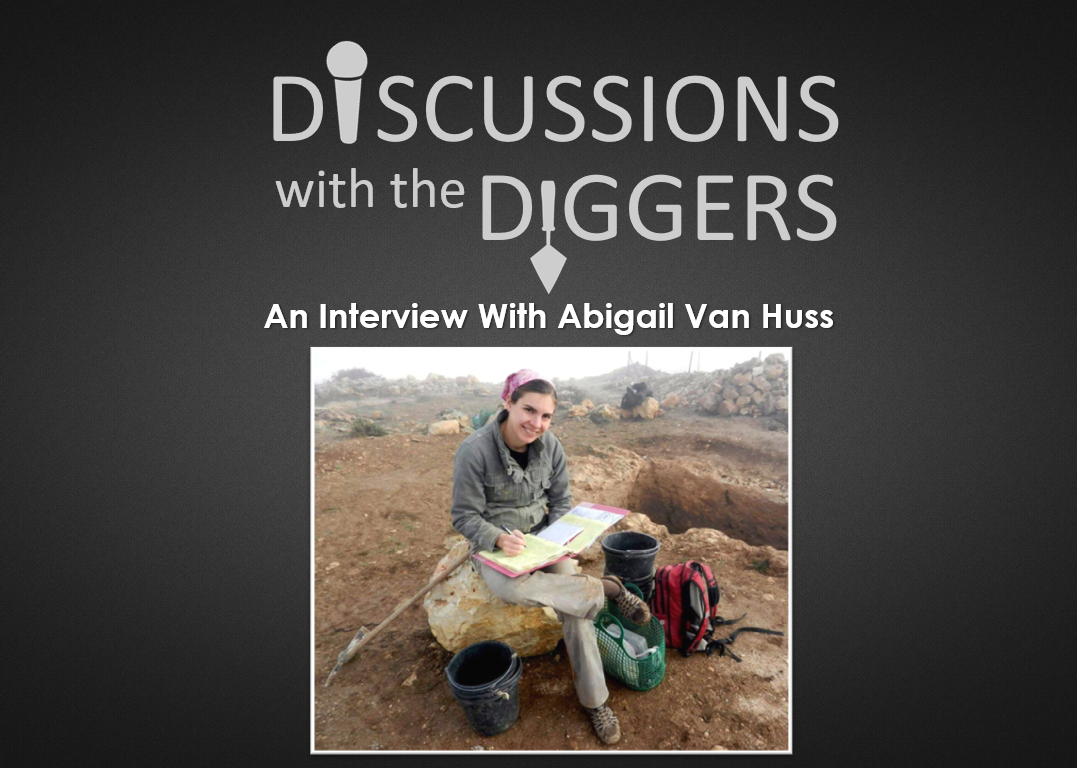
It’s time for another Discussions with the Diggers blog. My goal with this series is to interview archaeologists and learn from them about their experiences and discoveries. My next guest is Abigail Van Huss (nee Leavitt).
Abigail is the Assistant Dig Director for the excavations at Shiloh, Israel led by Associates for Biblical Research. She has been involved with archaeology since she participated in her first dig in 2010 at Khirbet el Maqatir. Since then she has been involved in numerous excavations. Abigail recently completed Master’s degree in Biblical History and Archaeology from The Bible Seminary in Katy, TX and is pursuing a PhD through Ariel University in Israel. The subject of Abigails Masters thesis is, “The El-Burnat (A) Structure(s): Joshua’s Altar?”
I first met Abigail when my wife and I began to dig at Shiloh in 2013. I have followed her blog Abigails Archaeological Adventures for several years and been fascinated by her research on Mt. Ebal. In this interview, I ask her specific questions about Joshua’s Altar.
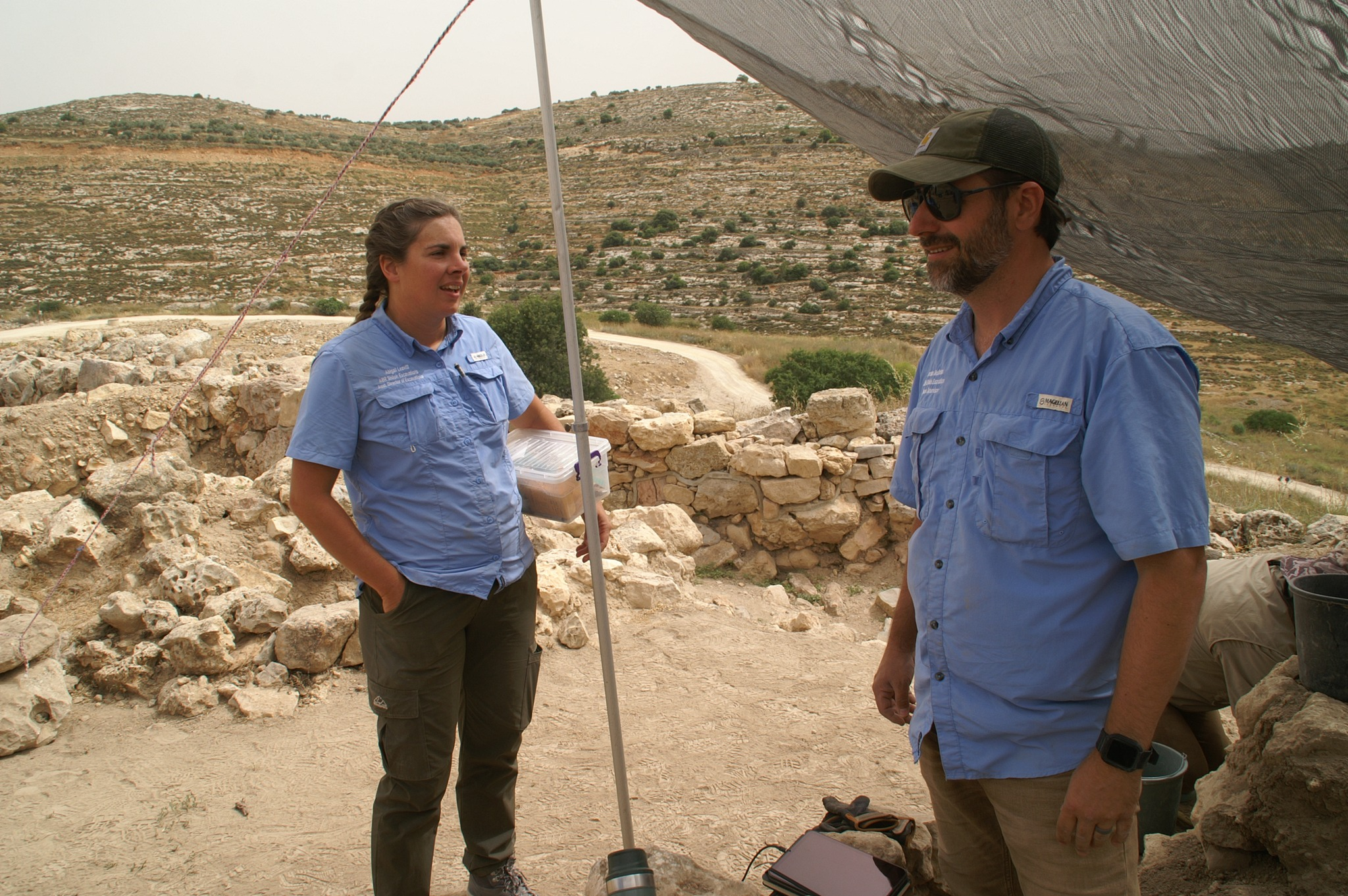
BIBLE ARCHAEOLOGY REPORT: Hello Abigail, thank you for taking the time to answer my questions about Joshua’s Altar. First, how did you become interested in archaeology and what are some of the sites you’ve excavated at?

ABIGAIL VAN HUSS: I had my first taste of archaeology at the Temple Mount Sifting Project in Jerusalem. I was on a tour of Israel, and my group had the opportunity to wet-sift some debris from the Temple Mount. I liked it so much that I went back to Israel the next year to spend two weeks working at the Temple Mount Sifting Project. After that, I started volunteering on archaeological digs. I have worked at a number of sites including biblical Shiloh, Khirbet el-Maqatir, a candidate site for biblical Ai, Mount Zion in Jerusalem, Tell Burna, an Iron Age II site on the border between Judah and Philistia, Khirbet Rafid, a sister-site to Shiloh, Fazael, a Chalcolithic site in the Jordan valley, and others.
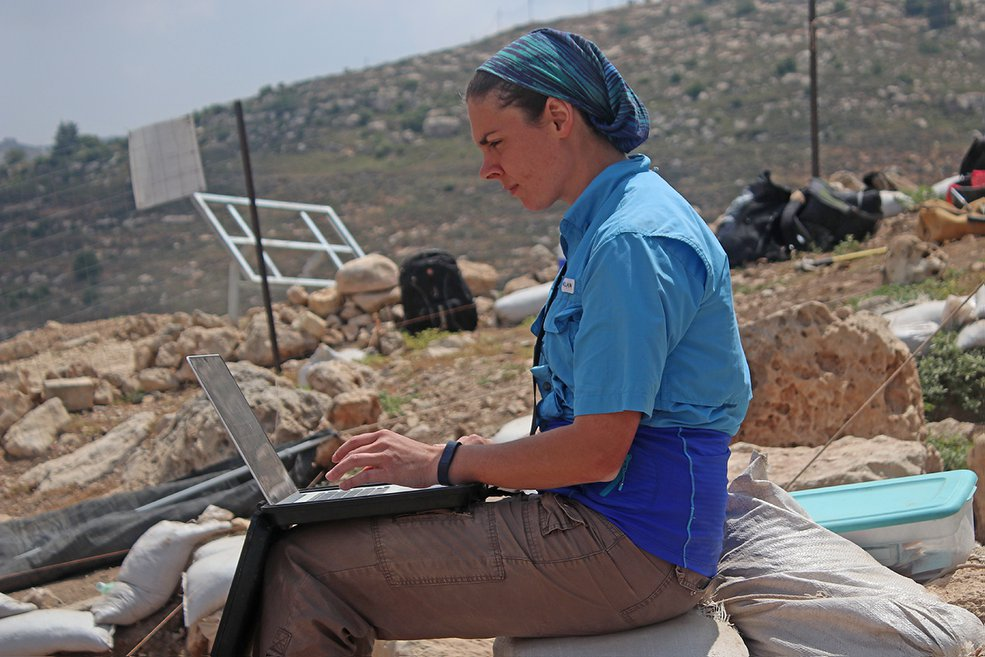
BIBLE ARCHAEOLOGY REPORT: You were a part of the Mt. Ebal Dump Salvage (MEDS) Project, led by the Associates for Biblical Research. Before we get into the finds from Mt. Ebal, can you give us an overview of the site? What is its primary importance from a biblical perspective?
ABIGAIL VAN HUSS: In Deuteronomy 27, Moses instructed the Israelites to build an altar on Mount Ebal and hold a dedication ceremony on Mount Ebal and Mount Gerizim. Joshua 8 records the fulfillment of that command, when Joshua led the Israelites in the construction of the altar. Early explorers attempted, but failed, to find the site. Then, in the 1980s, Israeli archaeologist Adam Zertal discovered and excavated a site on Mount Ebal that is almost certainly the site of Joshua’s altar. The site lies on the northwestern slopes of the mountain, nestled on a step in the mountain’s topography. The site consists of an enclosure made of a stone fence. Within the enclosure is a smaller enclosure, and within that enclosure is a central structure, which Zertal identified as Joshua’s altar. Archaeologically speaking, this is a very important site because it is one of the very first Israelite sites once they crossed into the promised land. So, finds from this site are of utmost importance in understanding the material culture of the early Israelites. From a biblical perspective, the site is important as the place where the Israelites established their new nation with God as their leader.
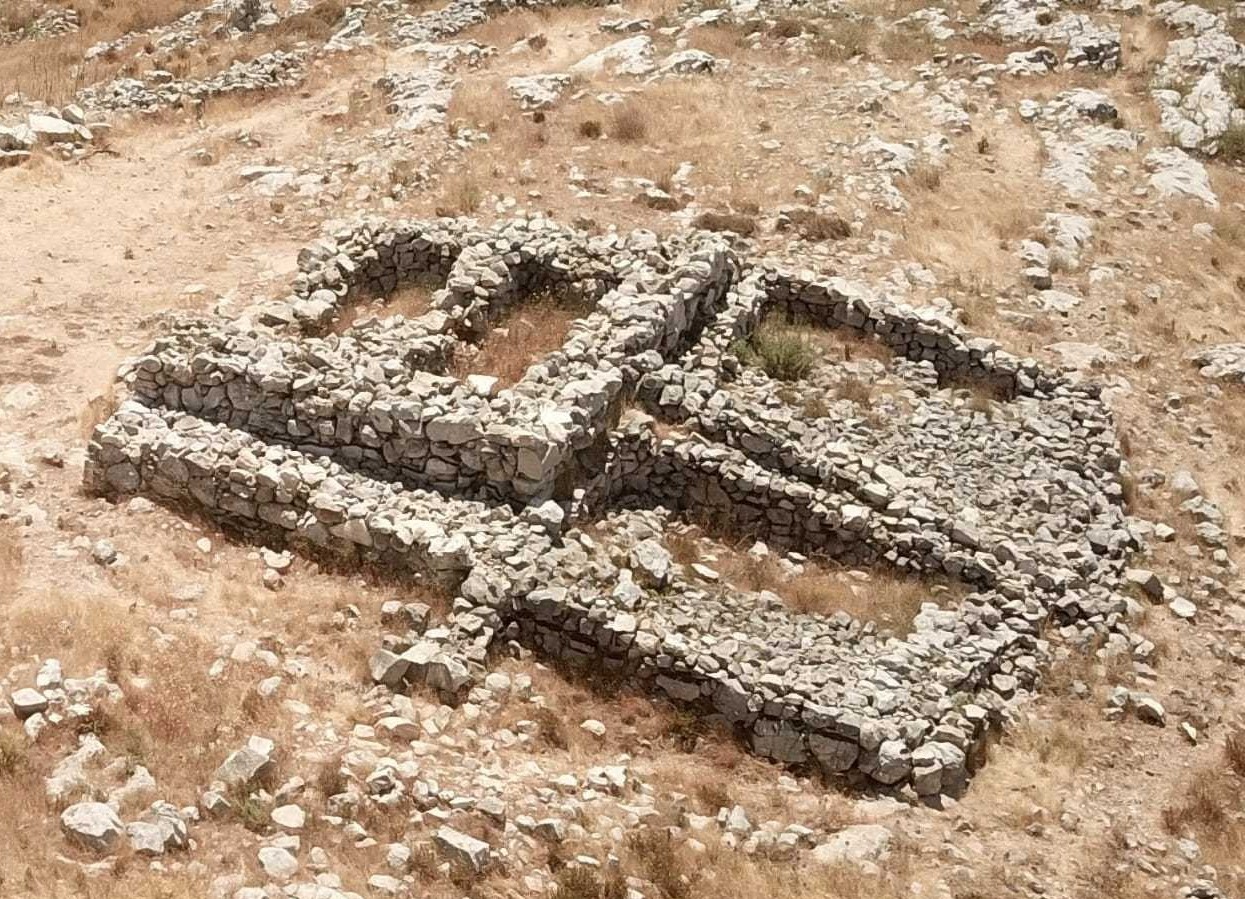
BIBLE ARCHAEOLOGY REPORT: Please describe for our readers the two altars that Adam Zertal excavated on Mt. Ebal in the 1980’s. How did he date them?

ABIGAIL VAN HUSS: Zertal’s excavations revealed two phases of usage at the site, which he labelled as Stratum I and Stratum II. Stratum II was the earlier phase and featured a round altar about two meters (6.5 feet) in diameter. Stratum I was the later phase. It featured a large rectangular altar, measuring 9 x 7 meters (39.5 x 23 feet). The rectangular altar also featured a supporting structure, courtyards, and a ramp leading to the top. Zertal believed that the entire occupational period at the site was limited to about 100 years from 1250 BC to 1150 BC. He believed that Stratum II spanned 50 years between 1250 BC and 1200 BC, while Stratum I occurred from 1200 BC to 1150 BC. Zertal based his dating of the site on the pottery that he found. Pottery from Stratum I dated to Iron Age I, while pottery from Stratum II was mostly Iron Age I, but included some pottery from the end of the Late Bronze Age II. Zertal also found a few pieces of pottery dating to the beginning of the Late Bronze Age II, but he did not factor these pieces into his dating of the site.
BIBLE ARCHAEOLOGY REPORT: What did the team who wet-sifted Adam Zertal’s dump piles find? How do your finds affect the dating of the site and, specifically Joshua’s Altar?
ABIGAIL VAN HUSS: The team found many small pieces of pottery and other items including flint and metal blades, metal tools, and an inscribed lead tablet. These findings matched very well with Zertal’s reported findings. However, there was a higher percentage of Late Bronze II pottery than what Zertal reported. These findings, when added to the Late Bronze II pottery that Zertal found, suggest that the founding of the site occurred earlier than Zertal realized. Some of the earliest pottery pieces date to around 1400 BC. This means that is likely that the round altar was built around 1400 BC, but the later, rectangular altar was not constructed until closer to 1200 BC. This places the construction of the earlier altar at the time of Joshua.
BIBLE ARCHAEOLOGY REPORT: You’re currently working on your PhD for Ariel University. What is the focus of your research?
ABIGAIL VAN HUSS: I am currently working on the transition from the Late Bronze Age to the early Iron Age in the central hill country of Israel. I am studying the pottery and other finds from over 250 sites in the region to determine the nature of this transitional period. The transition from the Late Bronze Age to the early Iron Age encompasses the Israelite conquest of Canaan, and many of the sites I am researching are part of the Israelite settlement in the hill country. The Mount Ebal site, which was the focus of my master’s thesis, is just one of the many sites I am currently researching.
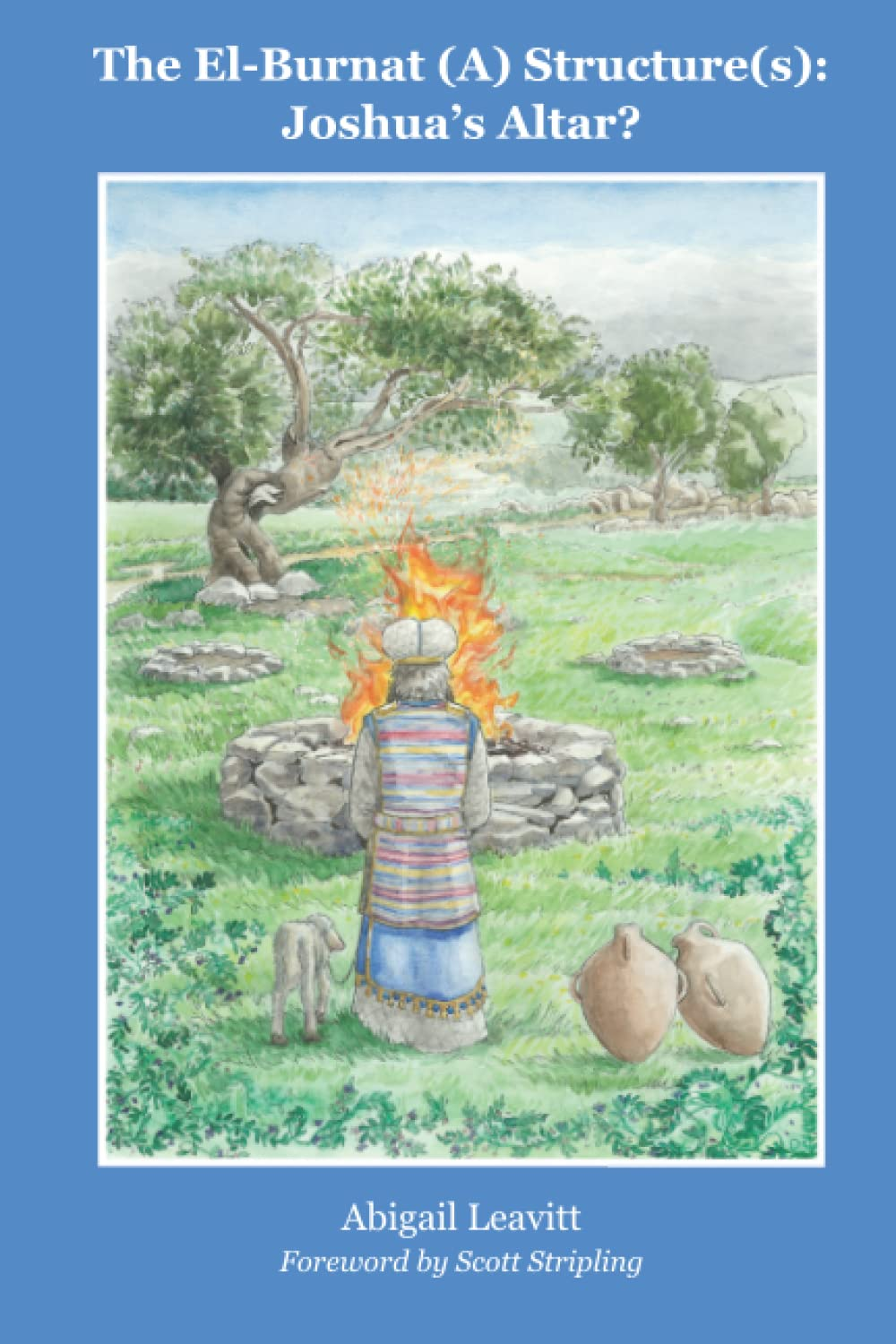
I want thank Abigail for graciously taking the time to share with us about the discovery Joshua’s Altar and its importance. Abigail’s research into the altar structure on Mt. Ebal is now available in a book entitled, The El-Burnat (A) Structure(s): Joshua’s Altar? It is available from ABR’s website HERE. You can also order it from Amazon HERE. Of course, I always recommend buying books from your local Christian bookstore, so you can check with them about ordering Abigail’s book.
You can see Abigail interviewed by her husband, Clayton Van Huss, on Biblically Grounded, explaining what biblical archaeology is:
Abigail was also recently interviewed on Digging for Truth in an episode entitled, “So You Want To Be An Archaeologist?” You can view it here:
Cover Photo: ABR
Disclaimer: As always, I allow each archaeologist to answer in his or her own words and may or may not agree with his or her interpretation of their work.
 Bible Archaeology Report