
This past month, the Canaanites, Phoenicians, and Persians were all in the news. Here were the top three reports in biblical archaeology in April 2025.
3. 3,800-Year-Old Canaanite Scarab Discovered at Tel Azekah
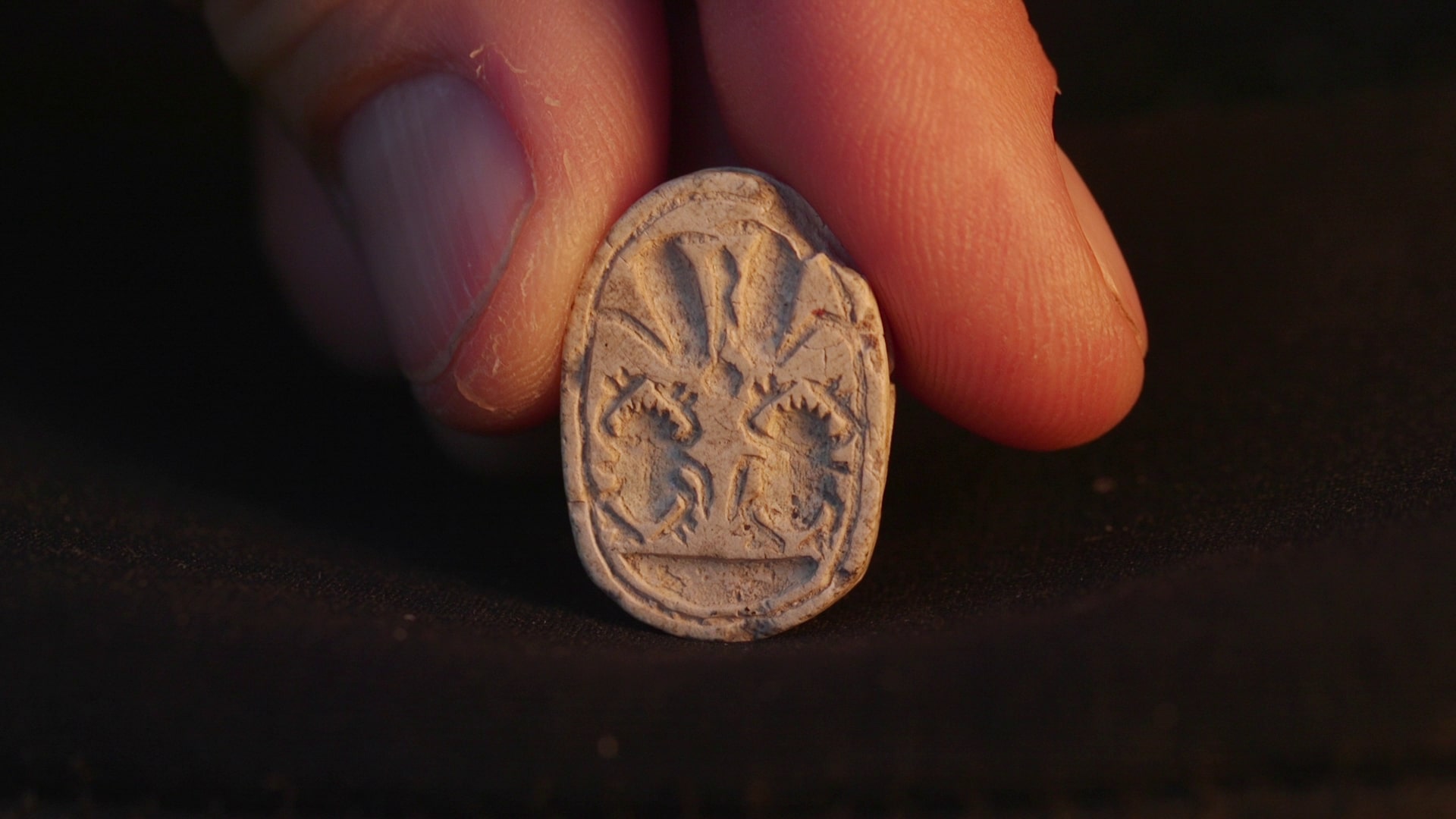
During a recent family trip to Tel Azekah, a 3.5-year-old girl picked up a beautiful stone, which turned out to be a 3,800-year-old scarab. The family turned it over to the Israel Antiquities Authority (IAA), who called upon experts to analyze it. Dr. Daphna Ben-Tor, an expert in ancient amulets and seals, concluded the seal was a Canaanite scarab from the Middle Bronze Age. In the IAA press release, Dr. Ben-Tor is quoted as saying, “Scarabs were used in this period as seals and as amulets. They were found in graves, in public buildings and in private homes. Sometimes they bear symbols and messages, that reflect religious beliefs or status.” Tel Azekah, located near Beit Shemesh, is named in the biblical story of David and Goliath, as the Philistine army was stationed between Socoh and Azekah (1 Sam. 17:1). Excavations have revealed that Tel Azekah was a significant site throughout the Middle Bronze, Late Bronze, and Iron Age periods.
2. New DNA Study Identifies Ancestry of Phoenicians
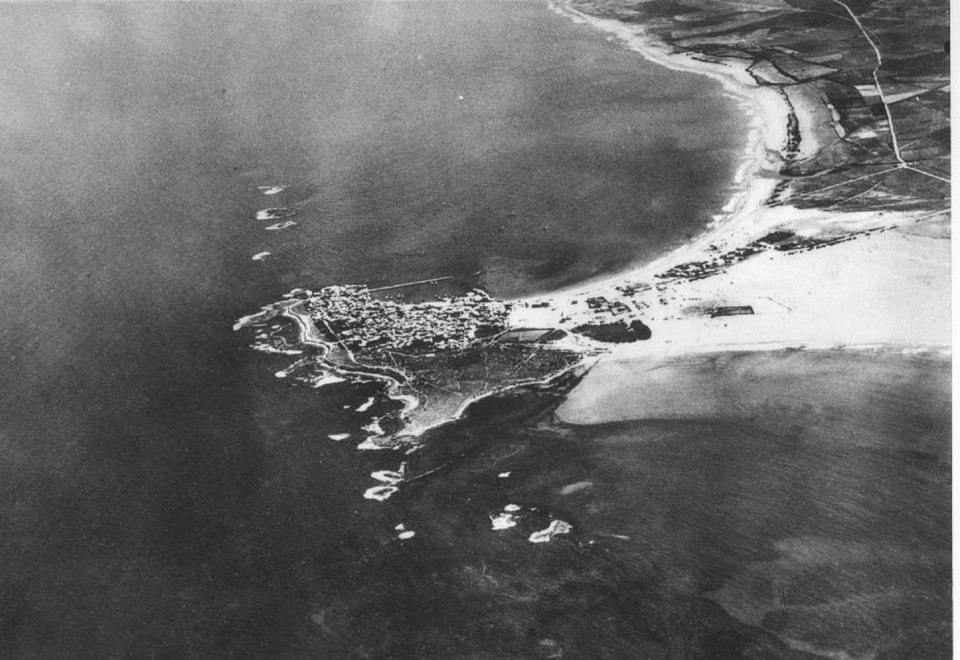
A new study published in the journal Nature, analyzing DNA from Phoenician burials dating from 600 BC to the 2nd century BC, concludes that the Phoenicians were a mixture of Mediterranean populations, with minimal Levantine DNA. During the early Iron Age, Phoenicians cremated their dead, which destroyed potential DNA evidence, but in later periods, they shifted to burial practices. The DNA sequences obtained demonstrate that these later Phoenicians had genetic roots primarily in Sicily, Greece, the Aegean islands, and North Africa. This is not surprising, as the Phoenicians were a seafaring people who established trading colonies throughout the Mediterranean and likely intermarried with local populations. The Phoenician cities of Tyre and Sidon are frequently mentioned in the Bible, where they are also depicted as seafaring people (2 Chr 8:17–18).
Source: https://archaeology.org/news/2025/04/25/new-evidence-of-phoenician-origins-emerges/
1. Quarry Used for Darius’s Palace at Susa Discovered in Iran

Researchers in Iran have discovered what they believe to be the quarry that provided the stones for the construction of Darius the Great’s palace at the ancient city of Susa. Referred to in the royal inscriptions of Darius as “Abiradush,” the long-lost quarry appears to correspond to a site recently discovered in the Kabir Kuh mountains near Abdanan. The location matches the historical description of Abiradush, and the research team confirmed the find using field surveys, satellite imagery, and geological analysis. Stone-cutting tools and evidence of large-scale extraction were also found at the site. It is believed that the stones were transported approximately 93 miles (150 km) from Abiradush to Susa via mountain roads and the Karkheh River. The palace of Darius and his son Xerxes at Susa is the setting for the book of Esther.
Stay Up-To-Date
Get the latest BREAKING NEWS in biblical archaeology each week here: https://biblearchaeology.org/current-events-list

 Bible Archaeology Report