
This past month, there were significant news stories from Egypt and Iraq related to the world of biblical archaeology. Here were the top three reports in September 2025.
3. 3,000-Year-Old Gold Bracelet Stolen from Egyptian Museum in Cairo
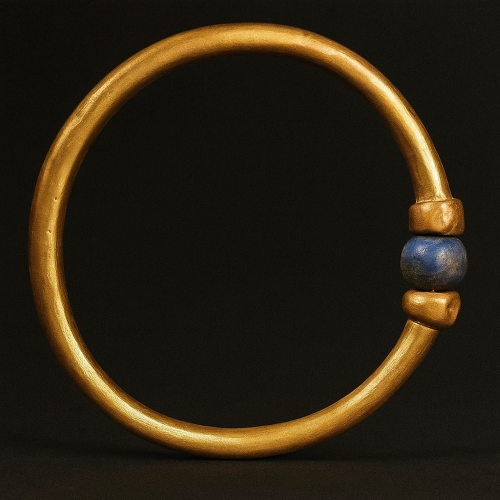
A 3,000-year-old gold bracelet recently stolen from the Egyptian Museum in Cairo has been melted down for its gold. Egyptian authorities announced that four individuals have been arrested in conjunction with the theft, including a restoration specialist who stole the artifact from a safe at the museum. She then sold it to a silver jeweler, who, in turn, sold it to a gold foundry worker who melted it down. The bracelet was a simple gold band adorned with a single round lapis lazuli bead and was dated to the Twenty-First Dynasty. In the Bible, King Solomon made a marriage alliance with a pharaoh from this dynasty (1 Kgs 3:1), commonly identified as Pharaoh Siamun.
Source: https://www.bbc.com/news/articles/c1kw8dwy4dro
2. Complete Stele of Ptolemy III Unearthed in Egypt

A team of archaeologists has unearthed a rare hieroglyphic version of the Canopus Decree of King Ptolemy III at Tell el-Pharaeen in the city of Husseiniya, Egypt. Other stelae discovered in the past contained trilingual inscriptions in hieroglyphic, Demotic, and Greek of Ptolemy’s Canopus Decree; the new stele only contains hieroglyphics. This sandstone stele is over four feet tall and 32 inches wide, and dates to 238 BC. Ptolemy III’s Canopus Decree is a royal edict proclaimed in the ancient city of Canopus to the Egyptian priests there. It praises Ptolemy for his civic achievements and sacred observances. Many Bible scholars believe Ptolemy III is referred to in the book of Daniel (11:8).
Source: https://archaeologymag.com/2025/09/complete-copy-of-the-canopus-decree/
1. Large Lamassu Statue Discovered in the Remains of King Esarhaddon’s Palace
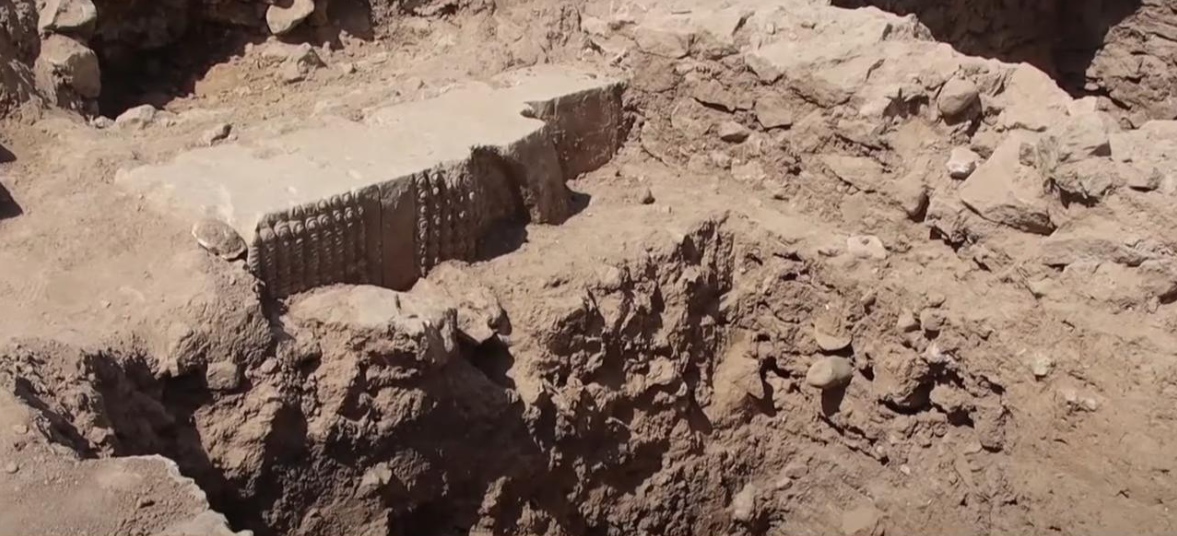
Archaeologists excavating at Tell Nabī Yūnus in Mosul, Iraq have discovered what could be the largest lamassu (winged bull statue) yet found. It was unearthed in the throne room of the palace of the Assyrian king Esarhaddon. The lamassu would have originally stood to a height of 20 feet; other lamassu discovered from ancient Assyria, such as those currently housed in the British Museum and the Louvre, are only about 11 to 13 feet tall. In 2014, ISIS took over the area and began to destroy the nearby shrine of the Tomb of Jonah and dug tunnels to loot antiquities they discovered underground. When the Iraqis regained control of the area, they found the remains of a previously unknown palace in the tunnels dug by ISIS. The site has been excavated since 2018 by Heidelberg University and Iraq’s State Board of Antiquities and Heritage. These excavations have exposed parts of Esarhaddon’s palace, as well as cuneiform tablets from the reigns of Sennacherib, Esarhaddon, and Ashurbanipal, and artifacts that may have been taken from Egypt and the southern Levant as spoils of war. Esarhaddon (Ez 4:1-2), as well as his father Sennacherib (2 Kgs 18-19; 2 Chr 32; Isa 36-37), and his son Ashurbanipal (Ez 4:9-10) are all mentioned in the Bible.
Source: https://www.heritagedaily.com/2025/09/neo-assyrian-winged-bull-could-be-largest-ever-found/156054
Stay Up-To-Date
Get the latest BREAKING NEWS in biblical archaeology each week here: https://biblearchaeology.org/current-events-list

 Bible Archaeology Report