
About Bible Archaeology Report
Revealing the world of biblical history.
Mission: Bible Archaeology Report is an apologetics ministry dedicated to highlighting archaeological discoveries that support the historical reliability of the Bible
Goals:
- To make biblical archaeology more accessible to the average person—especially younger generations—by translating technical information into clear, understandable language.
- To serve as a trusted resource for both the Church and the curious, offering credible archaeological and historical information that affirms and illuminates the Bible.
Presuppositions:
- The Bible is a collection of sacred texts composed in various literary genres. Where it recounts the past, it describes real people, authentic places, and accurate history.
- Archaeology itself neither “proves” or “disproves” the Bible. However, over the past 150 years hundreds of discoveries in the Holy Lands have demonstrated again and again that the Bible, when properly understood, is a historically accurate document.
- A lack of evidence does not logically imply that something did not exist or occur. Archaeological evidence is almost always fragmentary and incomplete. Many biblical sites were destroyed by war, natural disasters, erosion, looting, and urbanization. Furthermore, only a fraction of these sites have been excavated and published. Thus, it ought not surprise us that many biblical details are uncorroborated by archaeology.
- Archaeology is always interpreted by archaeologists with their own perspectives, presuppositions, and biases. This explains why there is often debate surrounding finds relating to the biblical text. The old adage, “Ask two archaeologists and you’ll get three opinions” is true.
About Bryan Windle
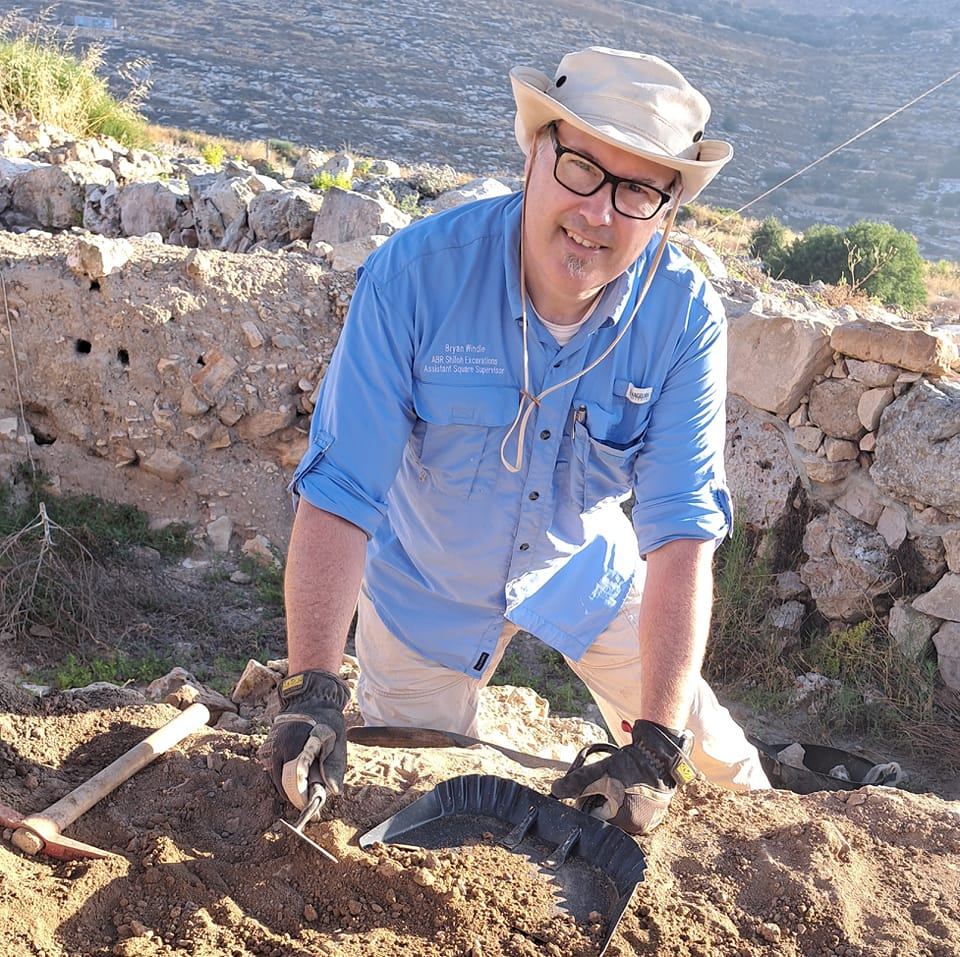
Bryan Windle is an archaeologist with Associates for Biblical Research (ABR) and currently serves on the dig staff of the annual Shiloh excavations each year. He also works as ABR’s Director of Marketing and Public Relations. He has been featured in more than 50 episodes of ABR’s TV show Digging for Truth, and has published numerous articles in Bible and Spade as well as other magazines and journals. Bryan also writes a monthly blog on his own website (BibleArchaeologyReport.com), and is the co-founder of the Ready Answers Apologetics Conference (ReadyAnswers.ca).
Bryan completed his Master’s degree at Trinity Southwest University, earning an M.A. in Archaeology and Biblical History. His thesis on the most recent research from Jericho will soon be published as a book titled Joshua’s Jericho: The Latest Archaeological Evidence for the Conquest, by Trowel Press. He is currently a PhD student at Trinity Southwest University.
Bryan and his wife, Jennifer, have four children and two grandchildren and currently live in Richards Landing, Ontario, Canada.
Education:
- Master of Arts (Archaeology & Biblical History), Trinity Southwest University, 2025
- Bachelor of Education, Nipissing University, 1995
- Bachelor of Arts (English), Nipissing University, 1994
Professional Affiliations:
- Evangelical Theological Society
- Near East Archaeological Society
- Ontario College of Teachers
 Bible Archaeology Report
Although an agnostic, I find your posts well worth reading. I have always held the belief that the Bible was a written collection of oral history. It is often ignored for being such, a mistake in my humble opinion.
As you point out, so much of it seems to lead us in the right direction with regard to archaeological discovery.
Thanks for collecting and posting your findings, they are always worth following up. Although it does mean I spend more time in the library and on the Internet than is probably good for me. 🙂
Hello Bryan, I just discovered your BLOG. I very much appreciate your mission and the couple of articles I have read thus far. Thank you. Carry on sir.
Good on you, Bryan. I appreciate your work on this site (biblearchaeologyreport). I’m not picky, but it usually takes away some credibility for me when I find a writer misusing a word. In this instance it didn’t. But it might for others (and your site is too good for that to happen). Would you mind checking your use of the word aught. I think it means ‘the little’ or ‘nothing’, as in ‘for aught I know’ not as an imperative as I think you intend it. I ought to tell you I’m a civil engineer, not even vaguely related to proper use of words. But I don’t think I’m wrong.
Thanks so much for your kind words and for catching that. You are correct, I Should have used ought instead of aught.
In regard to Christmas archaeology information, do you have evidences of the time or “course” that Zacharias served in his priestly duty? I have heard from someone who teaches early church history that there is.
Would that give an indication about a “time frame” for Christ’s birth?
Jack Finegan deals with this issue in his book, Handbook of Biblical Chronology. He works through the intricate details and summarizes: “If we take the course of Abijah as beginning service on or about Heshvan 17 (rather than at the other possibility of lyyar 8), then the sequence of the priestly periods of service (Table 127) leads to Tebeth (Dec/Jan) or Shebat (Jan/Feb) for the nativity of Jesus. In the year 3/2 B.C. (Seleucid year 309), to translate the dates into terms of our own calendar and using the figures in the Babylonian calendar, the month Tebetu (Tebeth) began on Jan 8, 2 B.C., and Tebeth 17—24 was equivalent to Jan 24—31, 2 B.C., and the month Shabatu (Shebat) began on Feb 7, 2 B.C. Stating the figures more generally, Beckwith suggests that the Tebeth and Shebat dates point to a time for the nativity of Jesus between mid-January and fairly early February in 2 B.C. At any rate it is wintertime…”
Fantastic work, Bryan! Always enjoy your insightful and balanced articles and videos. Excited to see where God takes you in your studies and pursuit of biblical archaeology.
Hi Bryan, thanks. Your blog has been so helpful. I have been giving the young adults sermons on Joshua and your articles on Jericho have explained the wall problem very well. They have also asked for me to do a sermon on lack on archeological evidence and your description of archeology will be very helpful in giving them a good answer.
A friend and I are currently co-facilitating a class on Apologetics. My next session focuses on the reliability of the NT – and what a wealth of material you have accumulated on this site – TQ for your labour of love! I pray it encourages you to know that your hard work is leading more to trust the Bible as the inerrant eternal Word of God, and in Jesus the Word made flesh! – LBH from Wesley Methodist Church, Malacca, Malaysia