
As the month draws to a close, it’s time to look back at the most significant news stories from the world of biblical archaeology. They included a Roman goddess from a biblical city, a Roman Emperor depicted as an Egyptian Pharaoh, and the haunting discovery of a mass children’s grave. Here were the top three news reports in April 2026.
3. Statue of Athena Unearthed at Laodicea
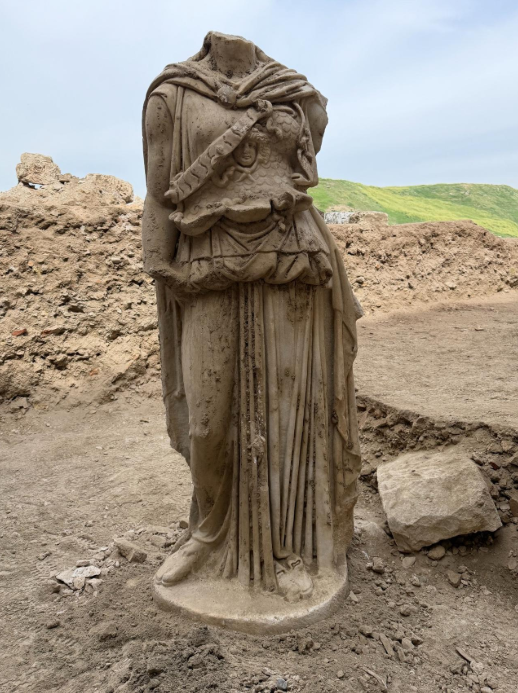
Archaeologists excavating in the ancient city of Laodicea recently unearthed a statue of Athena in the West Theater. The white marble statue stands almost 6.5 feet (2 m) tall, and is missing its head and hands. Based on an analysis of the style of the sculpture, scholars believe it was carved during the reign of Emperor Augustus (27 BC to AD 14). Athena is depicted wearing a sleeveless peplos, with a cloak draped around her neck, and an aegis on her chest, featuring the head of Medusa. In addition to being the goddess of war, Athena was also regarded as the patron of weaving, which was a lucrative industry at Laodicea. In the book of Revelation, the apostle John delivers a letter to the church at Laodicea, condemning them for being lukewarm. In 3:17, Jesus says to them, “You say, ‘I am rich; I have acquired wealth and do not need a thing.’ But you do not realize that you are wretched, pitiful, poor, blind and naked” (NIV).
2. Stela from Karnak Temple Depicts Roman Emperor
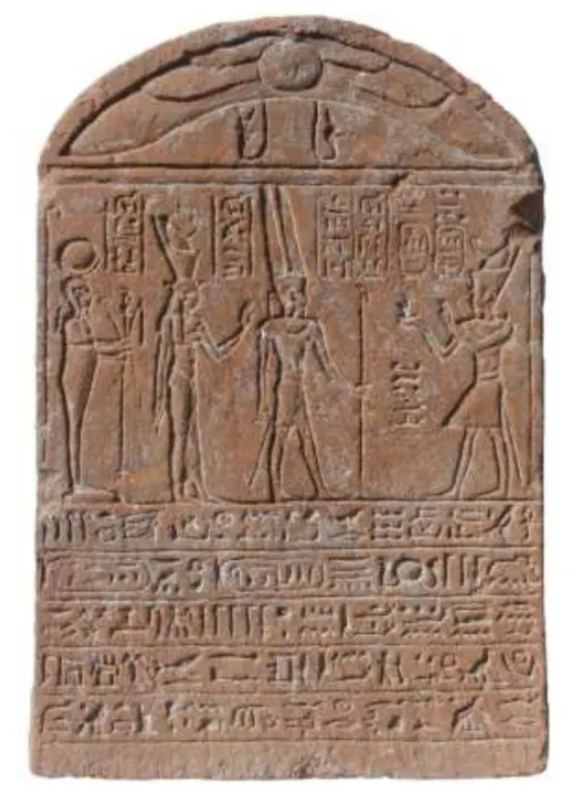
Workers restoring the Karnak Temple complex in Luxor, Egypt, recently unearthed a stela (stone monument) that depicts the Roman emperor Tiberius as a pharaoh. The 2,000-year-old sandstone slab measures 23.6 × 15.7 inches (60 × 40 cm) and shows Tiberius standing next to the Egyptian deities Amun, Mut, and Khonsu. Since Egypt was a Roman province during the reign of Tiberius, he would have been seen as responsible for maintaining ma’at (cosmic order). The accompanying inscription commemorates the renovations carried out on a wall at the Temple of Amun-Ra during the reign of Tiberius. The Gospel of Luke records that John the Baptist began his ministry in the 15th year of the reign of Tiberius Caesar (3:1).
Source: https://archaeology.org/news/2026/04/14/roman-emperor-identified-on-karnak-stele/
1. Mass Children’s Grave Discovered at Tel Azekah
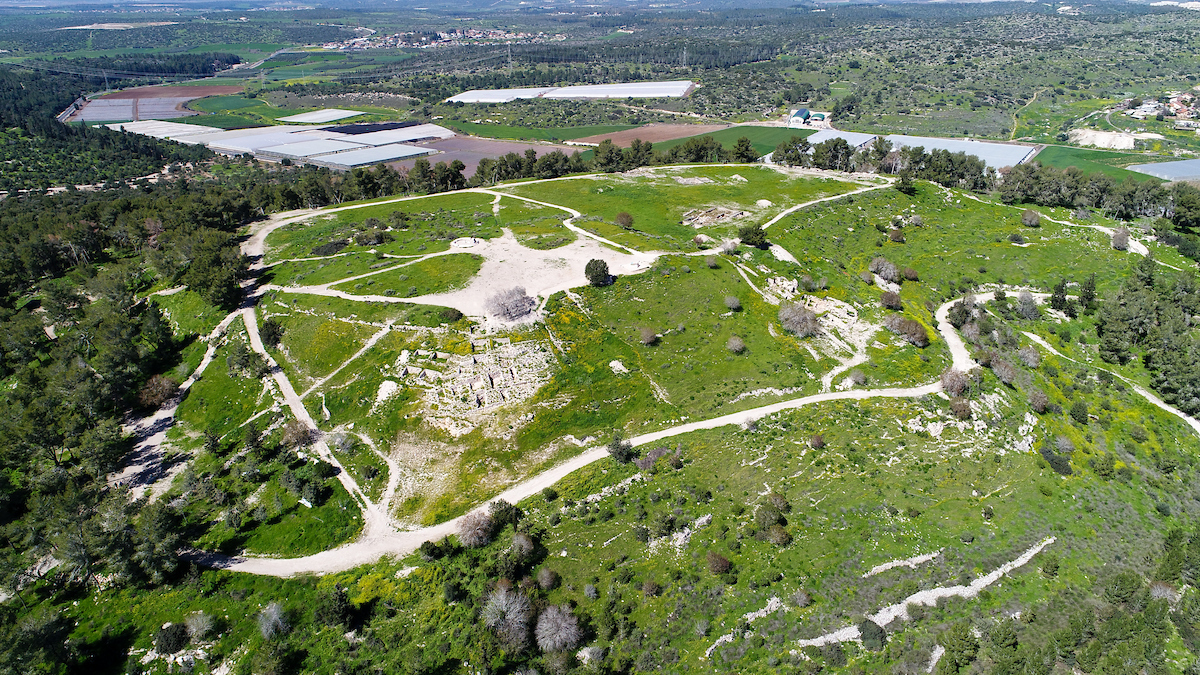
Archaeologists from Tel Azekah recently published an article in Palestine Exploration Quarterly in which they report the discovery of a mass grave of children that dates to the Persian era. The skeletal remains of between 68 and 89 children were discovered in a cistern that was dated to the fifth century BC based on the pottery and other small finds recovered nearby. According to the osteological analysis, 90 percent of the children were under five years of age, and 70 percent were less than two years old. The authors of the study propose that, “during the Persian period, the cistern functioned mainly as a mass burial site for infants who were not granted individual interments since they were not yet weaned.” They ruled out the possibility that the children were buried as a result of human sacrificial rituals, as there was no evidence of cut marks or burning on the bones; such diagnostic indicators are present in other archaeological sacrificial contexts. Before the Babylonian invasion and subsequent exile, Azekah was an important city in Judah (Jer. 34:7).
Source: https://doi.org/10.1080/00310328.2025.2589646
Stay Up-To-Date
Get the latest BREAKING NEWS in biblical archaeology each week here: https://biblearchaeology.org/current-events-list


