
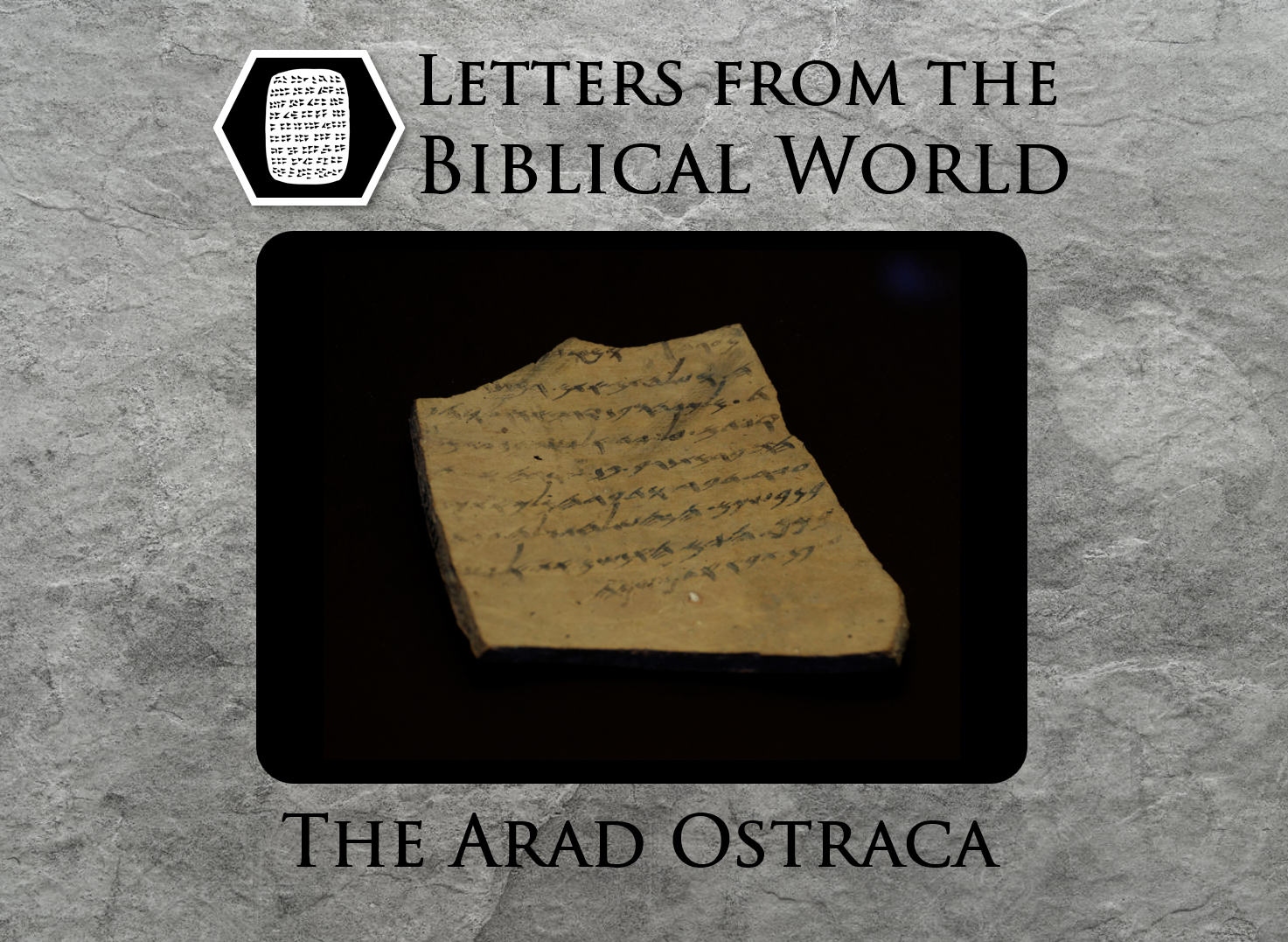
This month, I am continuing my series “Letters from the Biblical World,” in which I explore extra-biblical letters from the ancient Near East that appear to reference or illuminate people, places, and events described in the Bible. Having already written about the Amarna Letters and the Lachish Letters, I will now turn my attention to the Arad Ostraca.
Where is Arad?
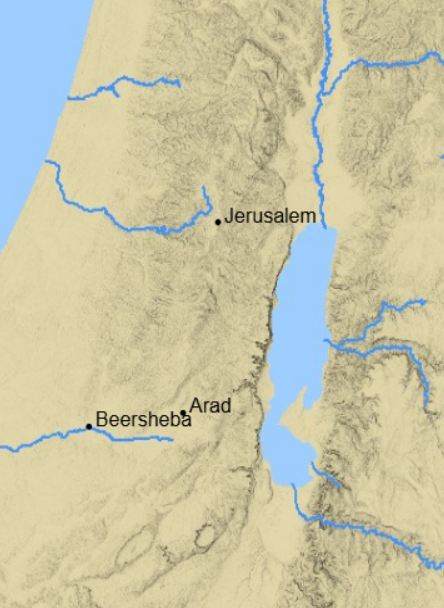
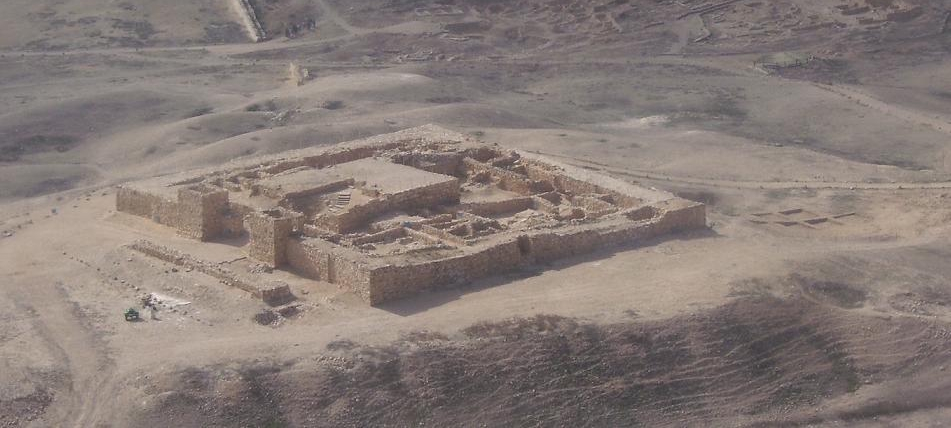
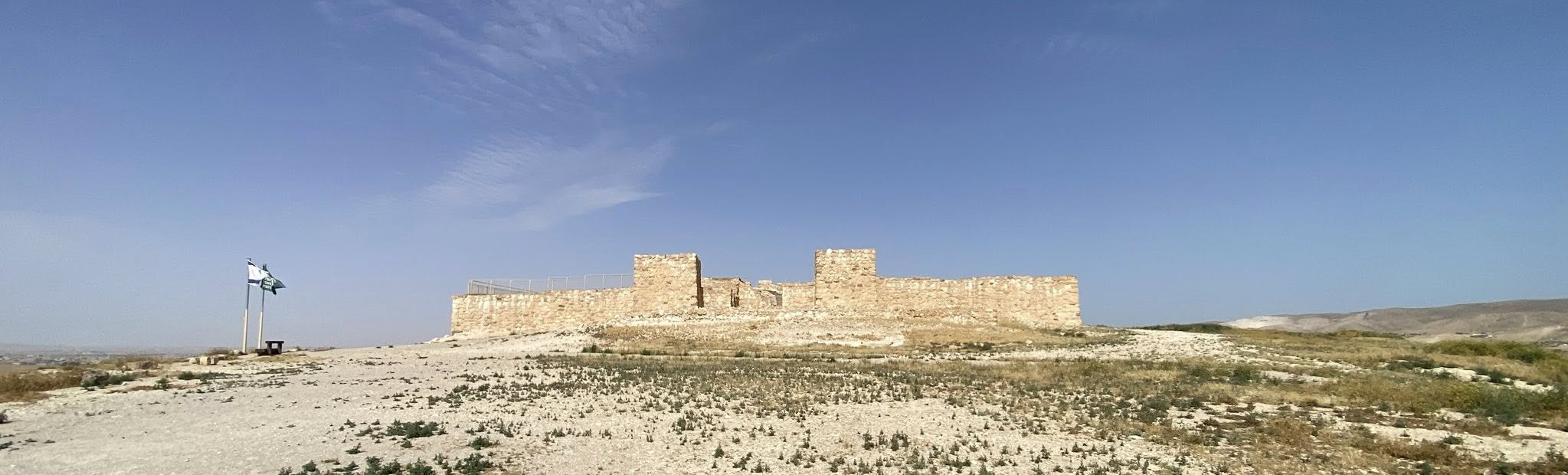
Tel Arad is located in the Negev Desert, 19 miles (30 km) east of Beersheba and 15 miles (24 km) west of the southern basin of the Dead Sea. The site was excavated for 18 seasons between 1962 and 1984. Subsequent excavations were also carried out around the water system at the site. The excavations unearthed evidence of the earliest occupation dating to the Chalcolithic and Early Bronze Age. Arad is most famous for its Iron Age fortress, which was situated on an important trade route connecting Jerusalem, Beersheba, and Edom. Because of its strategic location, Arad served as a fortress protecting the southern border of Judah. According to Herzog’s excavation report, there were seven Iron Age strata (XII to VI) dating from the second half of the tenth century BC to the late seventh or early sixth century BC.1 One of the unique features of the fortress is that it contained a small temple, which Kenneth Kitchen believes was a “satellite temple” to Yahweh, based on the evidence from the ostraca discovered at the site.2 This temple, along with its altar was deliberately buried (not destroyed), possibly in association with the spiritual reforms of King Hezekiah.
What are the Arad Ostraca?
An ostracon (plural: ostraca) is a clay shard with an inscription in ink. In 1965, during the third season of excavation at Arad, archaeologists discovered a group of Hebrew ostraca in one of the rooms of the southern casemate wall.3 They were found under a burn layer associated with the Babylonian destruction, and are usually dated to around 600 BC. Many of the ostraca are short administrative texts detailing deliveries of wine, flour, oil, and military provisions.
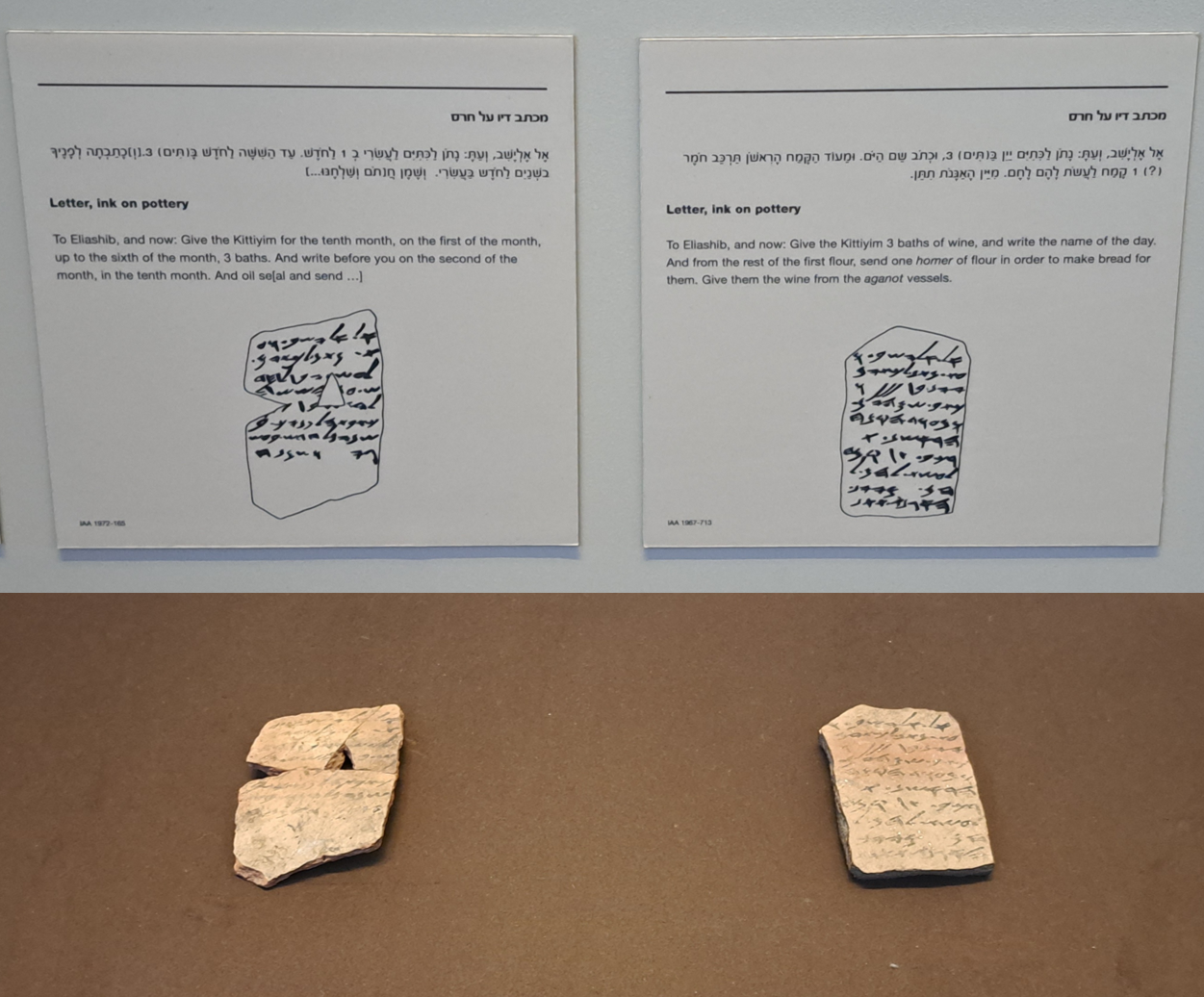
One group of these ostraca are letters addressed to Eliashib, likely the quartermaster of the fortress. They provide a glimpse into the workings of the kingdom of Judah in the late seventh century BC.
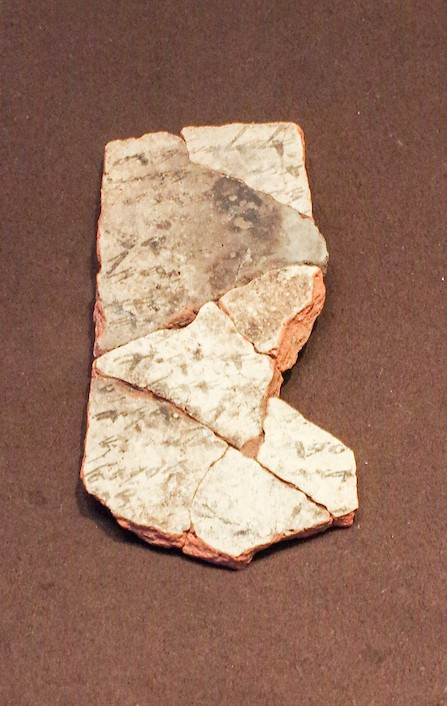
For example, one ostraca (no. 1 – sometimes referenced in older numbering systems as no. 5) reads,
To Eliashib, and now: give the Kittim 3 (?) baths of wine and write the name of the day. And from the rest of the first flour let 1 ephah (?) of flour be mixed (?) to make bread for them. From the wine of the basins give.4
Who were the Kittim? Aharoni notes that this word often refers to Greek residents of the Aegean islands, and suggests they were mercenaries serving in the armies of Judah, perhaps as garrison forces at the more remote fortresses.5
In 2017, a group of researchers used multispectral imaging on another ostracon from Arad (no. 16) to discover three lines of text on the supposedly blank side and four “new” lines on the front side. This letter from Hananiah to Elisahib greets the quartermaster with the phrase, “I bless you by Yahweh.” It also includes instructions about receipts, a money pouch, five shekels, and supplies of oil. The newly revealed text on the back includes a request for wine and asks if anything else is needed.6
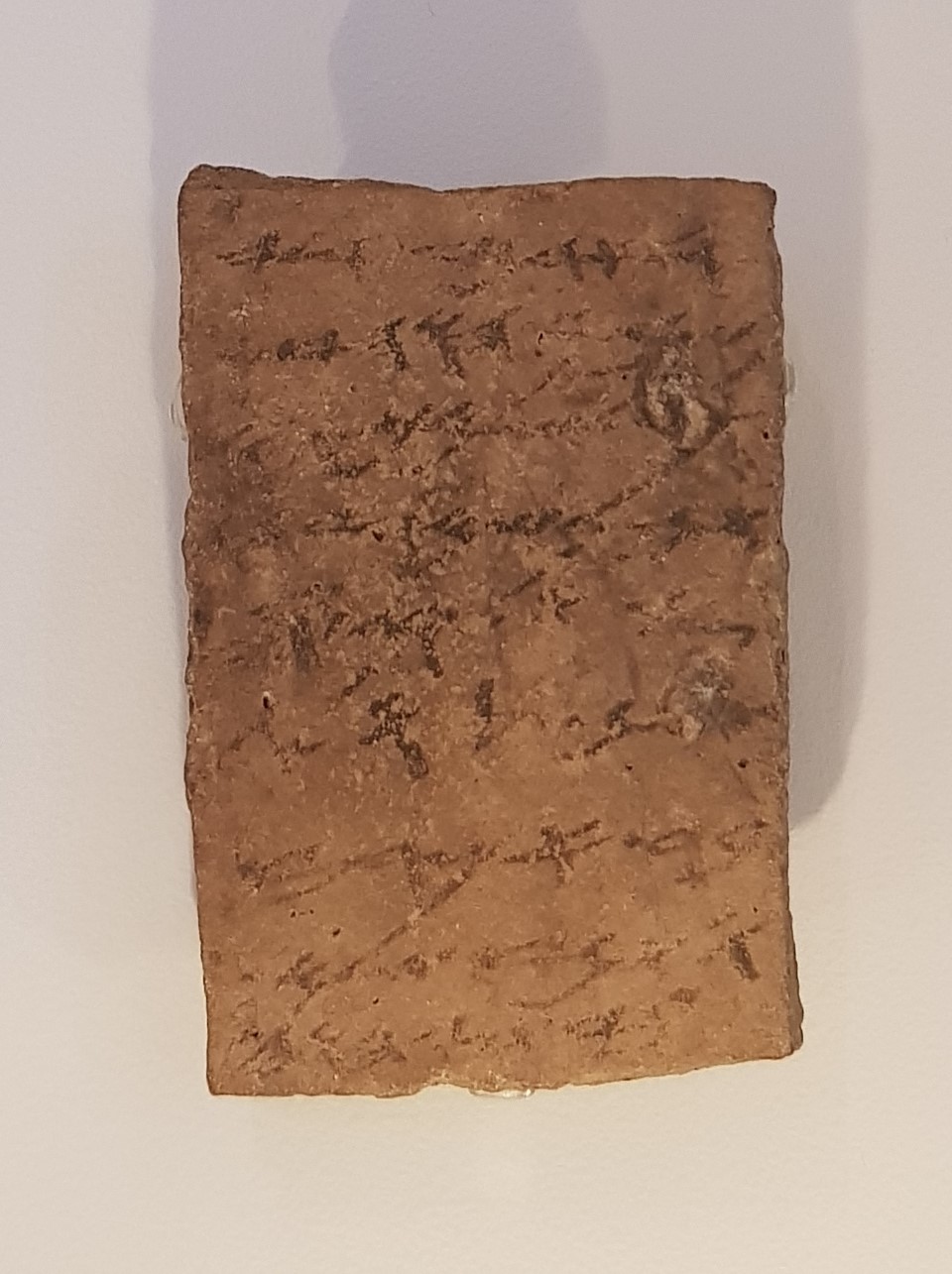
The most famous Arad ostraca (no. 18) contains a reference to the House of Yawheh. It reads:
To my lord Eliashab, Yahweh may ask for thy peace. And now: give Shemariahu…and to the Kerosite give…And regarding the matter which thou commandest me – Shalom. He dwells in the House of Yahweh.7
Aharoni maintained that this was likely a reference to the Temple in Jerusalem, rather than the small satellite temple at Arad, because, based on the stratum in which the ostracon was found (Stratum VI), the local temple at Arad had already been decommissioned.8 Moreover, the letter appears to be referencing a Temple in the location of the sender. Finally, the letter may affirm the practice of seeking shelter in the Temple (
Since many of the ostraca deal with the provision of food, such as wine, oil, and bread, these texts indicate that the fortress served as a site where supplies were sent and then redistributed.9
Some of the ostraca, such as no. 24, deal with the movement of troops to counter the growing threat from Edom.
How Do They Relate to Biblical History?
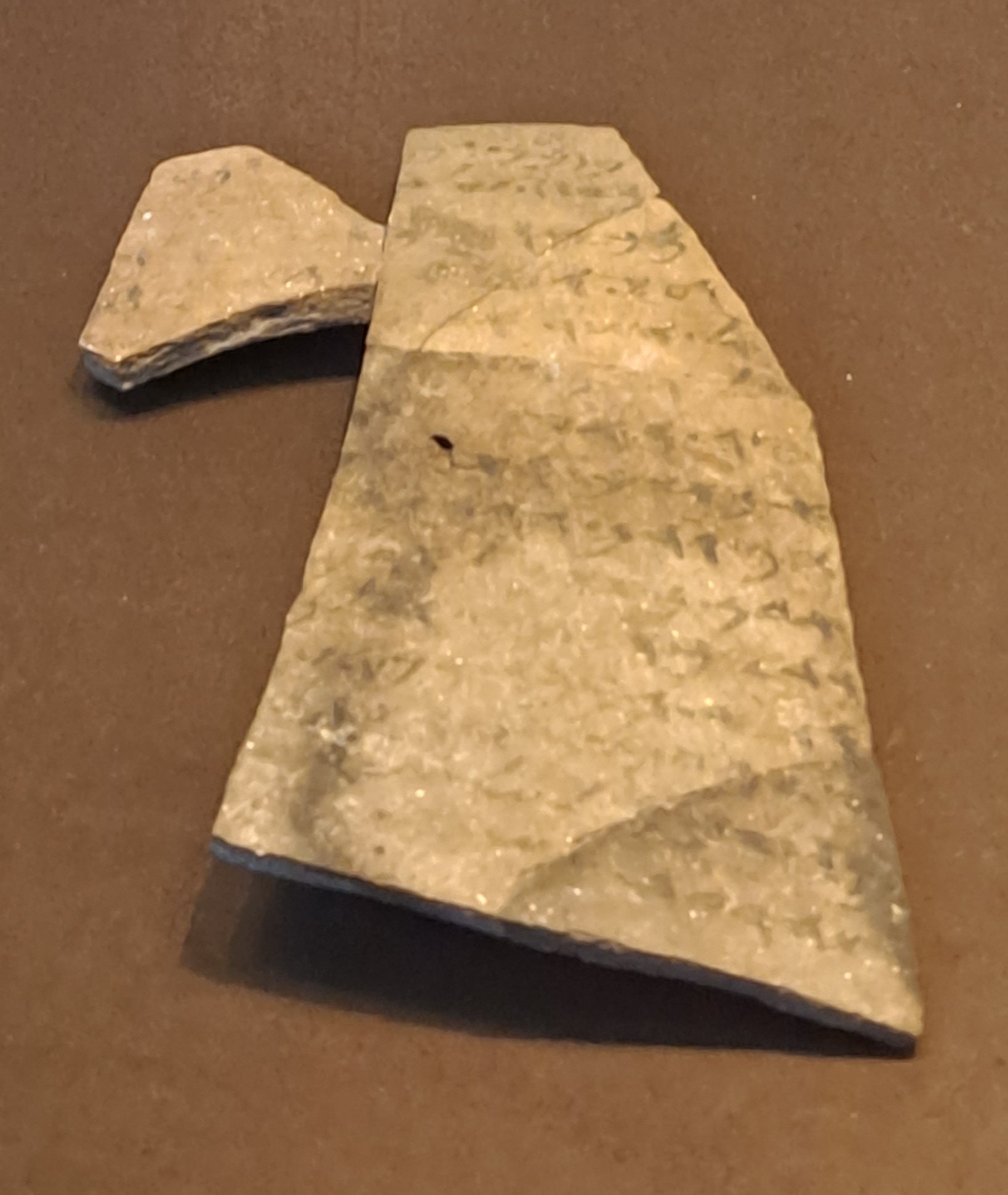
The Arad ostraca demonstrate that there was still a dedicated worship of Yahweh throughout the Kingdom of Judah in the period prior to the Babylonian invasion. The reference to the “House of Yahweh” provides an important extra-biblical testimony to the First Temple in Jerusalem. The concern about the military threat from Edom affirms the biblical description of Edom’s hostility towards Judah in the sixth century BC (Ps 137:7).
Moreover, a 2021 study published in the journal Near Eastern Archaeology¸ detailed an algorithmic and forensic analysis of the handwriting of the Arad ostraca to determine how many different writers there were. The results showed that there were at least 12 different authors, three of whom were stationed at the small, remote fortress. The authors concluded:
Following this reconstruction, it is reasonable to deduce a significant proliferation of literacy among the Judahite army ranks ca. 600 BCE. A contending claim, that the ostraca were written by professional scribes, can be dismissed with two arguments. First, the existence of three distinct writers in the tiny fortress of Arad. Second, the textual content of the inscriptions: Ostracon 1 orders the recipient (Eliashib) “write the name of the day”; Ostracon 7 commands, “and write it before you”; and in Ostracon 40, the author mentions that he had written the letter.10
This indicates there were several literate people among the military ranks at Arad, and these are only the ones we have evidence for. If one extrapolates this across other fortresses and towns across Judah, including in Jerusalem, it implies there was a significant level of literacy in the kingdom at that time, not just a select group of scribes who possessed this knowledge. This affirms the biblical description of people reading and writing in the Late First Temple period (Is. 8:1, Jer. 32:10, Hab. 2:2, 2 Kgs 23:2).
Conclusion
The Arad Ostraca provide a glimpse into the military administration and religious beliefs of people in Judah during the final decades of the kingdom before the Babylonian exile. They further provide evidence of literacy among people of different social strata, which aligns with numerous biblical references to reading and writing.
Cover: Arad letter no. 24 / Courtesy of Todd Bolen / BiblePlaces.com
Endnotes
1 Ze’ev Herzog, “The Fortress Mound at Tel Arad: An Interim Report.” Tel Aviv 29, no. 1 (2002), 14.
2 K. A. Kitchen, On The Reliability of the Old Testament. (Grand Rapids: Wm. B. Eerdmans Publishing Co., 2006), 416.
3 Y. Aharoni, “Hebrew Ostraca from Tel Arad.” Israel Exploration Journal, vol. 16, no. 1, 1966, 1. JSTOR, http://www.jstor.org/stable/27925035.
4 Aharoni, 3.
5 Aharoni, 4.
6 Anat Mendel-Geberovich, Arie Shaus, Shira Faigenbaum-Golovin, et al. “A Brand New Old Inscription: Arad Ostracon 16 Rediscovered via Multispectral Imaging.” Bulletin of the American Schools of Oriental Research, no. 378 (2017): 121. https://doi.org/10.5615/bullamerschoorie.378.0113.
7 Y. Aharoni, “Hebrew Ostraca from Tel Arad.” Israel Exploration Journal, vol. 16, no. 1, 1966, 6. JSTOR, http://www.jstor.org/stable/27925035.
8 Ahroni, 7.
9 Ze’ev Herzog, “The Fortress Mound at Tel Arad: An Interim Report.” Tel Aviv 29, no. 1 (2002), 79.
10 Shira Faigenbaum-Golovin, Arie Shaus, Barak Sober, David Levin, Nachum Dershowitz, Christopher A. Rollston, and Israel Finkelstein. “Literacy in Judah and Israel: Algorithmic and Forensic Examination of the Arad and Samaria Ostraca.” Near Eastern Archaeology 84, no. 6 (2021), 154. https://doi.org/10.1086/717298

