
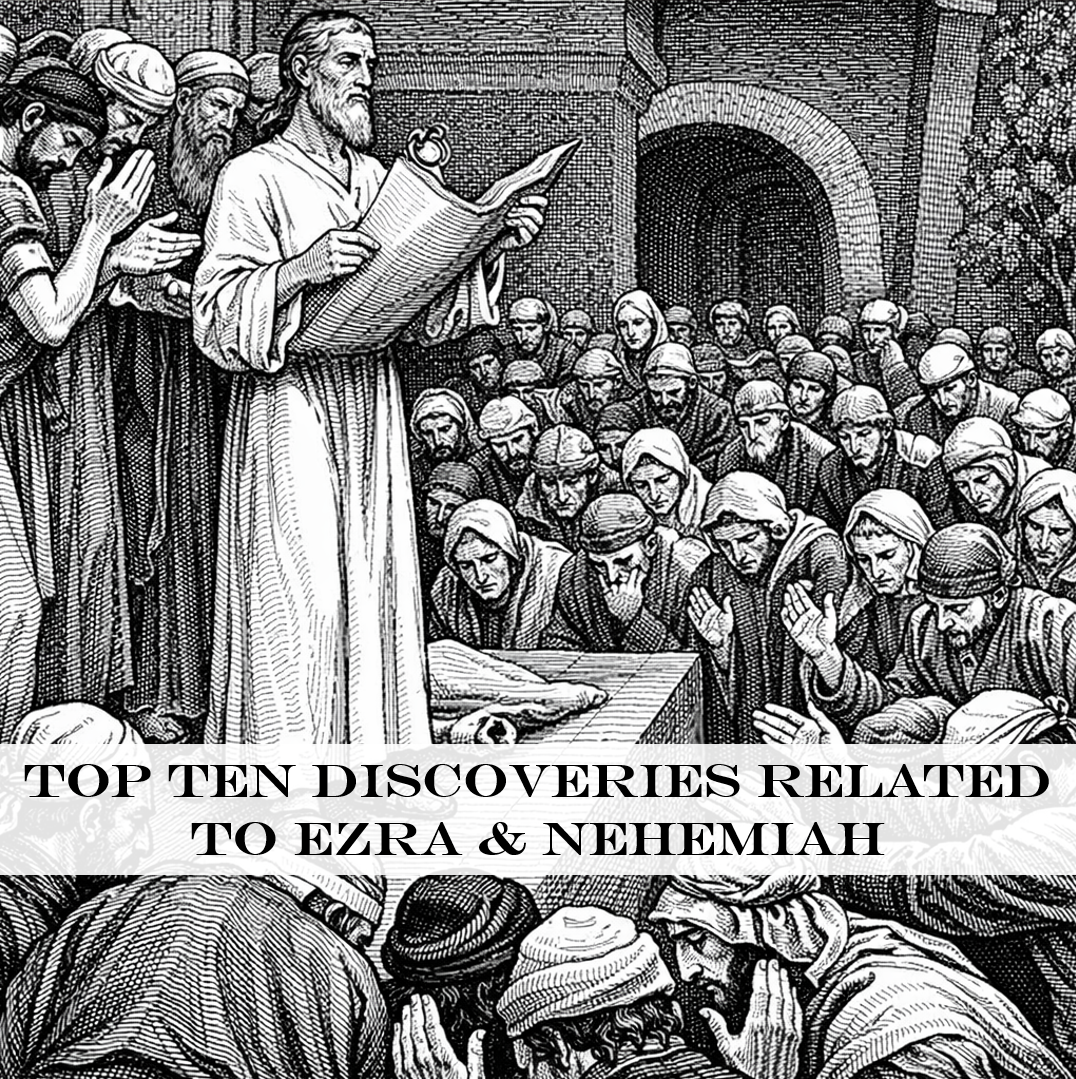
The books of Ezra and Nehemiah record the return of the Jewish exiles to Jerusalem in the Persian era, focusing on the rebuilding of the temple and the city walls, as well as the spiritual reforms they initiated. In the Hebrew Bible (the Old Testament in Christian Bibles), Ezra and Nehemiah form a single book. Not everyone agrees that these accounts are historically reliable. Lester L. Grabbe, for example, calls them a “ripping yarn” and claims that they “do not inspire confidence that we have genuine historical data.”1 On the other hand, archaeology has demonstrated that numerous people, places, and events within the books are historically accurate. Here are the top ten archaeological discoveries related to Ezra and Nehemiah, which help demonstrate the historicity of these biblical books.
10. Cuneiform Tablets: Evidence of the Jewish Exile
Remember the word that you commanded your servant Moses, saying, ‘If you are unfaithful, I will scatter you among the peoples (Neh 1:8).
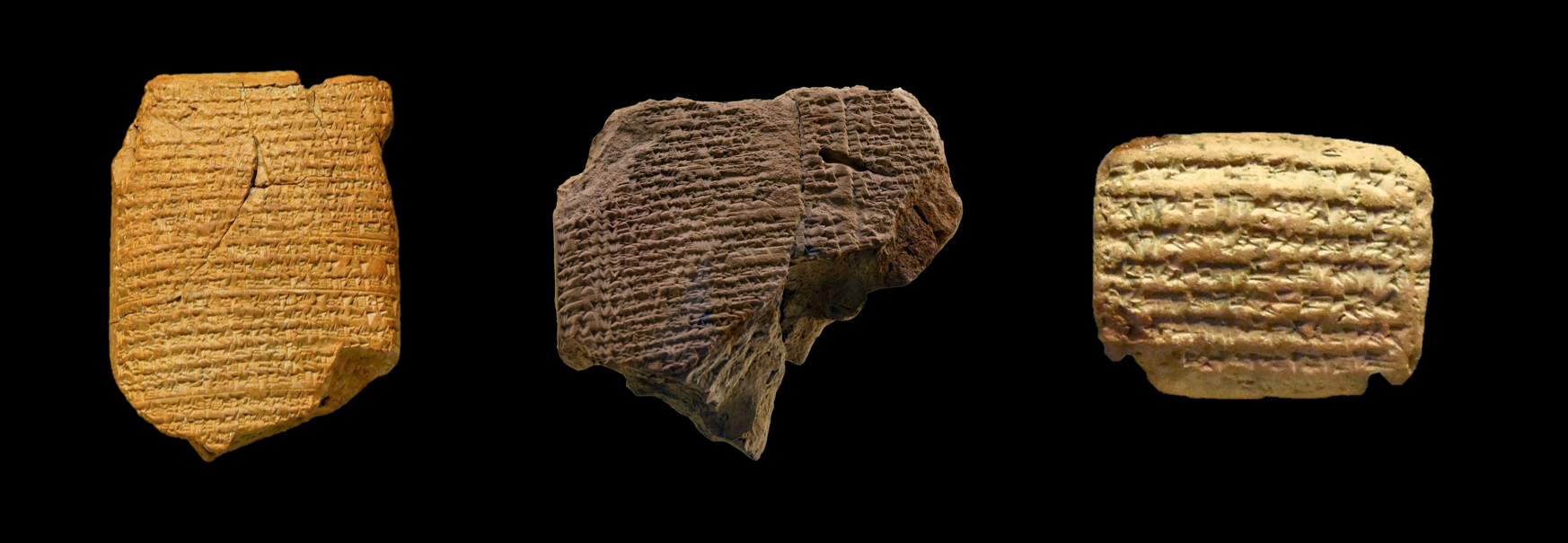
Central to the account of the return from exile is the fact that the Jewish people were in exile to begin with. Numerous cuneiform tablets from Babylon affirm the historicity of Nebuchadnezzar’s conquest of Judah and the people he took into exile, along with their longstanding habitation in Babylon. The Babylonian Chronicle for the years 605–595 BC describes the first two campaigns Nebuchadnezzar made against Judah (in 605 BC, when Daniel was taken into exile and in 597 BC, when the prophet Ezekiel was deported).2 The Jehoiachin ration tablets affirm that King Jehoiachin was indeed exiled in Babylon as the Bible indicates (2 Kings 24 and 25).3 The Al-Yahudu tablets from the city of Al-Yahudu (lit. “City of Judah”) in Babylon record business transactions, tax payments, and marriage contracts, depicting the Jewish exiles, not as slaves, but rather state dependents who retained their distinctly Jewish identity.4 The historical evidence clearly affirms that the Jewish people were exiles in Babylon before they were allowed to return to Jerusalem under Persian rule.
9. Persian Coins
For you are sent by the king and his seven counselors to make inquiries about Judah and Jerusalem according to the Law of your God, which is in your hand, and also to carry the silver and gold that the king and his counselors have freely offered to the God of Israel, whose dwelling is in Jerusalem (Ezra 7:14–15).
“Now some of the heads of fathers’ houses gave to the work. The governor gave to the treasury 1,000 darics of gold…” (Neh 7:70a).
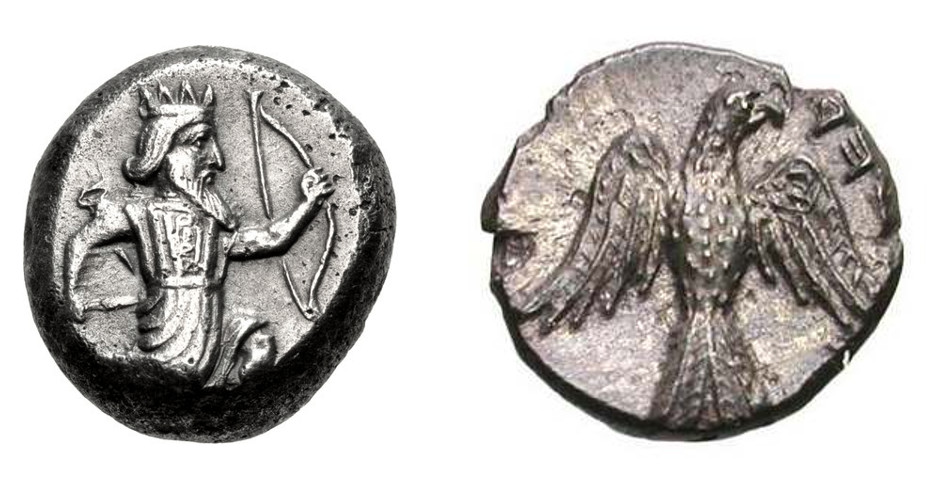
A significant number of verses in Ezra and Nehemiah deal with financial matters, which is not surprising given that the books detail the rebuilding of the Temple and fortifications at Jerusalem. Royal and administrative payments in the Persian empire were often made with gold darics and silver sigloi, although weighted silver was also used. Darius I standardized and expanded the use of these coins throughout the empire’s economic system.5 They often depicted a crowned Persian hero or king running while holding a spear and a bow on the obverse, with a rectangular punch mark on the reverse.5 The payments of silver and gold in Ezra and Nehemiah likely included both gold darics and silver sigloi as well as weighted measures. In the later Persian period, the district of Yehud (Judah) minted its own coinage.
8. Discoveries Related to Artaxerxes I
Now after this, in the reign of Artaxerxes king of Persia, Ezra the son of Seraiah, son of Azariah, son of Hilkiah…went up from Babylonia. (Ezra 7:1, 6a).
In the month of Nisan, in the twentieth year of King Artaxerxes, when wine was before him, I took up the wine and gave it to the king. Now I had not been sad in his presence (Neh 2:1).
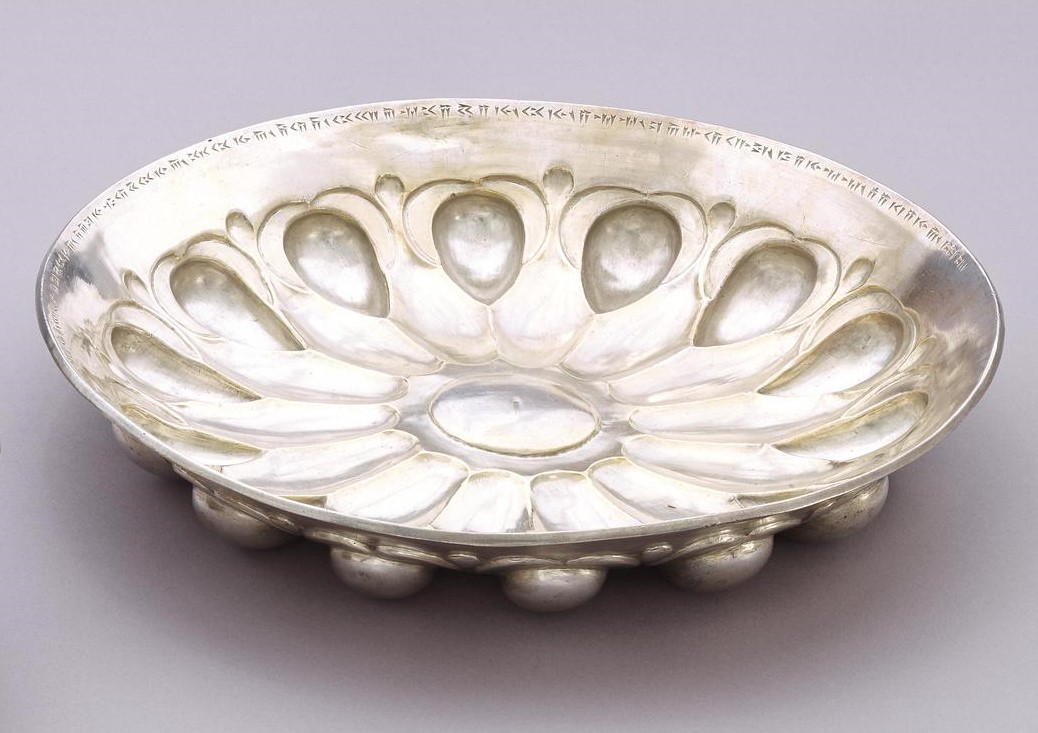
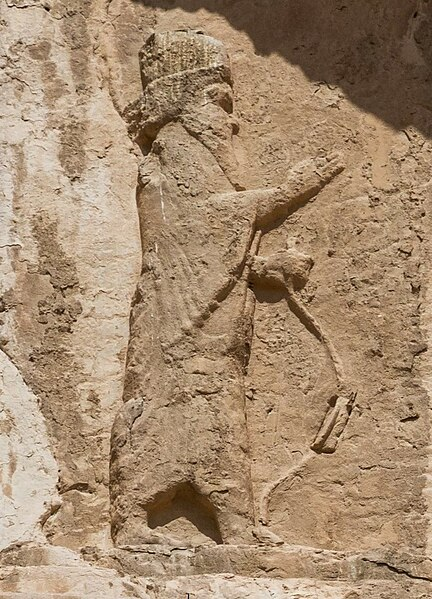
Numerous Persian kings are named in the books of Ezra and Nehemiah, including Cyrus (Ezra 1:1), Darius I (Ezra 4:5), Xerxes/Ahasuerus (Ezra 4:6), and Darius the Persian/Darius II (Neh. 12:22). The Persian king who figures most prominently, however, is Artaxerxes I. It was Artaxerxes who sent Ezra the priest to teach the people of Jerusalem about proper worship. Nehemiah served as cupbearer to Artaxerxes, who dispatched him to repair the walls of Jerusalem. Many archaeological discoveries related to Artaxerxes help illuminate his life.6 While his grandfather, Darius I, constructed the new capital city of Persepolis, Artaxerxes continued its expansion, finishing the Throne Hall that his father, Xerxes, had begun. Both at Persepolis and on his tomb at Naqsh-e Rustam, reliefs depict Artaxerxes as king. These reliefs depict the Persian king whom both Ezra and Nehemiah served under.
7. The Naophoros statue of Udjahorresnet
And you, Ezra, according to the wisdom of your God that is in your hand, appoint magistrates and judges who may judge all the people in the province Beyond the River, all such as know the laws of your God. And those who do not know them, you shall teach (Ezra 7:25).
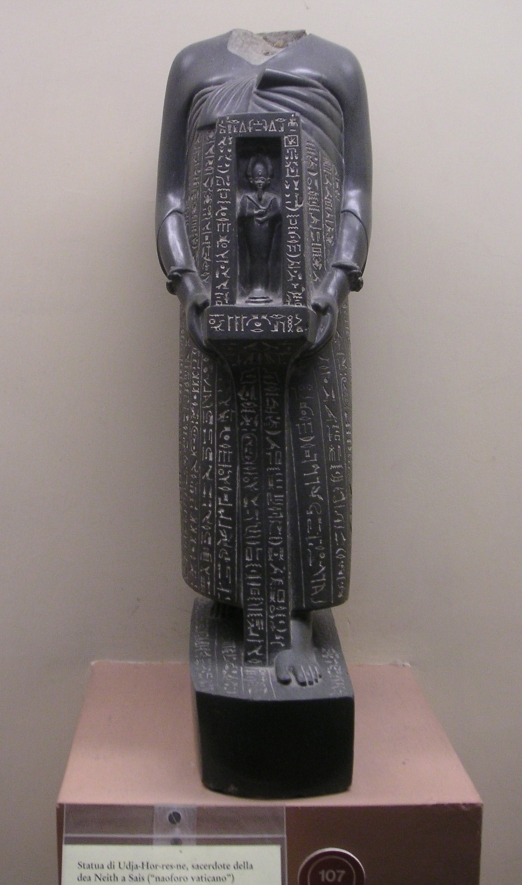
While it may seem far-fetched to some readers that a pagan king would send Ezra the priest back to teach the people of Jerusalem the proper worship of YHWH, it turns out that this practice was actually part of Persian imperial policy designed to keep subject peoples loyal. The Naophoros statue of Udjahorresnet, currently housed in the Vatican Museum, depicts an Egyptian official named Udjahorresnet who influenced two Persian kings to respect local traditions and petitioned them to restore the cult sanctuary of Neith at Sais.7 Darius I then commissioned Udjahorresnet to oversee the revival of worship and to teach the laws of Egypt. Blenkinsopp notes, “The two goals of Ezra’s mission correspond to the two phases of Udjahorresnet’s activity: the restoration of the cult at the national and dynastic shrine of Sais; the reorganization of judicial institutions, for which the smooth functioning of the Houses of Life was a necessary precondition.”8
6. The Tattannu Tablet
At the same time Tattenai the governor of the province Beyond the River and Shethar-bozenai and their associates came to them and spoke to them thus: “Who gave you a decree to build this house and to finish this structure? (Ezra 5:3).
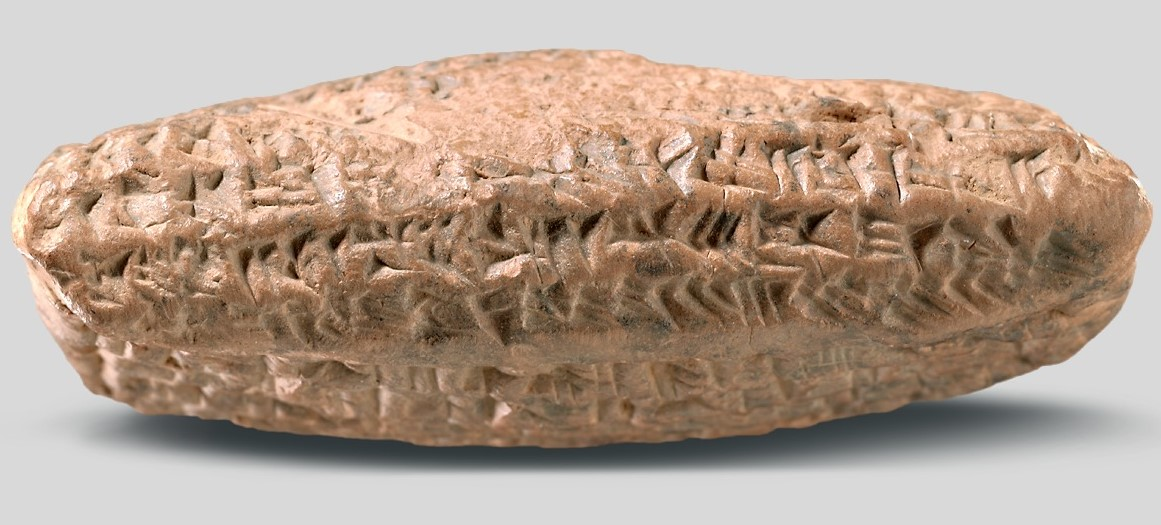
In Ezra 5, the governor of the Persian province named Beyond-The-River came to ascertain whether the Jewish people under Zerubbabel’s leadership had royal approval to rebuild the temple in Jerusalem. The Persian province called Beyond-the-River, which designates the lands west of the Euphrates River, is well known from Persian inscriptions.9 A group of Persian tablets, called the Tattannu Archive, confirms Tattannu/Tattenai, served as the governor of this province. One cuneiform tablet (VAS 4 152) is a promissory note dated to the 20th year of Darius I (502 B.C.) in which one of the witnesses of the transaction is a servant of “Tattannu, Governor Across-The-River.”10 There is a consensus among scholars that this governor Tattannu and the biblical Tattenai are one and the same.11
5. Elephantine Papyrus No. 30
Then I came to the governors of the province Beyond the River and gave them the king’s letters. Now the king had sent with me officers of the army and horsemen. But when Sanballat the Horonite and Tobiah the Ammonite servant heard this, it displeased them greatly that someone had come to seek the welfare of the people of Israel (Neh 2:9–10).
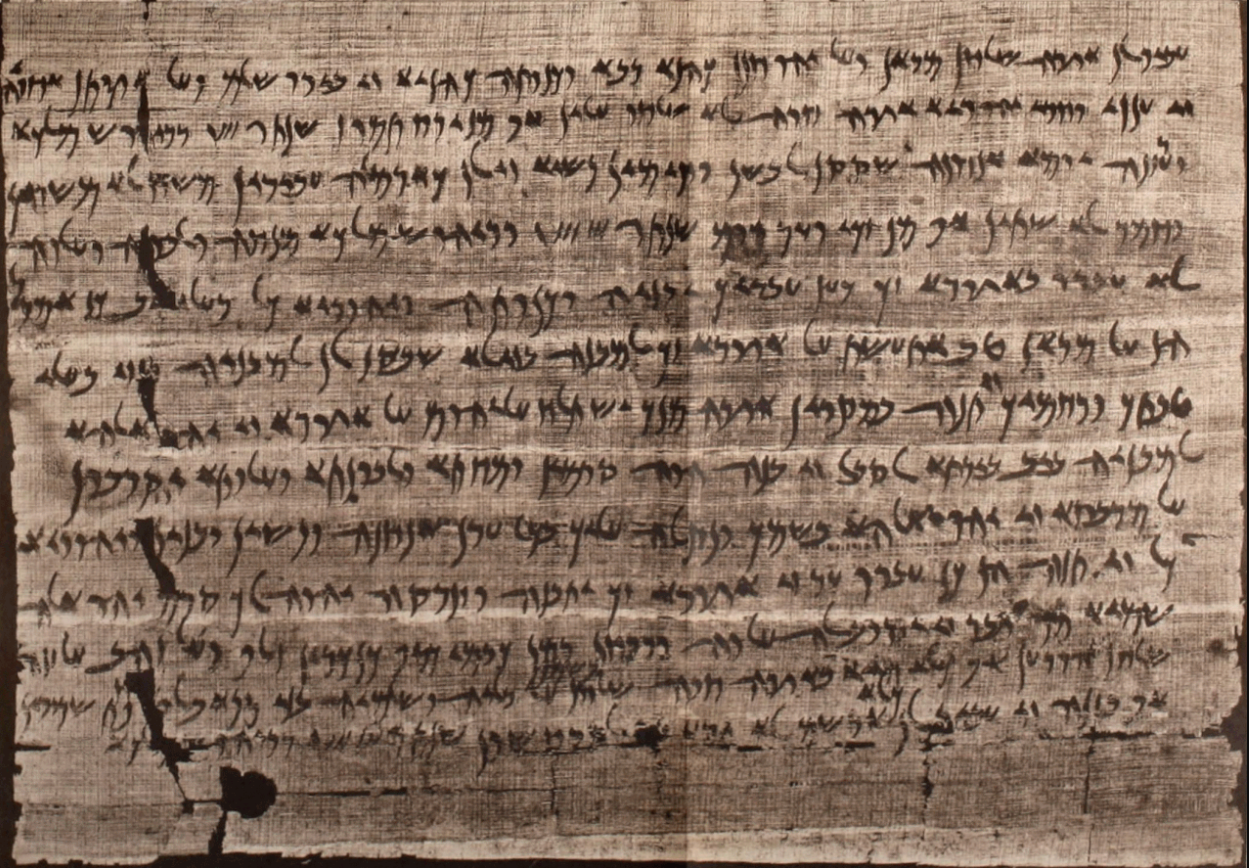
The Elephantine Papyri refer to a collection of documents belonging to the Jewish community on the island of Elephantine in Egypt. Some of them are written in Aramaic and date to the same period as Ezra and Nehemiah. Elephantine Papyrus No. 30 (Cowley) is a letter from Jedaniah and the Jewish priests at Elephantine to Bagavahya/Bagoas, the Persian governor of Judah, asking for permission to rebuild their temple to YHW (Yahweh), which had been destroyed by local Egyptians. In it, Jedaniah notes, “Moreover, all these things in a letter we sent in our name to Delaiah and Shelemiah, the sons of Sanballat, the governor of Samaria.”12 Edwin Yamauchi identifies Sanballat, the governor of Samaria, with the Sanballat who opposed Nehemiah, writing, “Though Sanballat is not called governor in the Book of Nehemiah, an important Elephantine papyrus makes his position explicit.”13
4. The Palace in Susa
The words of Nehemiah the son of Hacaliah. Now it happened in the month of Chislev, in the twentieth year, as I was in Susa the citadel… (Neh 1:1).

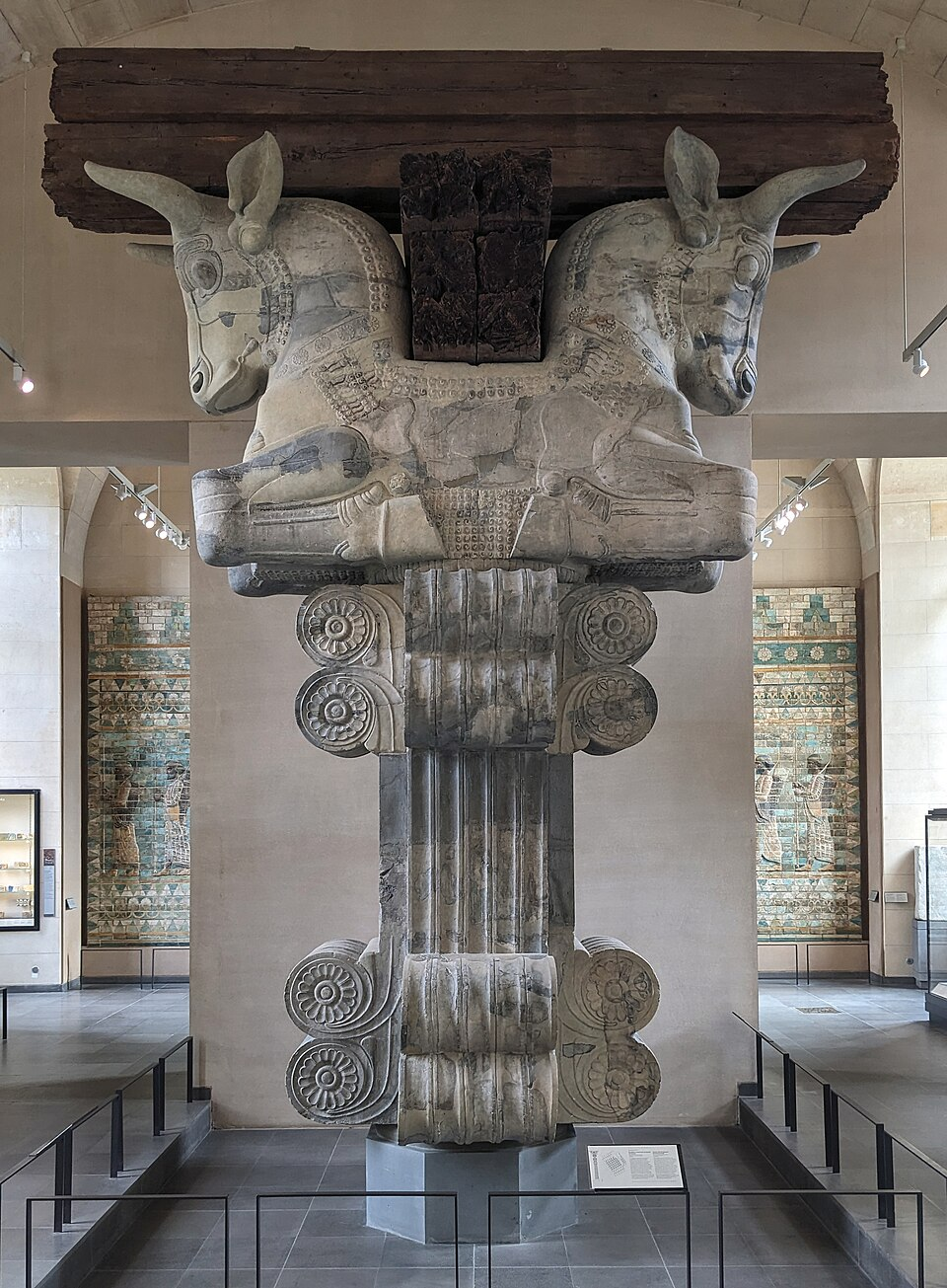
The setting for the first chapter of the book of Nehemiah is the Persian palace at Susa. Artaxerxes’ grandfather, Darius I, had constructed the palace as his royal capital during the winter months due to its favorable climate. The palace, which also figures prominently in the book of Esther, was first excavated by British archaeologist William Loftus from 1850 to 1852, and then intermittently by French archaeologists from 1897 to 1979. These excavations identified the Apadana (the Audience Hall or Court of the Gardens), the King’s Gate, three inner courtyards, the Haram, and the throne room. The scene from Nehemiah chapter one occurred in either the throne room or the Apadana. The latter is more likely since, as cupbearer to the king, Nehemiah would be present when he held court and received people, which took place in the Apadana/Audience Hall. The Apadana at Susa was a square hypostyle hall, surrounded by three porticoes (columned porches). Within the hall were 36 columns, each with double bull head capitals.14 Darius’ foundation inscription was discovered in the audience hall, which describes its construction using cedars of Lebanon, ebony from Egypt, stone from Elam, ivory from Ethiopia, gold from Bactria, and precious stones from various parts of the Persian empire.15 Nehemiah likely served Artaxerxes his wine in this opulent audience hall on many occasions.
3. Evidence of the Post-exilic Temple/Temple Mount in Jerusalem
And the elders of the Jews built and prospered through the prophesying of Haggai the prophet and Zechariah the son of Iddo…and this house was finished on the third day of the month of Adar, in the sixth year of the reign of Darius the king. And the people of Israel, the priests and the Levites, and the rest of the returned exiles, celebrated the dedication of this house of God with joy (Ezra 6:14–16).
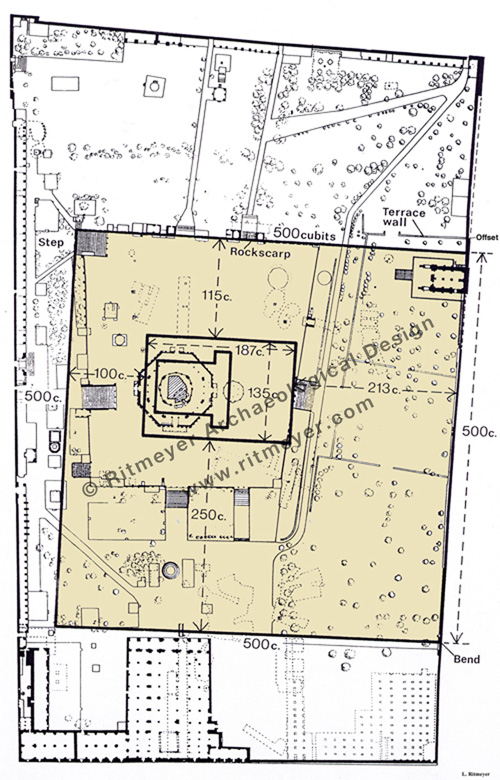
The Second Temple (also called Zerubbabel’s Temple) was constructed by the exiles who returned to Jerusalem, and the square Temple Mount on which it sat was refortified. Archaeological remains from this temple are scarce, due to the expansion activities of Herod the Great, the destruction of this temple by the Romans, the later rebuilding at the site in the Roman, Byzantine, Islamic, Crusader, and Ottoman periods, and the fact that systematic excavations are not possible given the current situation. There is limited evidence for the temple that the exiles rebuilt. The fourth-century Greek historian, Hecataeus of Abdera, mentions that the Temple of the Jews was standing in Jerusalem in his day.16 The Temple Mount Sifting Project discovered several Persian-era artifacts, including pottery and Yehud coins, through its work sifting thousands of tons of soil that was illegally removed from the Temple Mount in 1999 and dumped in the Kidron Valley.17 Leen Ritmeyer’s extensive research into the Temple Mount identified the 500-cubit square Temple Mount that ancient Jewish sources describe. He noticed that the bottom step of a staircase at the northwest corner of the Muslim platform was constructed from pre-Herodian stone blocks from an ancient wall, and that it was parallel to the eastern wall of the Temple Mount. The northernmost stone of these stairs was in line with a rockscarp in Cistern 29, creating a northern line to the eastern wall. The famous bend in the eastern wall created the southeast corner of this 500-cubit square, and there was an offset in the northeast corner, likely indicating the presence of an ancient tower. The “Ritmeyer Square,” as it has been dubbed, contains archaeological and architectural elements indicating that it was the square Temple Mount that was constructed by Hezekiah in renovations to the first temple, and was repaired by Nehemiah shortly after the second temple was finished.18 Just north of the Golden Gate along the eastern wall, the lowest courses of stone date to the First Temple Period and were likely part of the corner tower mentioned in Neh. 3:31, where “the upper chamber [aliyah] of the corner” likely refers to a window or turret on the tower.19
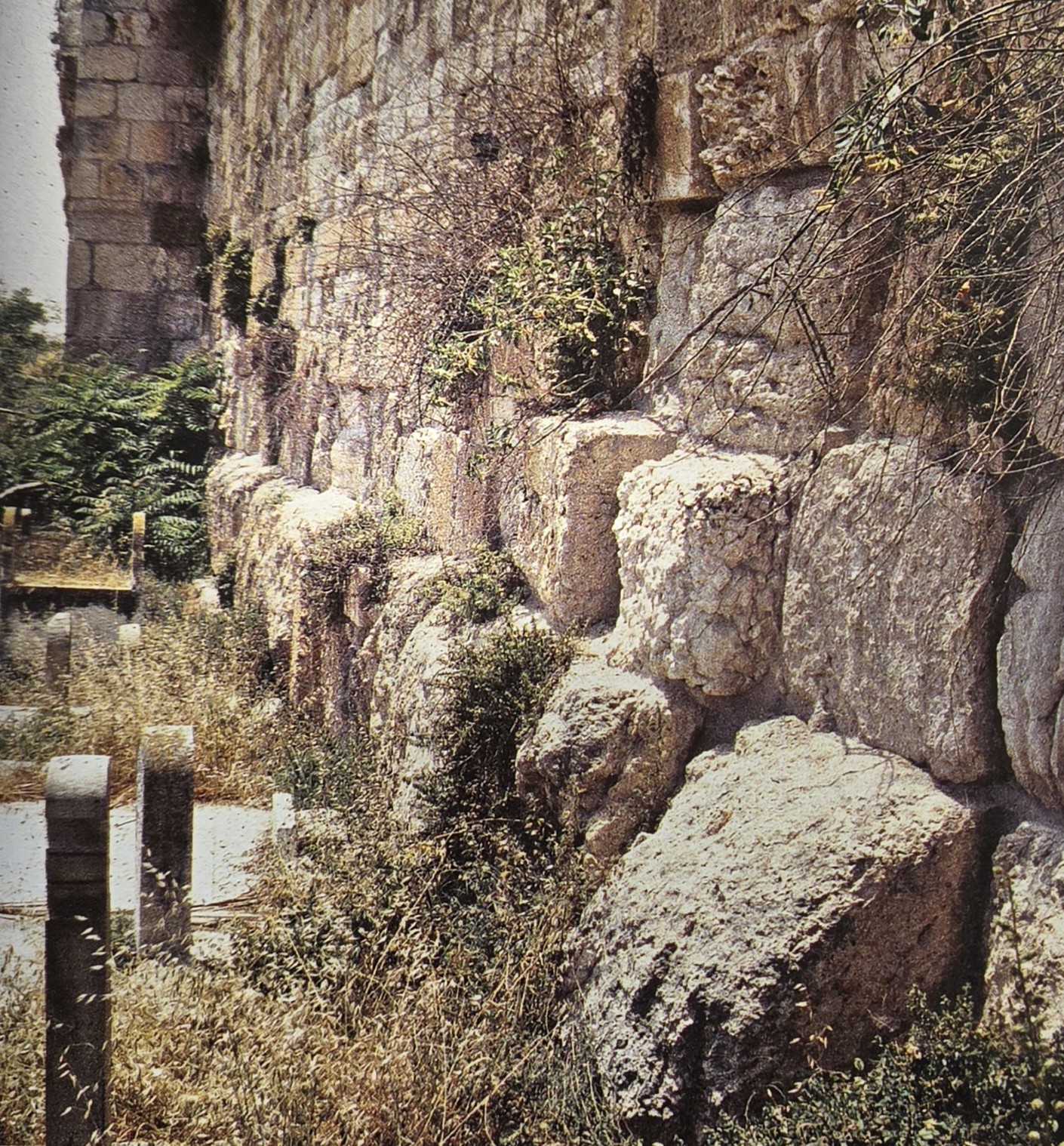
NOTE: I highly recommend purchasing two books by Leen Ritmeyer: The Quest: Revealing the Temple Mount in Jerusalem and Jerusalem in the Time of Nehemiah to learn more about the information I have tried to summarize above.
2. Nehemiah’s Wall
Then I said to them, “You see the trouble we are in, how Jerusalem lies in ruins with its gates burned. Come, let us build the wall of Jerusalem, that we may no longer suffer derision” (Neh 2:17).
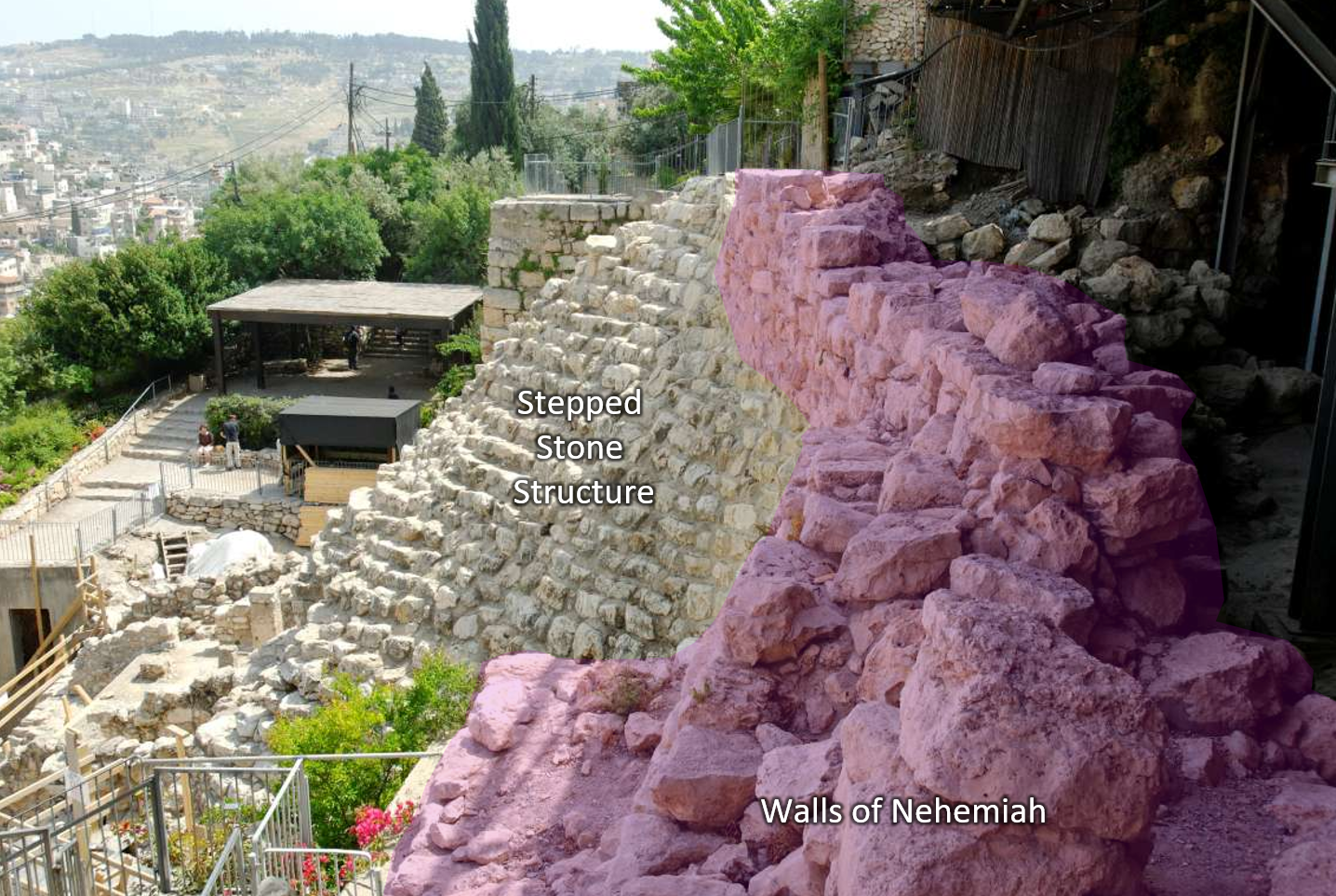
https://www.bibleplaces.com/nehemiah-photo-companion-to-the-bible/
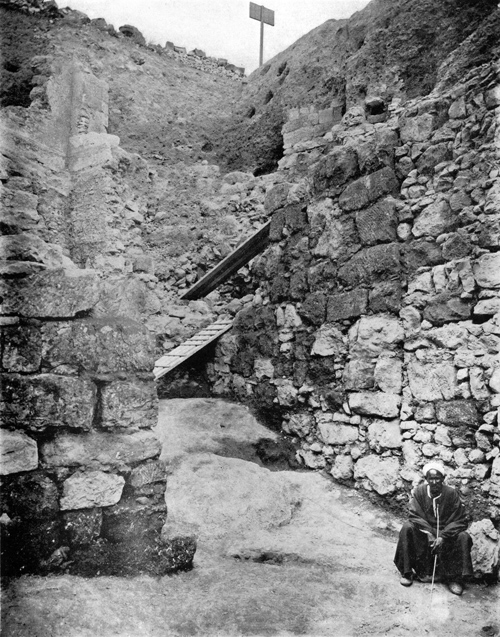
The remains from the Persian era unearthed in Jerusalem indicate that the city of Nehemiah’s day was confined to the Temple Mount and the City of David, particularly the southeastern hill.20 Eilat Mazar’s excavations in the City of David exposed the foundations of the Northern Tower that connected with a section of an ancient city wall. Beneath the tower, her team discovered two Persian dog burials and Persian pottery. Moreover, Yehud seal impressions are very common in the later Persian period, but none were found in this layer. This indicated that the layer dated to before the middle of the fifth century BC, and that the Northern Tower and the connecting wall were to be identified with Nehemiah’s wall.21 In her final excavation report, Mazar wrote, “Taking into account the strong archaeological evidence on the one hand and the detailed biblical account on the other, we propose identifying the Northern Tower, and likely the Southern Tower as well, together with the segment of the city wall (W27), as all forming part of Nehemiah’s fortifications.”22 This is not the only part of Nehemiah’s fortifications to be found in Jerusalem. According to Leen Ritmeyer, “The Valley Gate is another element of Nehemiah’s wall for which we have archaeological evidence. In 1927, J.W. Crowfoot discovered in this area a stretch of wall into which was built a 20-foot (6-m) high gate of very large stones which gave access to the City of David from the west. Although the gate was used by the Hasmoneans…the lower courses appear to date back some centuries earlier, making it a prime candidate for the Valley Gate of Nehemiah 3.”23
1. The Cyrus Cylinder
In the first year of Cyrus king of Persia, that the word of the LORD by the mouth of Jeremiah might be fulfilled, the LORD stirred up the spirit of Cyrus king of Persia, so that he made a proclamation throughout all his kingdom and also put it in writing: “Thus says Cyrus king of Persia: The LORD, the God of heaven, has given me all the kingdoms of the earth, and he has charged me to build him a house at Jerusalem, which is in Judah. Whoever is among you of all his people, may his God be with him, and let him go up to Jerusalem, which is in Judah, and rebuild the house of the LORD, the God of Israel—he is the God who is in Jerusalem. And let each survivor, in whatever place he sojourns, be assisted by the men of his place with silver and gold, with goods and with beasts, besides freewill offerings for the house of God that is in Jerusalem” (Ezra 1:1–4).
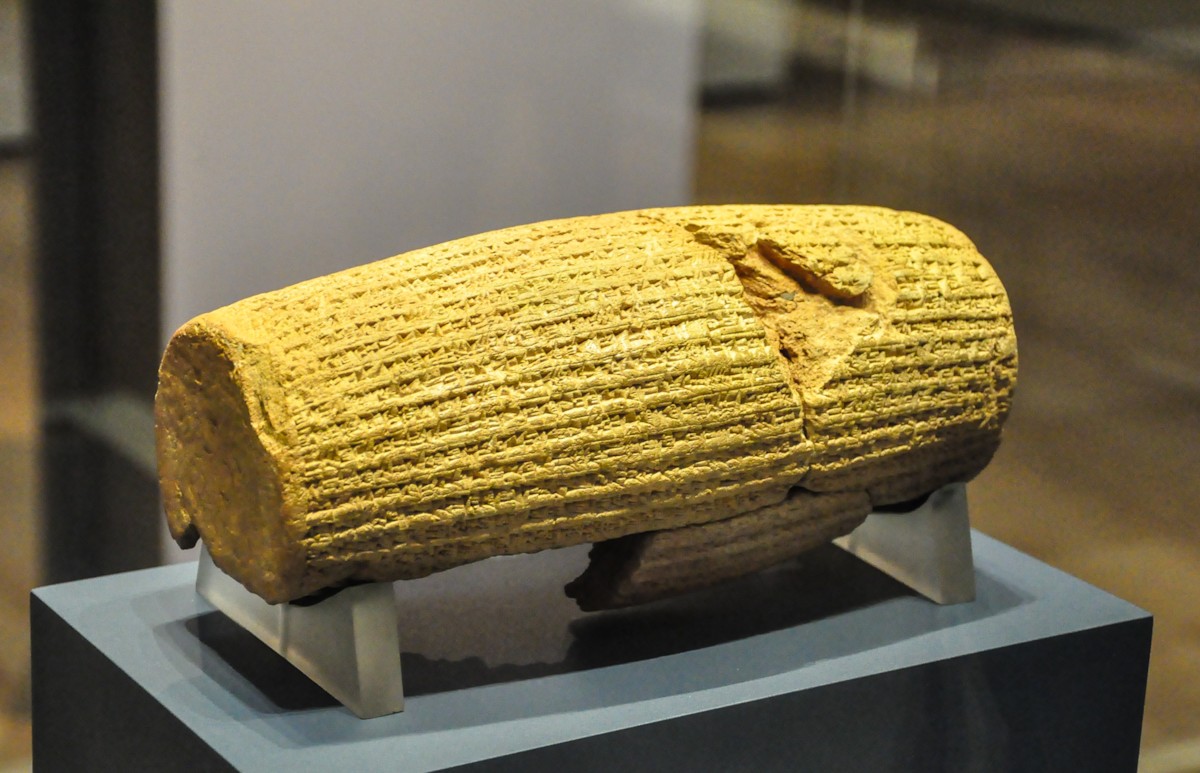
The Cyrus Cylinder is one of the greatest discoveries in biblical archaeology related to the Old Testament. The small, barrel-shaped cylinder, measuring 22.5 cm by 10 cm, was discovered in the ruins of Babylon in 1879 by Hormuzd Rassam. A second piece of the Cyrus Cylinder, discovered in the Yale University Babylonian Collection, was joined to the main artifact in 1972. In the inscription, Cyrus declares:
As far as Ashur and Susa, Agade, Eshnunna, the towns Zamban, Me-Turnu, Der as well as the region of the Gutians, I returned to (these) sacred cities on the other side of the Tigris, the sanctuaries of which have been ruins for a long time, the images which (used) to live therein and established for them permanent sanc-tuaries. I (also) gathered all their (former) inhabitants and returned (to them) their habitations. Furthermore, I resettled…the gods, unharmed, in their (former) chapels, the places which make them happy. May all the gods whom I have resettled in their sacred cities ask daily Bel and Nebo for a long life for me and may they recommend me (to him).24
Dr. Bryan Wood explains the difference in wording between the Cyrus Cylinder and the declaration in Ezra: “In the case of the Jews…since they had no idols, the gold and silver articles taken from the Temple were returned. The specific proclamation pertaining to the Jews is documented in Ezra”25
Some have suggested that it is problematic to see the Cyrus Cylinder as reflecting general Persian policy and connecting it to Ezra because it is a foundation inscription, buried during the construction or remodelling of a building and was only intended to be read by the gods.26
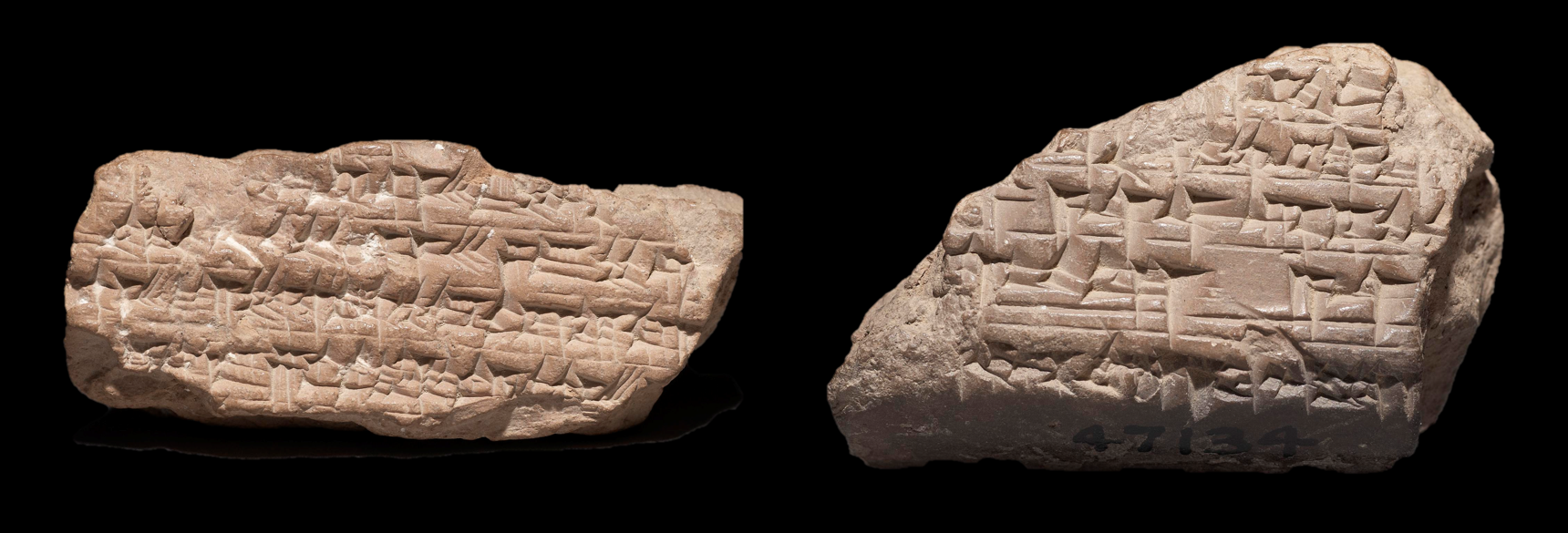
However, in 2010, the British Museum announced that it had discovered two fragments of a cuneiform tablet that contain the same text as the Cyrus Cylinder. According to the press release from the British Museum, these fragments show “that the ‘declaration’ on the Cylinder is much more than a standard Babylonian building inscription. It was probably an imperial decree that was distributed around the Persian Empire, and it may have been pronouncements of this sort that the author of the Biblical book of Ezra was able to draw upon when writing about Cyrus.”27
Conclusion
Historical evidence affirms that people from Judah were taken into exile by the Babylonian king Nebuchadnezzar and freed to return to Jerusalem by the Persian king Cyrus. Numerous details of Persian policy, people, and building activities in Jerusalem recorded in Ezra and Nehemiah are now attested in the archaeological record. These findings, when added to the hundreds of other discoveries related to biblical history, lead me to conclude that the Bible is a historically reliable document. It describes actual people, authentic places, and accurate history.
Endnotes
1 Lester L. Grabbe, Ezra-Nehemiah. (New York: Routledge, 1998), 15, 59.
2 “ABC 5 (Jerusalem Chronicle),” Livius.org. July 26, 2017. https://www.livius.org/sources/content/mesopotamian-chronicles-content/abc-5-jerusalem-chronicle/ (Accessed March 16, 2026).
3 James B. Pritchard, Ancient Near Eastern Texts Relating to the Old Testament. (New Jersey: Princeton University Press, 1969), 308.
4 “Tablets of Jewish Exiles,” Bible History Daily. Feb. 12, 2016. https://www.biblicalarchaeology.org/exhibits-events/tablets-of-jewish-exiles/ (Accessed March 16, 2026).
5 Michael Alram, “The Coinage of the Persian Empire.” In The Oxford Handbook of Greek and Roman Coinage. Ed. William E. Metcalf (Oxford: Oxford University Press, 2012), 62–64.
6 Bryan Windle, “Artaxerxes I: An Archaeological Biography.” Bible Archaeology Report. Oct. 24, 2024. https://biblearchaeologyreport.com/2024/10/24/artaxerxes-i-an-archaeological-biography/ (Accessed March 17, 2026).
7 Joseph Blenkinsopp, “The Mission of Udjahorresnet and Those of Ezra and Nehemiah.” Journal of Biblical Literature 106, no. 3 (1987), 410. https://doi.org/10.2307/3261065.
8 Blenkinsopp, 419.
9 Amélie Kuhrt, The Persian Empire: A Corpus of Sources from the Achaemenid Period (London: Routledge, 2007), 325, 711–712, 753, 831, .
10 Matthew Jursa and Matthew M. Stolper, “From the Tattannu archive Fragment,” Wiener Zeitschrift für die Kunde des Morgenlandes 97 (2007): 243.
11 Jursa and Stopler, 244.
12 Bezalel Porten, The Elephantine Papyri in English. (New York: E.J. Brill, 1996), 144.
13 Edwin Yamauchi, “Archaeological Backgrounds of the Exilic and Postexilic Era Part 4: The Archaeological Background of Nehemiah.” Bibliotheca Sacra, Vol. 137:548 (Oct 1980), 300.
14 Jean Perrot, ed. The Palace of Darius at Susa. (London: I.B.Tauris & Co Ltd, 2013), 55.
15 Edwin M. Yamauchi, Persia and the Bible (Grand Rapids: Baker Book House, 1990), 296.
16 Hecataeus of Abdera, in Diodorus Siculus, Library of History 40.3.
17 Daniel Shani, “The History of The Temple Mount in 12 Objects: #4 The Early Second Temple Period.” https://tmsifting.org/en/2019/12/23/the-history-of-the-temple-mount-in-12-objects-4-the-early-second-temple-period/ (Accessed April 22, 2026).
18 Leen Ritmeyer, The Quest: Revealing the Temple Mount in Jerusalem. (Jerusalem: Carta, 2006), 168–197.
19 Ritmeyer, 198.
20 Jodi Magness, Jerusalem Through The Ages.(New York: Oxford University Press, 2024), 139.
21 Christopher Eames, “Discovered: Nehemiah’s Wall.” AIBA, Oct. 31, 2019. https://armstronginstitute.org/204-discovered-nehemiahs-wall (Accessed March 21, 2026).
22 Eilat Mazar, The Summit of the City of David Excavations 2005 – 2008, Final Reports Volume I. (Jerusalem: Shoham Academic Research and Publication, 2015), 189 –
23 Leen and Kathy Ritmeyer, Jerusalem in the Time of Nehemiah. (Jerusalem: Carta, 2014), 38–39.
24 James B. Pritchard, Ancient Near Eastern Texts Relating to the Old Testament. (New Jersey: Princeton University Press, 1969), 315–316.
25 Bryan G. Wood, “The Ongoing Saga of the Cyrus Cylinder: The Internationally-Famous Grande Dame of Ancient Texts.” Associates for Biblical Research. https://biblearchaeology.org/research/divided-kingdom/2877-the-ongoing-saga-of-the-cyrus-cylinder-the-internationallyfamous-grande-dame-of-ancient-texts (Accessed March 23, 2026).
26 Nathan Steinmeyer, “The Cyrus Cylinder.” Bible History Daily, December 04, 2025. https://www.biblicalarchaeology.org/daily/ancient-cultures/the-cyrus-cylinder/ (Accessed March 23, 2026).
27 British Museum, “Cyrus Cylinder Statement,” January 20, 2010, Wayback Machine, https://web.archive.org/web/20110922221208/http://www.britishmuseum.org/the_museum/news_and_press_releases/statements/cyrus_cylinder.aspx (Accessed March 23, 2026).

