
And the anger of the Lord was kindled against Israel, and he gave them continually into the hand of Hazael king of Syria and into the hand of Ben-hadad the son of Hazael (2 Kgs 13:3).
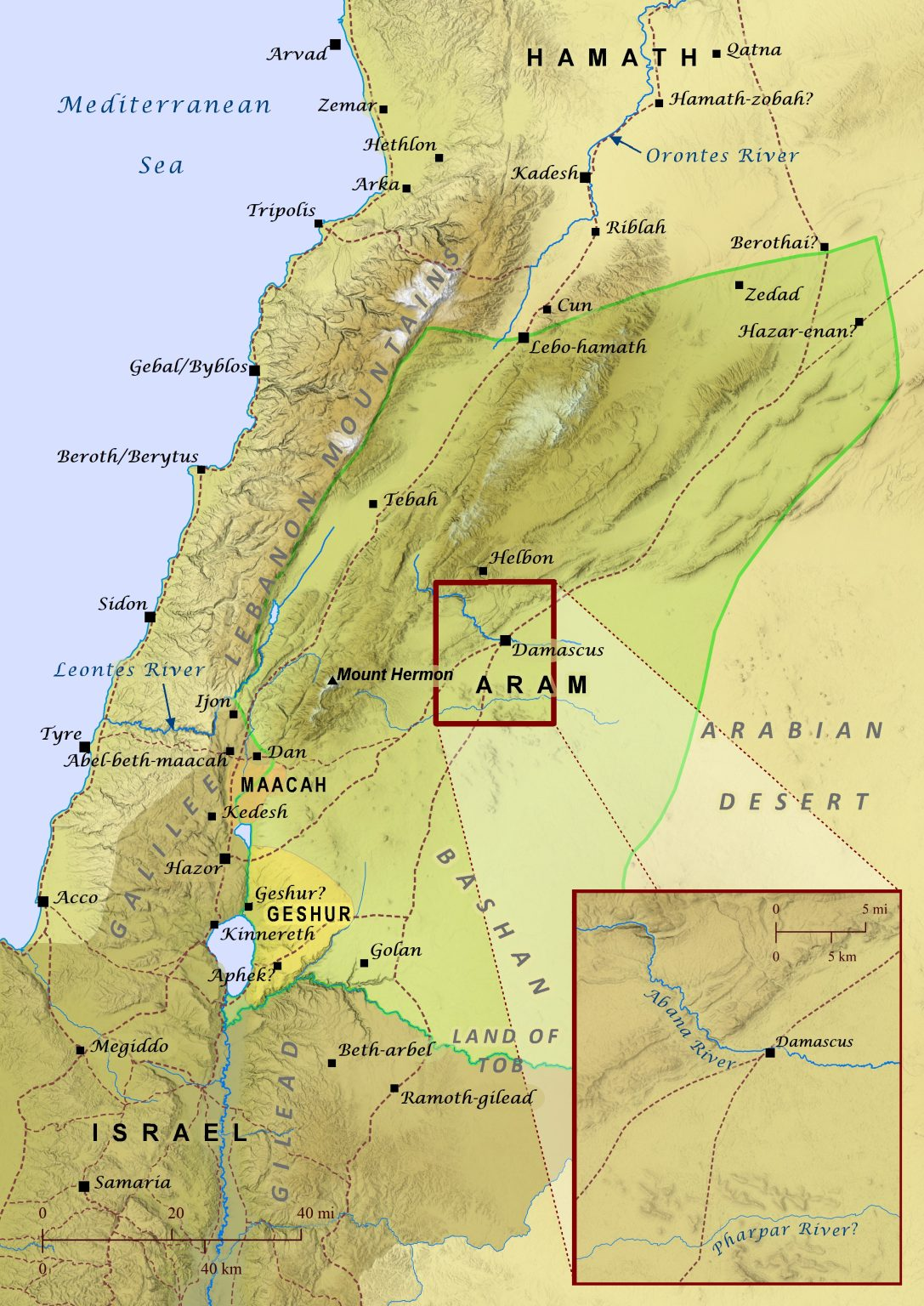
The Bible mentions three Syrian kings named Ben-Hadad: Ben-Hadad I (1 Kgs 15:18), Ben-Hadad II (1 Kgs 20:1), and Ben-Hadad III (2 Kgs 13:3). This article explores the life of Ben-Hadad III, Hazael’s son and successor (2 Kgs 13:24). Ben-Hadad III ascended the throne of Aram-Damascus (Syria) around 800 BC. Both the biblical text and ancient Near Eastern inscriptions indicate that he could not hold on to the regional power his father had established.1
Ben-Hadad III in the Bible
Ben-Hadad, like his father Hazael, was a thorn in the side of the Israelite king, Jehoahaz, son of Jehu (2 Kings 13:1-3). The continual attacks from the Syrians to the decimated Israel’s military: “For there was not left to Jehoahaz an army of more than fifty horsemen and ten chariots and ten thousand footmen, for the king of Syria had destroyed them and made them like the dust at threshing” (2 Kgs 13:7). During the reign of Jehoash, Jehoahaz’s son, Syria’s power over Israel was broken, in fulfillment of a prophecy of Elisha (2 Kgs 13:15–19):
Then Jehoash the son of Jehoahaz took again from Ben-hadad the son of Hazael the cities that he had taken from Jehoahaz his father in war. Three times Joash defeated him and recovered the cities of Israel (2 Kgs 13:25).
Ben-Hadad III’s Historicity
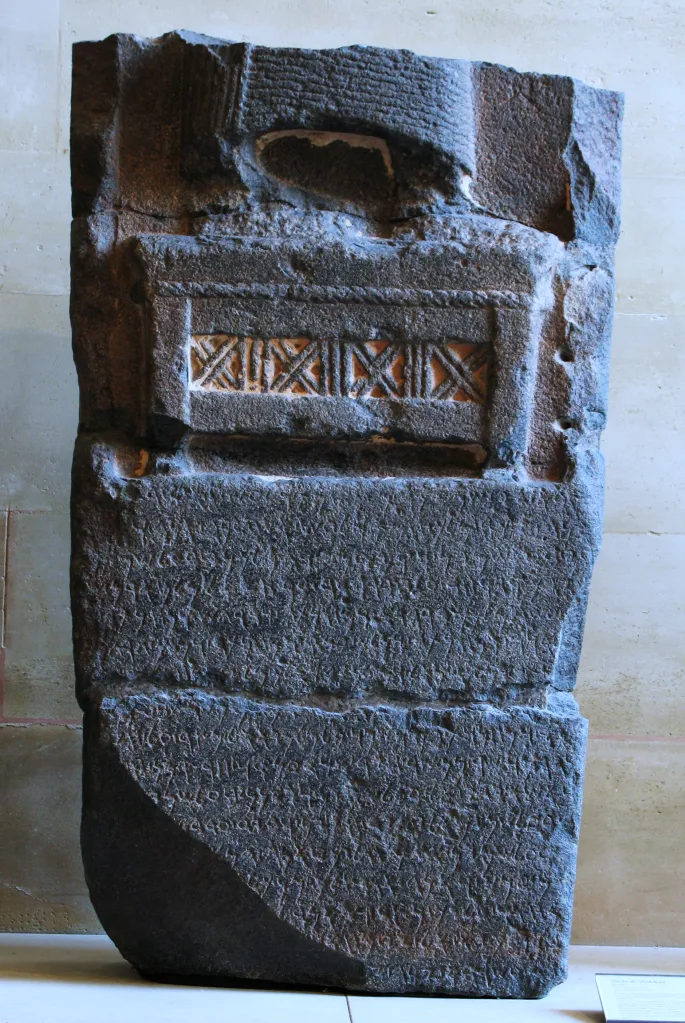
The Zakkur Stele provides extra-biblical evidence for Ben-Hadad III’s historicity. This victory monument contains an inscription by Zakkur, king of Lu’ash and Hamath, crediting his god Baal-shamayin (lit. “Lord of the Heavens”) for granting him kingship of Hazrach (biblical Hadrach [Zech. 9:1]) and for delivering this city from an attack led by “Bar-Hadad, son of Hazael, king of Damascus.”2 The inscription uses the Aramaic Bar-Hadad, which is equivalent to the Hebrew Ben-Hadad (“bar” and “ben” both mean “son of” in their respective languages). Zakkur claims that Ben-Hadad led a coalition of ten other kings to lay siege to Hazrach, but that the siege was unsuccessful.3 Although Ben-Hadad still had a level of regional influence, as demonstrated by his ability to assemble this coalition, the failed siege may reflect the beginning of Damascus’s declining dominance in the region.
Ben-Hadad III’s Name

Ben-Hadad literally means “son of Hadad.” Hadad (also known as Adad) was an Aramaean storm god and the patron deity of Damascus, which is likely why at least three kings from the city took this throne name. Hadad is often depicted holding thunderbolts and riding a bull. A relief from the Syrian Temple of the Storm God at Aleppo, dating to the time of Hazael or Ben-Hadad, depicts Hadad riding in a chariot pulled by a bull.4
Archaeological evidence suggests that a temple to Hadad once stood in Damascus as well. The Umayyad Mosque occupies the site of a succession of earlier religious structures. A temple to Hadad was constructed there between the 10th and 9th centuries BC, followed by a Greco-Roman temple dedicated to the cult of Jupiter, then a Christian church in the Byzantine era, and finally the Islamic mosque that stands there today.5 While little remains from the Temple of Hadad today, renovations to the mosque in the early part of the past century revealed an orthostat with a relief of a winged sphinx. Given its similarity to the Phoenician-style Arslan Tash ivories, which are associated with Hazael’s palace, scholars also date the orthostat relief to Hazael’s reign.6

Ben-Hadad III in Assyrian Inscriptions

The inscriptions of the Assyrian king, Adad-Nirari III mention a Syrian king named Mari’ several times. On a stone slab found at Calah, Adad-Nirari boasts,
I marched to Damascus. I locked up Mari’, king of Damascus, in Damascus his royal city. The awesome splendor of the god Ashur, my lord, overwhelmed him and he seized my feet and became my servant. I received from him within his palace in Damascus, his royal city, 2,300 talents of silver, 20 talents of gold, 3,000 talents of bronze, 5,000 talents of iron, multicolored linen garments, a bed (inlaid) with ivory, a couch with ivory inlay and fittings, his property and possessions without number.7
In the Saba’a inscription, Adad-Nirari III likewise claims to have locked Mari’ up in Damascus and taken tribute from him.
Many scholars identify Ben-Hadad as Mari’ (lit. “my lord” in Aramaic) because of a convergence of chronological data of multiple kings, both in biblical and extra-biblical historical sources. Adad-Nirari’s inscriptions reveal that he conducted his campaigns to the west in the late 9th and early 8th centuries BC. The Bible indicates the reigns of Hazael (ca. 842—800 BC) and Ben-Hadad (ca. 800–? BC) coincided with the reigns of the Israelite kings Jehoahaz (ca. 814–798 BC) and Jehoash (ca. 798–782 BC), and that the Syrian kings oppressed Israel at this time (2 Kgs 13:1–4). The Tell al-Rimah Stele of Adad-Nirari states that he received tribute from both Jehoash the Samarian (King Jehoash of Israel) and Mari’, king of Damascus. Thus, the chronological data indicates that Mari’ is Ben-Hadad.
Interestingly, the Bible may indirectly refer to Adad-Nirari. In 2 Kings 13:5, we read, “Therefore the Lord gave Israel a savior, so that they escaped from the hand of the Syrians.” The chronological evidence suggests that Israel’s “savior” may have been Adad-Nirari, whose campaign against Damascus brought Ben-Hadad into submission and significantly weakened Syrian dominance over Israel.
If this reconstruction is correct, Ben-Hadad’s reign began in power, as he oppressed Israel (2 Kgs 13:3), and ended in weakness, with Adad-Nirari taking away his independence and Jehoash regaining cities previously captured from Israel (2 Kgs 13:25).

Conclusion
Archaeological and inscriptional evidence from the reign of Ben-Hadad III illuminates the longstanding conflict between Aram-Damascus and Israel and the eventual decline of Syrian power. Although Ben-Hadad inherited a powerful kingdom from his father, Hazael, his reign saw significant setbacks, particularly because of growing Assyrian domination. Overall, this evidence corresponds well with the biblical portrayal of Ben-Hadad’s declining power and Israel’s resurgence during his reign.
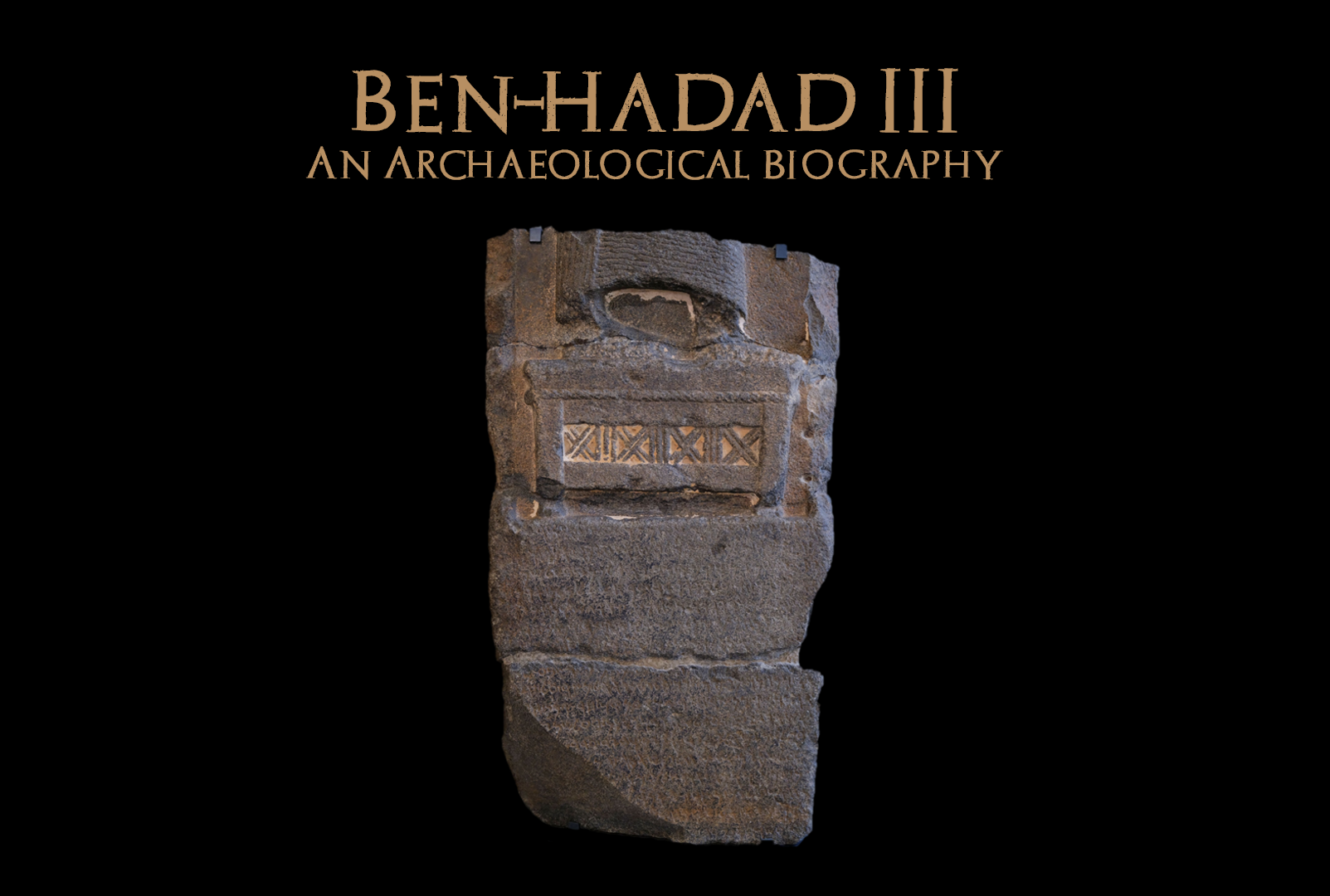
Cover: The Zakkur Stele. Photo: Shonagon / Wikimedia Commons / Public Domain
References
1 Wayne T. Pitard, “Aram.” In The Anchor Bible Dictionary, ed. D.N. Freedman. (New York: Doubleday, 1992), 509.
2 Sarah C. Melville, Brent A. Strawn, Brian B. Schmidt, and Scott Noegel, “Neo-Assyrian and Syro-Palestinian Texts I.” In The ancient Near East: Historical Sources in Translation, ed. Mark W. Chavalas. (London: Blackwell Publishing, 2006), p. 307.
3 James Moore, “Louvre AO 8185, KAI 202 Zakkur.” Digital Editions of Aramaic and Phoenician Sources, University of Ohio. https://deaps.osu.edu/text_objects/11642 (Accessed Aug. 18, 2026).
4 Andrew Lawler, “Temple of the Storm God.” Archaeology, Vol. Volume 62 Number 6, (Nov./Dec. 2009). https://archive.archaeology.org/0911/features/syria_aleppo_temple_storm_god_citadel.html (Accessed Aug. 18, 2026).
5 “A Mosque at the Heart of the City: A Place of Worship Since Antiquity.” French Ministry of Culture. https://archeologie.culture.gouv.fr/mosquee-omeyyades/en/place-worship-antiquity(Accessed Aug. 18, 2026).
6 Emir Djafar Abd El-Kader, “Un orthostate du temple de Hadad à Damas.” Syria: Archéologie, Art et Histoire (1949), 191-195. https://www.persee.fr/doc/syria_0039-7946_1949_num_26_3_4515? (Accessed Aug. 18, 2026).
7 Mordecai Cogan, The Raging Torrent: Historical Inscriptions from Assyria and Babylonia Relating to Ancient Israel. (Jerusalem: Carta, 2015), 40.

