The top three reports in biblical archaeology in September 2026 included discoveries of an ancient treaty, a ritual bath, and a famous school.
3. 2,000-Year-Old Mikvah Moved from Kiryat Gat
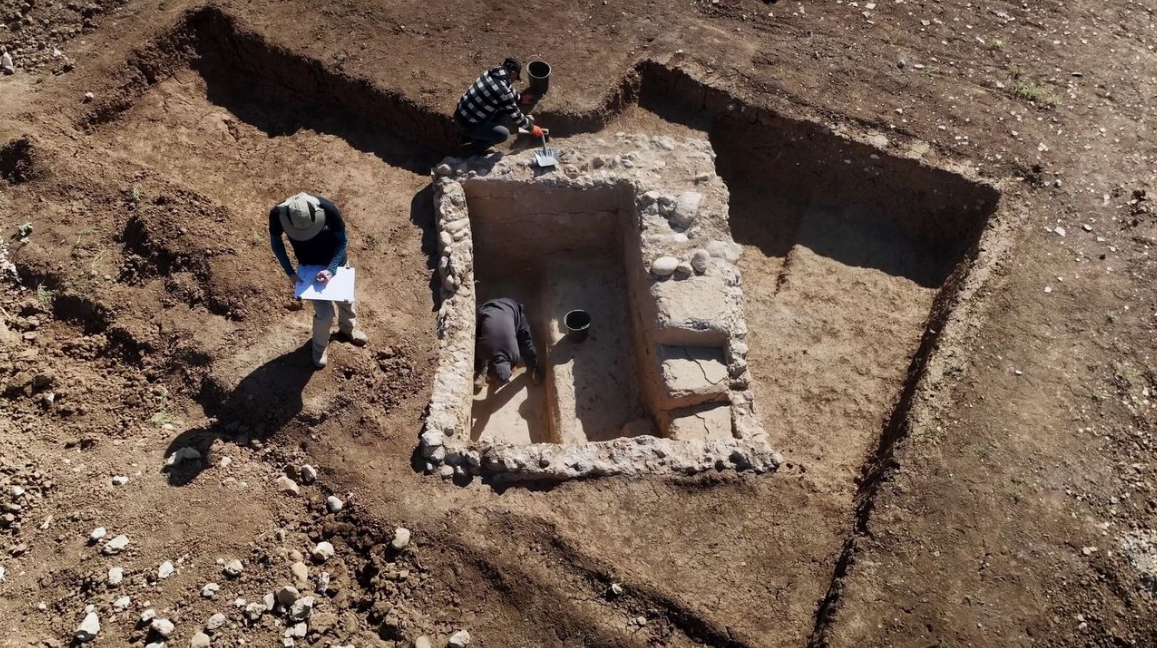
The Israel Antiquities Authority conducted a complex operation to temporarily move a 2,000-year-old mikvah (Jewish ritual bath) discovered during excavations in the Carmei Gat neighborhood of Kiryat Gat. To move the structure, engineers reinforced its base with steel beams and treated its interior plaster to protect it from damage during transport. The mikvah was part of a Jewish settlement that was abandoned during the Bar Kokhba revolt in the second century AD. It measured 13 feet (4 m) wide and weighed 25 tons. Engineers moved the mikvah to the National Treasures Department while construction and conservation work continues at the site. Once the work is complete, the mikvah will be returned to its original location and opened to the public.
Source: https://www.iaa.org.il/en/page/news-index (see “An Exceptional Engineering Operation in Kiryat Gat’s New Carmei Gat Neighborhood: An Intact 2,000-year-old 25-Ton Purification Bath Was Extracted Whole out of the Ground” [Sept. 17, 2026])
2. School Purportedly Associated with Aristotle and Alexander the Great Unearthed in Greece
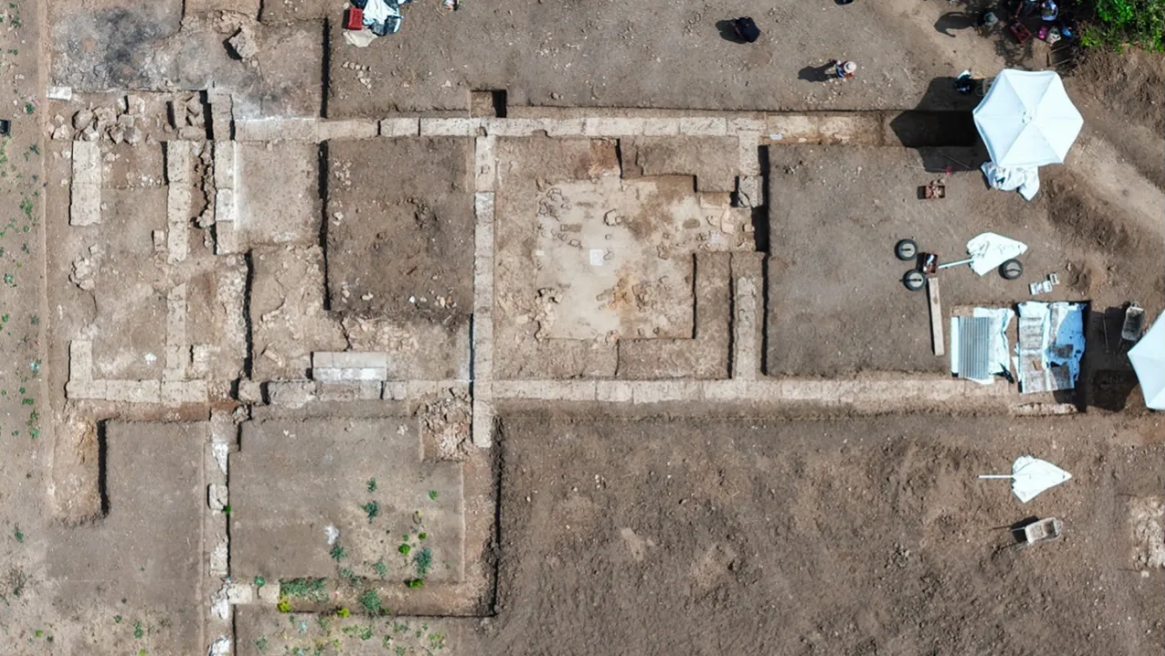
According to the Hellenic Ministry of Culture, a school recently unearthed in the ancient Macedonian city of Mieza (in modern Greece) may be the site where Aristotle educated Alexander the Great. The excavations revealed a 2,400-year-old building complex, consisting of a lecture hall, an arena, a stadium and two banquet halls. The accompanying mosaic floors and decorated columns are similar to those found in the Macedonian royal palace at Aigai (modern Vergina). Plutarch wrote that Aristotle educated Alexander the Great at a school in Mieza (Alexander 7.1–3). This historical account, along with the similarities between the school and the royal palace, has led scholars to identify the recently unearthed complex as the school where Aristotle taught Alexander. While Alexander the Great is not named in the Bible, the book of Daniel contains prophecies traditionally understood to refer to him. Daniel 8:5 reads, “As I was considering, behold, a male goat came from the west across the face of the whole earth, without touching the ground. And the goat had a conspicuous horn between his eyes” (ESV). Verse 21 identifies the goat as Greece and its prominent horn as its first king, whom many scholars identify as Alexander the Great.
1. Fragment of World’s Oldest Treaty Discovered in Turkey
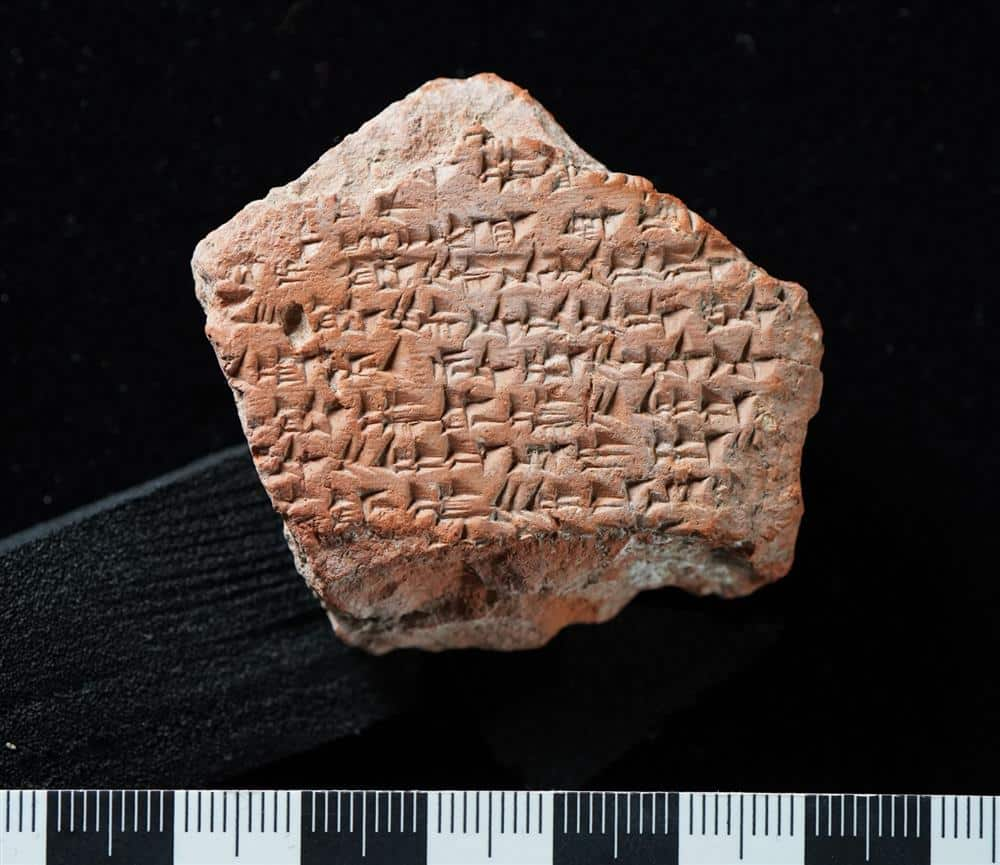
The Turkish Ministry of Culture and Tourism recently announced the discovery of a cuneiform tablet fragment recording the Treaty of Kadesh, signed in approximately 1269 BC by Pharaoh Ramesses II and the Hittite king Hattusili III. The text on the fragment outlines provisions for people seeking refuge from one country to another. While other copies of the treaty have been discovered elsewhere, archaeologists found this tablet fragment while excavating a building in the Hittite capital of Hattusa.
The Hittites established a powerful kingdom in Anatolia that flourished during the Late Bronze Age (ca. 1650–1200 BC). While Ramesses II is not explicitly named in the Bible, the Hittites are. However, there is confusion surrounding two seemingly distinct groups of “Hittites” in the Bible: those from Anatolia and those native to Canaan. Research by ABR’s Dr. Bryant Wood (see link below) suggests that the majority of the Hebrew terms for “Hittites” (the singular forms) should be translated “Hethites”—the indigenous descendants of Heth, the son of Canaan (Gen. 10:15)—while a small number (six plural forms) refer to the Hittites of Anatolia (modern Turkey). This solution, based on linguistic and archaeological evidence, challenges the claims of critics who argue that the biblical references to the Hittites are anachronistic or historically inaccurate.
Source: https://basin.ktb.gov.tr/TR-474337/barisin-binlerce-yillik-izi-hattusada-gun-yuzune-cikti.html Bryant Wood’s article on Hittites: https://biblearchaeology.org/research-articles/hittites-and-hethites-a-proposed-solution-to-an-etymological-conundrum/
Stay Up-To-Date
Get the latest BREAKING NEWS in biblical archaeology each week on ABR’s new website. Click here: https://biblearchaeology.org/category/breaking-news