
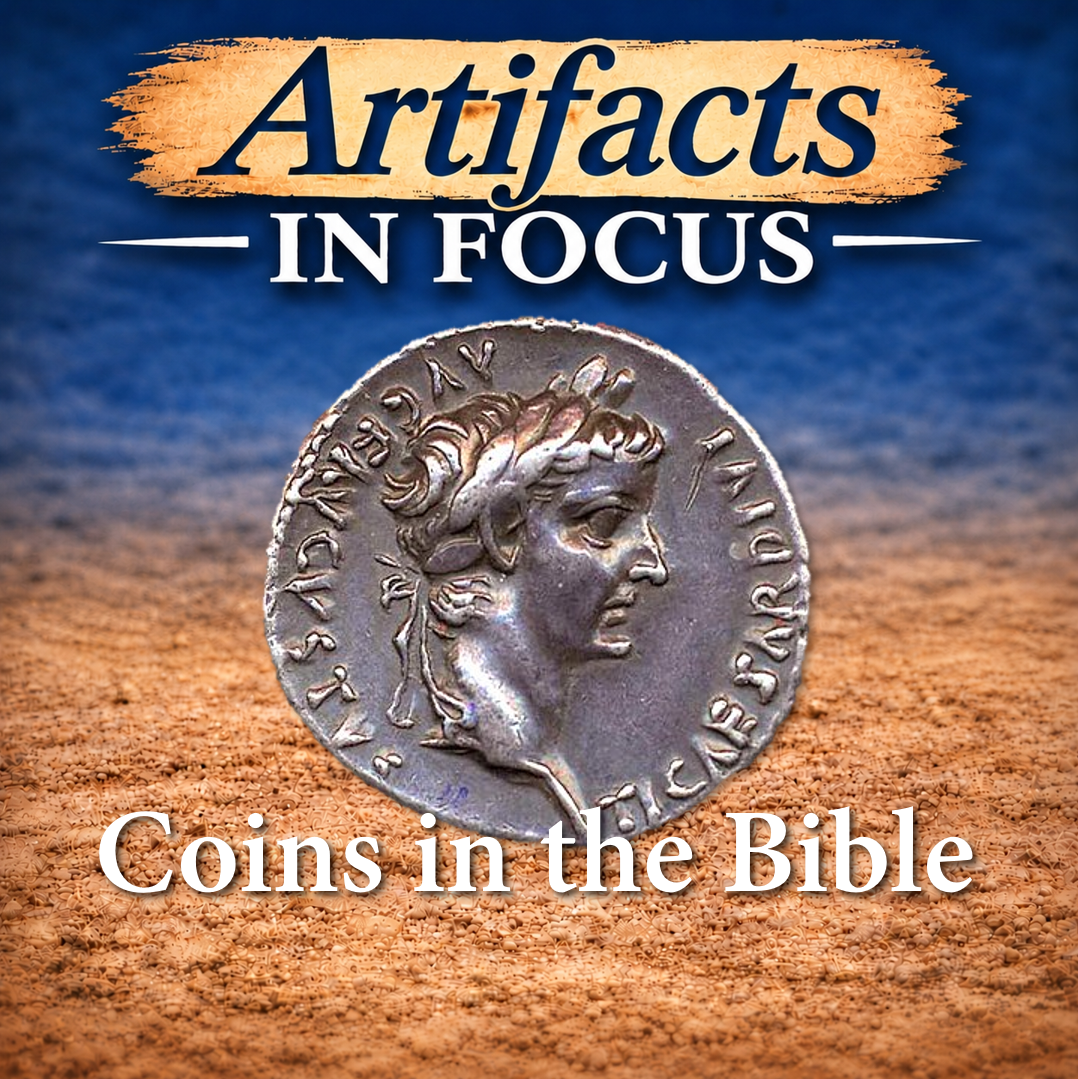
I’m starting a new series called “Artifacts in Focus”, that will highlight a single type of Bible artifact. My goal is to provide a general overview of these artifacts and also illuminate the biblical texts that mention them. The first article in this series is about coins in the Bible.
History of Coins
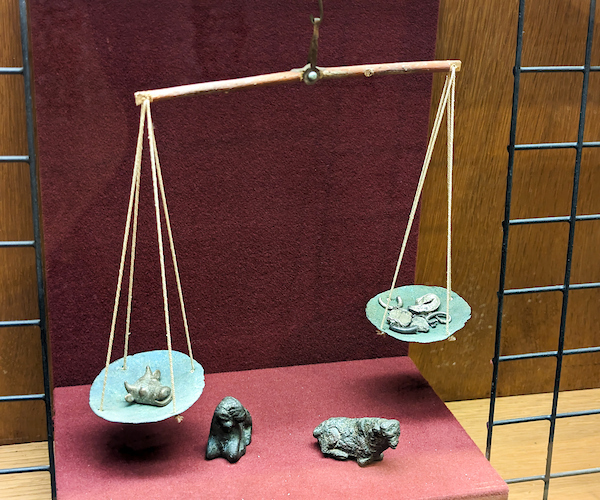
Before money was invented, people measured wealth and payments by specific weights of precious metals. For example, Abraham purchased the field of Ephron in Machpelah to bury his wife Sarah for “four hundred shekels of silver, according to the weights current among the merchants” (Gen 23:16). While some coins later became known as shekels, originally it was a unit of weight, measuring just under half an ounce (11-13 grams).
According to Arthur L. Friedberg, “The Old Testament is full of references to terms such as shekel and its components, the bekah (half shekel), pim (third shekel), rebah (quarter shekel), gerah (twentieth shekel), and talent. None of these, when mentioned in the earliest of biblical books, refers to coins, which did not exist until much later. When we see these so-called denominations, they are always referring to a particular weight of precious metal.”1
In time, kings realized that controlling a monetary system was economically advantageous, making it easier to pay state employees and collect revenues, while promoting their royal authority.
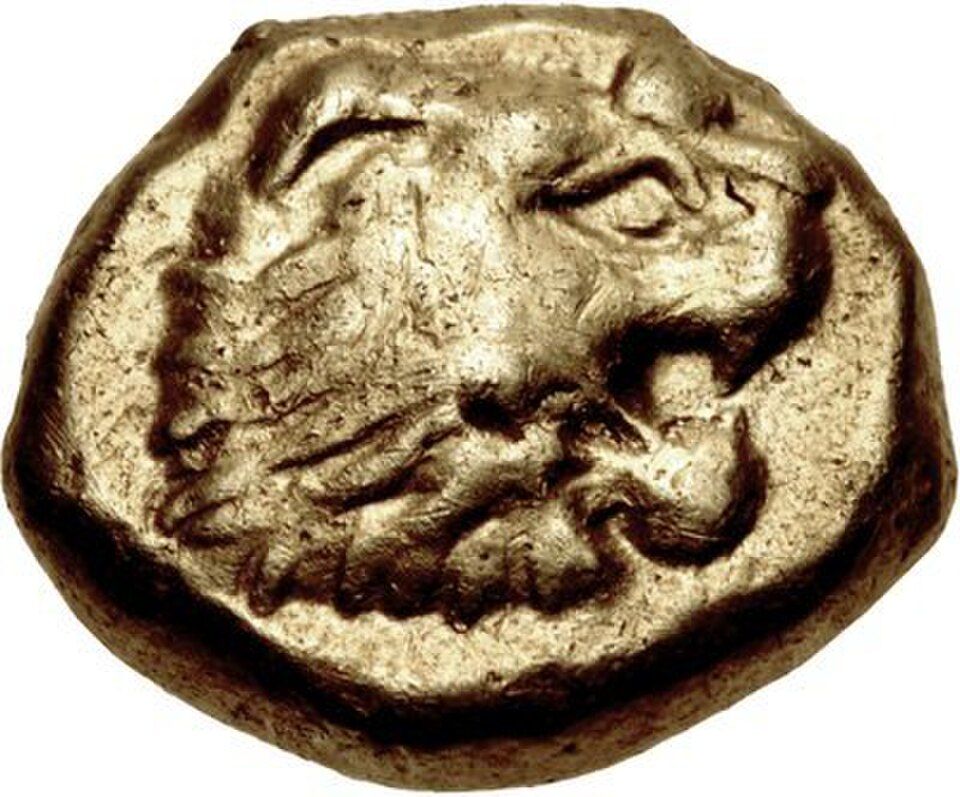
Herodotus credited the Lydians with inventing coinage, as they were the first who “coined and used gold and silver currency.”2 The famous Lydian lion coin is generally considered to be one of the first coins to be minted; it was made from electrum, a naturally occurring alloy of gold and silver.
Coins in the Old Testament
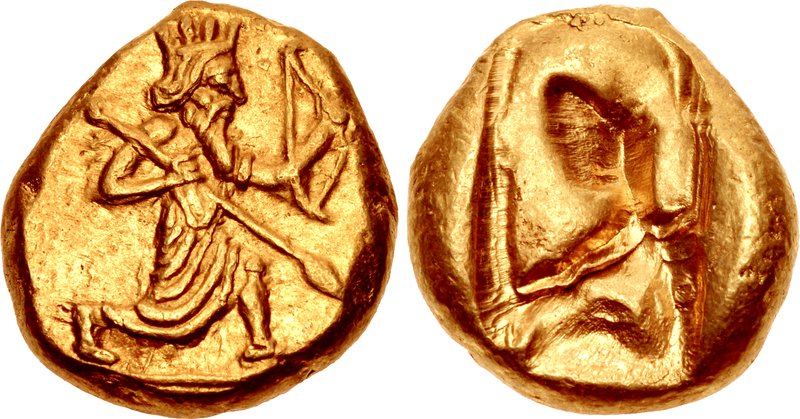
When Cyrus the Great conquered Lydia, the birthplace of coinage, coins were introduced to the Persian Empire.3 Darius I is usually credited with standardizing and expanding the imperial use of coins. Gold darics and silver sigloi became the basis of the empire’s economic system. They depicted a crowned Persian hero or king running and holding a spear and a bow; the reverse bore a square punch mark.4
In Nehemiah 7 (ca. 445 BC), after the wall was rebuilt around Jerusalem, the people gave to the treasury for rebuilding the temple in Jerusalem. Large numbers of darics were among the contributions. Those who returned to Jerusalem in the almost 100 years after Cyrus first released the exiles no doubt brought these darics with them, or acquired them as they became the standard currency in the Persian Empire. Some gold darics have been discovered in excavations in Israel.5
Some English translations render the Hebrew term darkemonim (דַּרְכְּמוֹנִים) as “drachmas” rather than “darics.” Other scholars believe that the term may refer to a monetary unit, rather than actual coins. While the meaning of the Hebrew term is debated, its association with gold Persian darics remains a plausible identification.
Coins in the New Testament
Seven different Greek words are used for coins in the New Testament, which provide clues to their identification, although some debate remains about which specific ruler each represents.
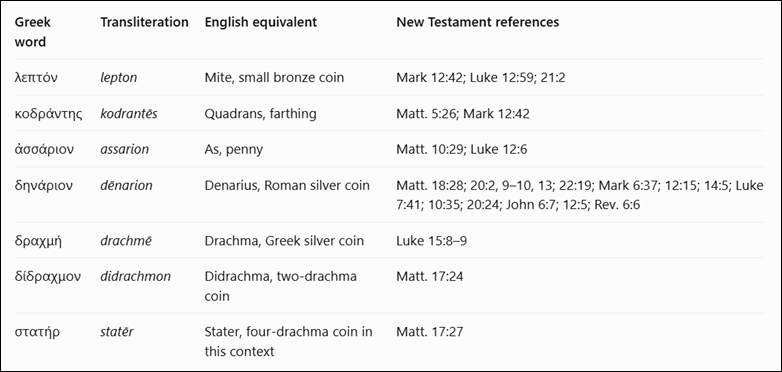
The “Widow’s Mite”
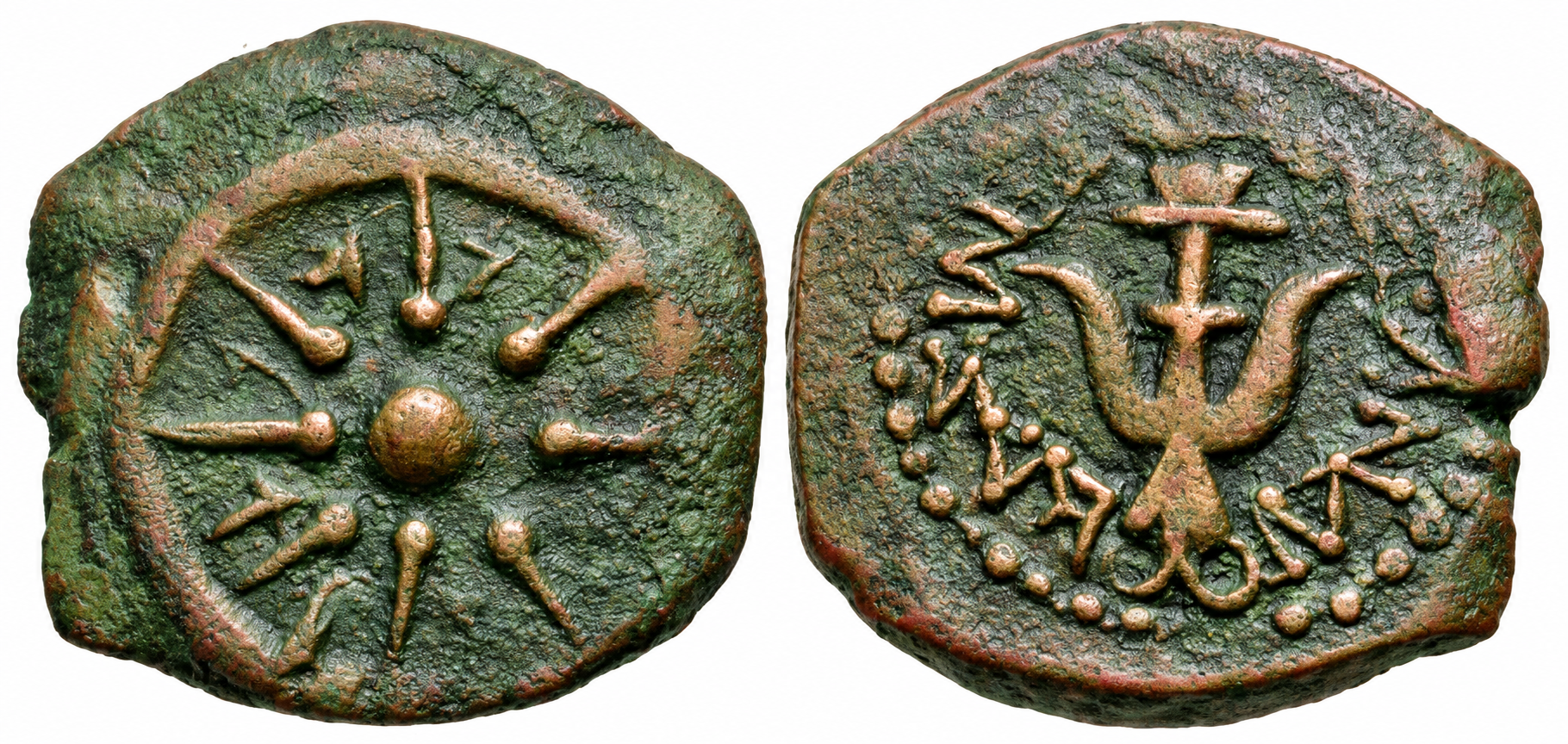
The most famous coin is likely the so-called widow’s mite. The word mite comes from Tyndale’s English translation of the New Testament from 1525, and the term stuck. Mark 12:42 says, “And a poor widow came and put in two small copper coins [λεπτός], which make a penny [κοδράντης].” Numismatist David Hendin identifies this small copper coin as a prutah or half-prutah, noting that “the most common among them, probably by a factor of more than 1000 to 1, is the small prutah of Jannaeus and possibly his successors.”6 This coin features an anchor on one side and an eight-rayed star on the other. For comparison, to understand how poor the widow was, Petronius says a loaf of bread cost one as, equivalent to four quadrans, or eight lepta.7 An inscription from Pompeii (H16 CIL IV 4888) notes that bread cost six quadrans, equivalent to 12 lepta.8 The widow didn’t even have enough money for a loaf of bread.
The “Tribute Penny”
Another famous coin, mentioned most often in the Gospels, is the denarius. It is sometimes called the “Tribute Penny” because of the interaction Jesus had with people who tested him, asking whether it was lawful to pay taxes to Caesar. Jesus replied,
“Show me a denarius. Whose likeness and inscription does it have?”
They said, “Caesar’s.”
He said to them, “Then render to Caesar the things that are Caesar’s, and to God the things that are God’s.” (Luke 20:24–25)
The denarius in question was either one of Augustus (27 to 14 BC), which were still in circulation at that time, or more likely Tiberius (14 to 37 AD). We cannot be certain; we only know it had an image and inscription of Caesar. Some scholars suggest that it might have been a Greek drachma.9 However, only provincial Greek drachmae had images and inscriptions of Caesar, unlike the traditional Greek Drachmas, which depicted Athena and an owl. Moreover, Luke specifically uses the word denarius, and not drachma (which he uses in Luke 15:8). Given this, and the fact that Jesus tells the people to give to Caesar what is his (ie. Caesar is still living at the time), implies the coin in question was likely the denarius of Tiberius.
While there are several variants, more than 98% of the denarii struck under Tiberius are of the PONTIF MAXIM variety.10 It contains a portrait of Tiberius on one side with the inscription “Tl CAESAR DIVI AVG F AVGVSTVS” (Tiberius, Caesar Augustus, Son of the Divine Augustus), with a seated female figure on the reverse side, along with the inscription PONTIF MAXIM (high priest). If this was the coin the crowd presented to Jesus, his response to “render to Caesar the things that are Caesar’s, and to God the things that are God” carries an ironic implication. Despite Caesar’s claim on the coin to be the divine son, Jesus essentially tells the crowd that Caesar is not divine; give him his due as an earthly king, but give to the One True God the things that are God’s.
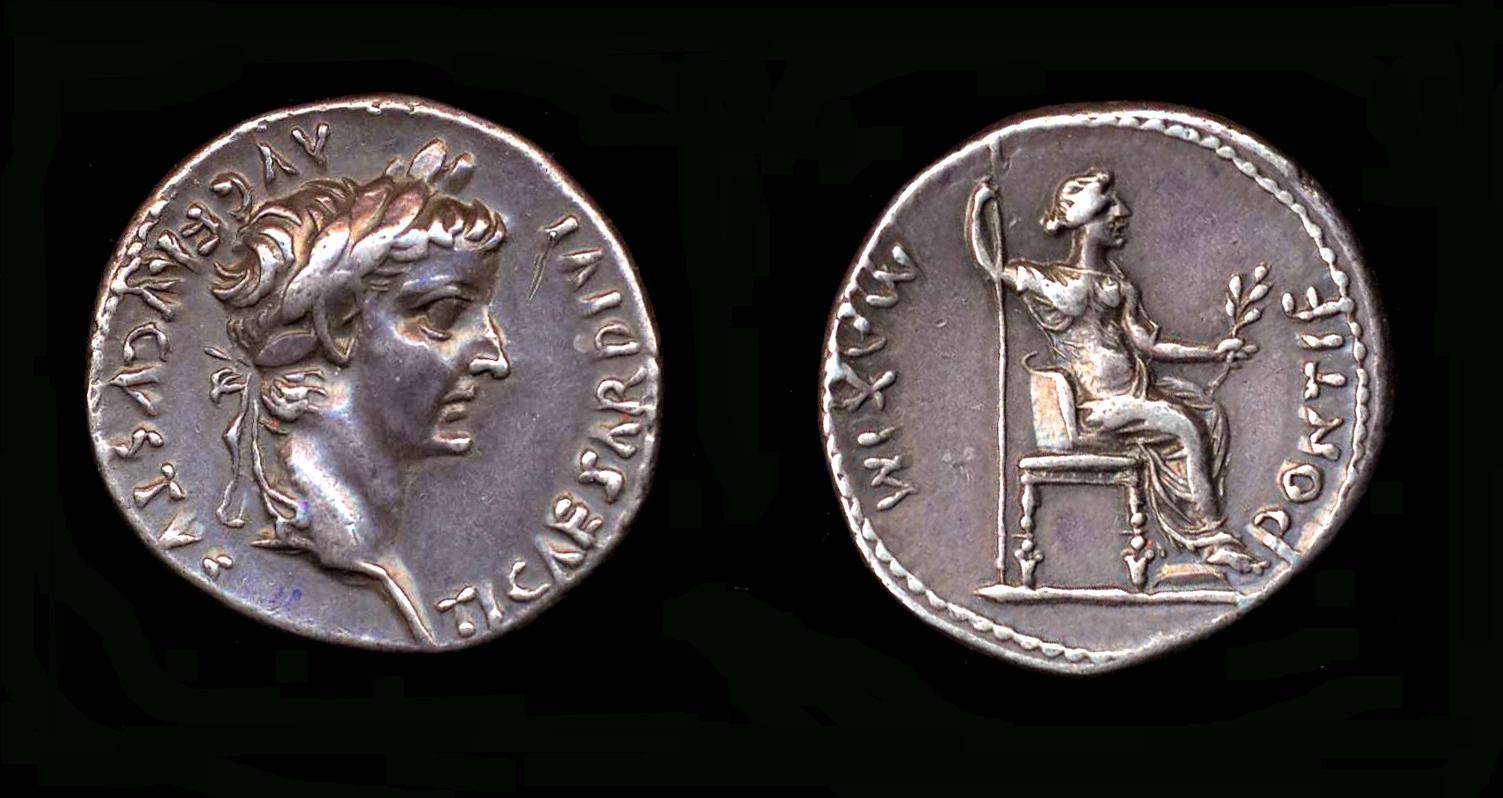
One further note concerns the value of a denarius. It is often said that the denarius was the typical wage of a common laborer in Jesus’ day. This claim comes largely from Jesus’ parable of the workers in the vineyard (Matthew 20:1–16), where the landowner agrees to pay the laborers one denarius for the day (Matt. 20:2). In actual fact, common laborers could earn less than this. For example, Roman soldiers only earned 225 denarii per year.11 An inscription from Pompeii indicates the wage for a lower laborer was 5 asses per day (1 denarius = 16 asses).12 Perhaps this hints at an overlooked point about Jesus’ parable of the workers in the vineyard: the landowner was overly generous even with the workers he hired early in the morning.
The Last Penny
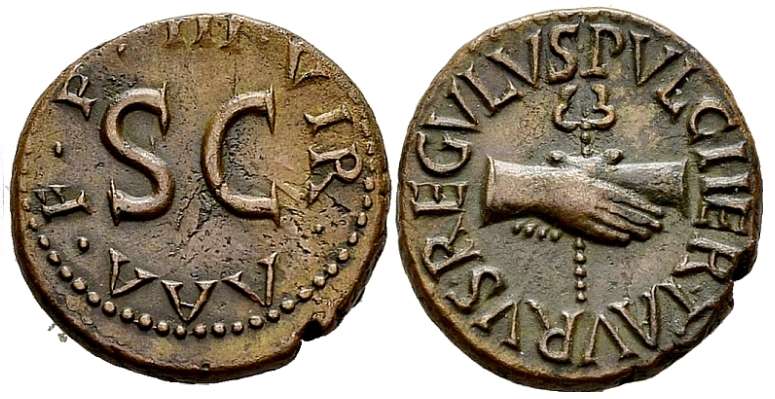
In the Sermon on the Mount, Jesus teaches, “Come to terms quickly with your accuser while you are going with him to court, lest your accuser hand you over to the judge, and the judge to the guard, and you be put in prison. Truly, I say to you, you will never get out until you have paid the last penny” (Matt 5:25–26).
The Greek word translated penny is kodrantes (Latin quadrans), a small copper Roman coin worth about 1/64 of a denarius. It had the lowest value in Roman currency. In his teaching, Jesus warns that unless you settle with an adversary before going to trial, you will be required to pay back every bit of money, right down to the last little bronze coin.
The Price of Sparrows
In Matthew 10, Jesus instructs his disciples before sending them out to teach in the cities. Although he warns them they will face persecution, he tells them not to fear. “Are not two sparrows sold for a penny? And not one of them will fall to the ground apart from your Father. But even the hairs of your head are all numbered. Fear not, therefore; you are of more value than many sparrows” (Matt. 10:29–31).
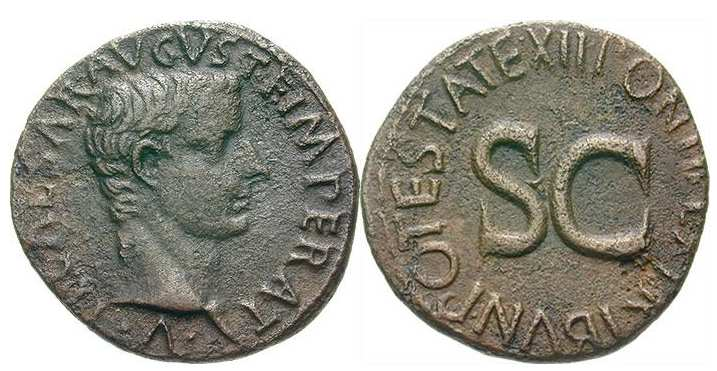
Here Jesus says two sparrows were sold for an assarion (Gk. ἀσσάριον; from the Latin as), a Roman copper coin worth about one-sixteenth of a denarius. While the as (plural asses) was the original basic unit of Roman currency during the early Roman Republic, by the first century AD, people more commonly reckoned money in denarii and sestertii. Some have suggested that Matthew uses assarion generally and may be referring to a similar small local coin.13
The Lost Coin
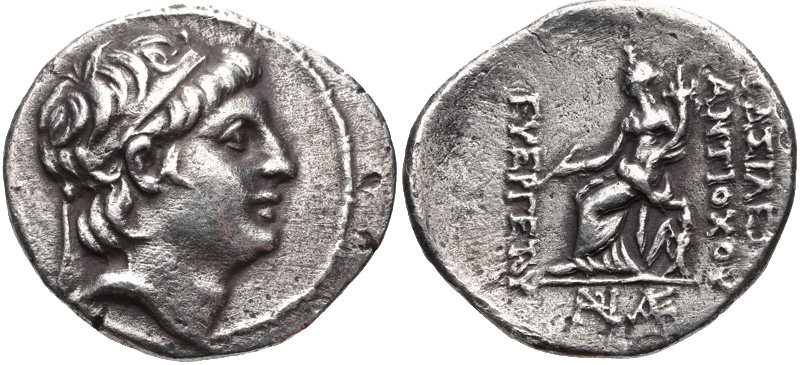
Luke records Jesus’ parable about the woman searching for a lost silver coin (Luke 15:8–10), using the term drachma. According to Hendin, “The Greek equivalent to the silver denarius was the drachm, which was the same size and value in the Roman period.”14 While it is possible that the gospel used a Greek coin that his Greek readers would have been familiar with to represent the coin Jesus actually spoke about, the fact that Luke uses the term denarius in Luke 20:24 suggests that the distinction in terminology here is intentional. Thus, I think it more likely that Jesus actually told a parable about a women who lost a drachma, especially since people at the time of Jesus were still familiar with Greek coins.
Numerous Greek drachmas were issued by Hellenistic monarchs, including Alexander the Great and successive Seleucid kings. They also continued to be minted in parts of the eastern Mediterranean under Roman rule. Thus, it is impossible to identify the precise type of drachma mentioned in Luke 15:8.
Of course, the point of Jesus’ parable is one of value: just as the woman was joyful in finding her lost silver coin, so “there is joy before the angels of God over one sinner who repents” (Luke 15:10).
The Temple Tax
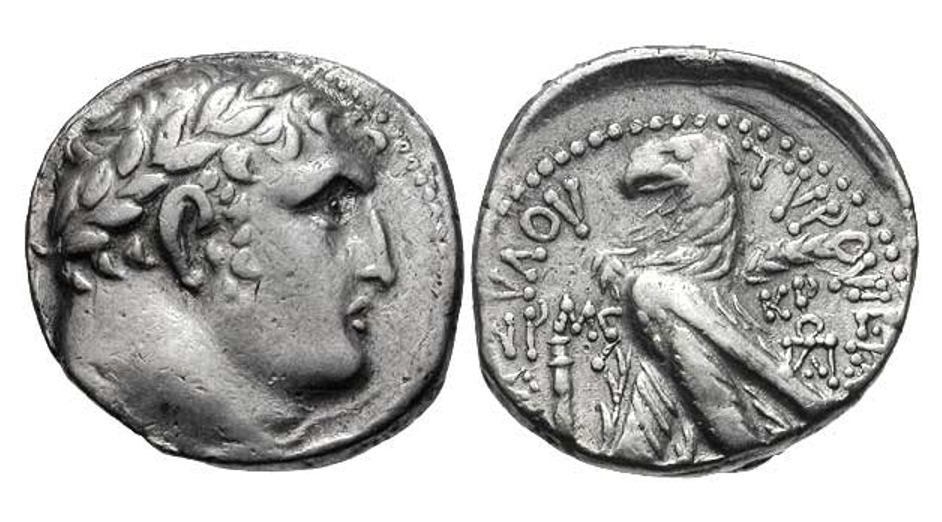
In the first century, each Jewish male paid the annual half-shekel Temple Tax in Tyrian silver.15 According to the Jewish Mishnah, Tyrian silver shekels (and half-shekels) were the only coin deemed acceptable, given their high quality silver.16 Sadly, and Ironically, the Jewish religious leaders’ insistence on shekels of Tyre meant that they only accepted currency bearing the graven image of the pagan Phoenician god Melqart. Moreover, in the first century AD, as Tyre began to discontinue producing the shekel, people minted them in Jerusalem for use in the temple, continuing to use the pagan iconography. Tyrian shekels minted in Jerusalem can be identified by the mintmark “KP” to the right of the eagle.17 The Temple Tax provides the context for two accounts in the gospels.
First, the coin Peter drew from a fish’s mouth was likely a Tyrian shekel. In Matthew 17:24–27 we read:
When they came to Capernaum, the collectors of the two-drachma tax went up to Peter and said, “Does your teacher not pay the tax?” He said, “Yes.” And when he came into the house, Jesus spoke to him first, saying, “What do you think, Simon? From whom do kings of the earth take toll or tax? From their sons or from others?” And when he said, “From others,” Jesus said to him, “Then the sons are free. However, not to give offense to them, go to the sea and cast a hook and take the first fish that comes up, and when you open its mouth you will find a shekel. Take that and give it to them for me and for yourself.”
In this passage two different words are used for the coin used to pay the Temple Tax. In v. 24, the word is didrachmon, (Gk. δίδραχμα) translated as “two-drachma” in the ESV above. For Greek-speaking people, the “half-shekel” required by the Temple Tax was worth about two drachmas. In v. 27, Jesus instructs Peter that he will find a “shekel” in a fish’s mouth to pay the tax. The word here is stater (Gk. στατῆρα). One stater represented four drachmas, precisely enough for two people’s Temple tax. The NET Bible’s textual note on Matthew 17:24 explains that name didrachmon could continue to designate the tax even when a different coin, the shekel, was used to pay it.18 Hendin says, “It seems clear from Matthew’s report that the coin in the fish’s mouth was a sheqel of Tyre since it was supposed to pay the annual half-sheqel Temple tribute for both Jesus and for Peter.”19
The second story which the Temple Tax likely provides the background for is Judas’s betrayal of Jesus for thirty pieces of silver (Matt. 26:140–16; 27:3–10). Here the generic Greek word used (ἀργύρια) simply means silver or silver coins. Since these coins came from the chief priests, who were associated with payments to the Temple, it makes sense that these were Tyrian shekels. “It is logical to assume that the “30 pieces of silver” paid to Judas were Tyre sheqels, since these coins were the most commonly used and accepted large silver coins at the time.”20
Conclusion
Focusing on a specific type of artifact brings the biblical world to life and deepens my understanding of the cultures in which the people, places, and events are set. Learning about the coins mentioned in the Bible also provides greater insight into the historical context and meaning of Scripture.
References
1 Arthur L. Friedberg, Coins of the Bible. (Atlanta: Whitman Publishing, 2004), 30.
2 Herodotus. Histories 1.94. Translated by A. D. Godley. Loeb Classical Library 117. (Cambridge: Harvard University Press, 1920).
3 Michael Alram, “The Coinage of the Persian Empire.” In The Oxford Handbook of Greek and Roman Coinage. Ed. William E. Metcalf (Oxford: Oxford University Press, 2012), 62–64.
4 Ben Wallace, “NGC Ancients: Coins of the Achaemenid Empire,” May 16, 2025. NGC Coins. Online: https://www.ngccoin.com/news/article/11633/NGC-Ancients-Achaemenid-Empire/ (Accessed March 6, 2025).
5 Haim Gitler and Oren Tal, “The Silver Coinage of Philistia in the Fifth and Fourth Centuries BCE,” Israel Numismatic Research 5 (2010): 59–87.
6 David Hendin, “Current Viewpoints on Ancient Jewish Coinage: A Bibliographic Essay.” In Currents in Biblical Research, Vol. 11, No. 2 (2013), 269.
7 Petronius, Satyricon 44.11.
8 Alison E. Cooley and M. G. L. Cooley. Pompeii: A Sourcebook. (London: Routledge, 2004), 164.
9 David Hendin, Guide to Biblical Coins, 5th edition. (Nyack: Amphora, 2010), 486.
10 Hendin, Guide to Biblical Coins, 486.
11 Richard Alston, “Roman Military Pay from Caesar to Diocletian.” In The Journal of Roman Studies 84 (1994), 114.
12 Koenraad Verboven, “Currency and Credit in the First Century AD Bay of Naples.” In The Economy of Pompeii, Miko Flohr and Andrew Wilson, eds. (Oxford: Oxford University Press, 2017), 369.
13 Walter Bauer, Frederick W. Danker, William F. Arndt, and F. Wilbur Gingrich, A Greek-English Lexicon of the New Testament and Other Early Christian Literature, 3rd ed., rev. and ed. Frederick W. Danker (Chicago: University of Chicago Press, 2000), s.v. “ἀσσάριον.”
14 Hendin, Guide to Biblical Coins, 486.
15 Hendin, Guide to Biblical Coins, 476.
16 Mishnah Bekhorot 8:7;
17 Friedberg, Coins of the Bible, 40.
18 https://classic.net.bible.org/bible.php/verse.php?book=Mat&chapter=17&verse=24&utm
19 Hendin, Guide to Biblical Coins, 484.
19 Hendin, Guide to Biblical Coins, 482.

